As technologists race to accelerate AI’s progress with minimal guardrails, they are being met with increasing resistance from a powerful global contingent: Christian leaders and their congregations.
Christians are not a monolith by any means. But this year, Christian leaders across sects—including Catholics, Evangelicals, and Baptists—sounded the alarm on AI’s potential impact on family, human relationships, labor, and the church itself. While many of these critics are not anti-technology, they have become concerned with the rapid pace of progress in the face of real-world harms. So they have started urging caution in sermons, open letters, and private conversations with political leaders, in an attempt to influence both policy debates and the general public’s perception.
[time-brightcove not-tgx=”true”]
White evangelicals make up roughly a quarter of American voters. Their outspokenness on AI could play a role in the widening rift between the tech leaders in Trump’s administration and his MAGA base as the midterms approach next year.
“Christ asked, ‘What does it profit a man to gain the world and lose his soul?,’” says John Litzler, the general counsel and director of public policy at the Baptist General Convention of Texas. “It’s not that Christians are anti-business or anti-growth. But the soul of our country and of the individuals in our country is more important.”
Pope Leo and Concerns About Child Harms
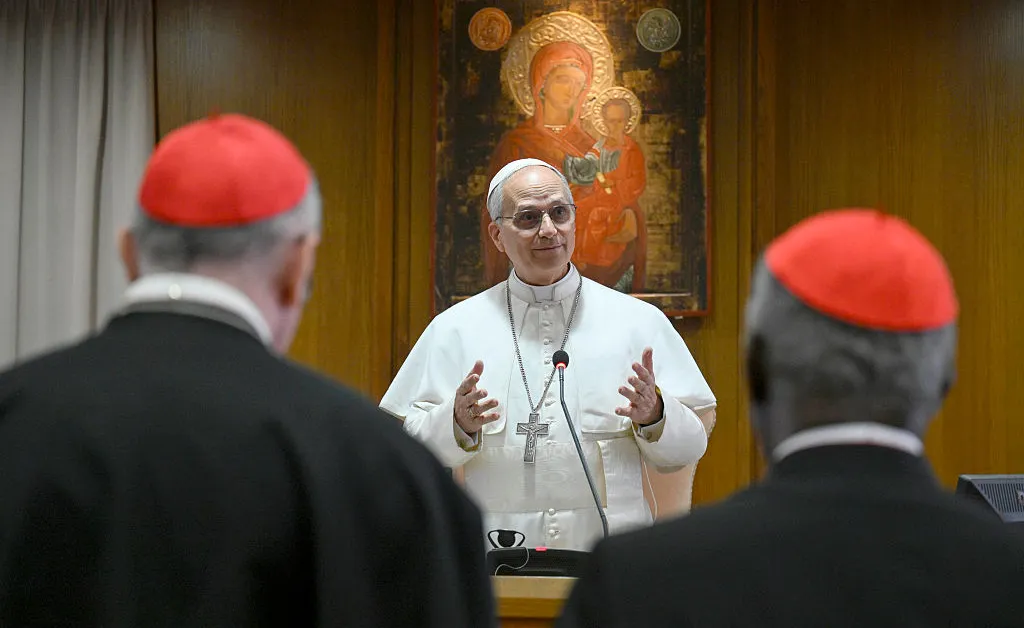
The wariness of some Christians towards AI starts at the very top of the Catholic Church. In May, Pope Leo XIV chose his name as a reference to a previous technological revolution that upended society. In the months since, he has used his platform to talk about AI’s potential to help spread the Gospel, but also to manipulate children and serve “antihuman ideologies.”
Read More: Pope Leo’s Name Carries a Warning About the Rise of AI
The following month, a group of influential bishops wrote a letter to the U.S. Congress with policy recommendations on AI. Many other Christian leaders have likewise followed his lead. “Leo XIV made it quite clear that he thinks this is something that the church should be speaking to: not just in terms of defining what it is, but also how it should be used,” says Michael Toscano, a Catholic and the director of the Family First Technology Initiative for the Institute for Family Studies.
In particular, Christian leaders are voicing fears about AI’s impact on families and children. In November, Pastor Michael Grayston at LifeFamily Austin led a discussion at his church about AI risks, touching on the rising usage of AI companions among teens. “If I’m in a crisis and need a person to talk to, it’s my friend AI, which is a lot easier, and means I don’t have to share with my friends,” he told TIME in Bee Cave, Tex., the next day. “So I’m going to keep doing that, and I’m going to become more and more isolated. That’s the trajectory that I’m super fearful of.”
Many Christians also dislike the way that Silicon Valley leaders have used religious language or iconography to support their mission of building God-like machines. The venture capitalist Peter Thiel, for example, has invoked the antichrist in lectures, theorizing that such a figure might wield anti-AI sentiment to amass political power. In November, Marc Andreessen posted a memeon X that appeared to mock Pope Leo over a post about AI.
Andrea Sparks, the co-founder of Not on Our Watch Texas, an initiative raising awareness of online child exploitation, says that when she heard Thiel’s comments about regulation being part of the antichrist’s mission, “It blew my mind.” She adds: “The Commandments tell us to love God and love one another, and I believe AI companions move us away from that.”
Anti-Accelerationism
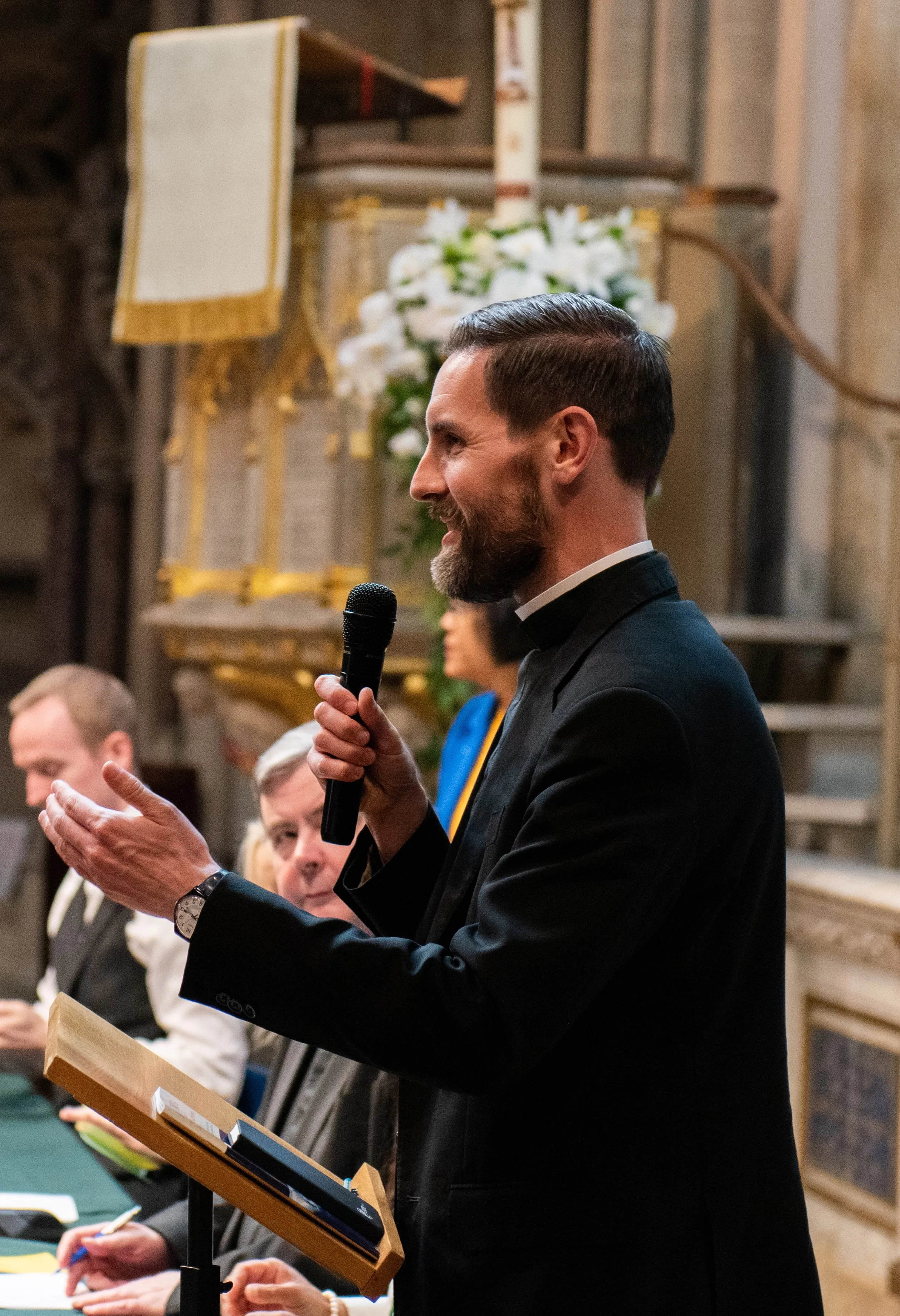
There are also Christian leaders who acknowledge the potential benefits of AI tools. Father Michael Baggot, a professor at the Pontifical Athenaeum Regina Apostolorum in Rome, remembers how difficult it was to dive into Catholicism at the beginning of his religious journey. He now serves as an advisor to Magisterium AI, a chatbot app designed to answer questions about Catholicism and faith. “It is accessible 24/7 in a way that no priest or professor is available, and provides very clear and concise summaries of topics that can be a bit confusing or difficult to approach,” he says.
But while Baggot sees clear use cases—such as translating the Bible into different languages—he has also grown disenchanted with the tech industry’s priority to accelerate AI tools regardless of the risks, particularly to children. He has taught courses about the dangers of AI companions and offered counsel to Megan Garcia, whose son, Sewell Setzer, died by suicide in 2024 after becoming romantically obsessed with a chatbot.
He is also troubled by the AI industry’s intention to displace workers. (Elon Musk, for example, has predicted that work will be rendered “optional” by AI.) “The church emphasizes that labor is important not only for what it produces, but because of the process of interior growth and community ties that it fosters,” he says. “I don’t think it’s enough to simply throw money at [displaced workers] and to tell them to get out of the way so that the rest of society can move forward.”
Nina Lutz, a PhD student at the University of Washington, recently worked on a project in which she interviewed 40 faith leaders about their relationship with technology. She heard many concerns, especially about AI accelerationism. “This notion that we are going to invest everything into AI and push it through as fast as possible, a lot of religious stakeholders found that really concerning,” she says. “They felt as though religious and other communities were being left behind.”
Getting involved in policy
These concerns have led some Christian leaders to become active in public policy, urging politicians to enact AI guardrails. This puts them in opposition to Donald Trump and his tech allies, who urge a light-touch approach. In May, Evangelical leaders sent an open letter to Trump warning of the dangers of out-of-control artificial intelligence and of automating human labor. In November, a coalition of 43 faith leaders sent a letter to Congress, urging lawmakers not to preempt state AI laws in this year’s National Defense Authorization Act (NDAA). A separate coalition that included the National Association of Evangelicals urged the House to rein in AI chatbots.
Chris MacKenzie, vice president of communications at the Americans for Responsible Innovation, says that the mission of his AI safety-focused nonprofit has been boosted by the outspokenness of faith leaders. “Some members of Congress, especially on the right, are really guided by their faith,” he says. “So faith leaders have a real impact in speaking to those people.”
Michael Toscano, at the Institute for Family Studies, has embarked on a similar mission. He co-runs the Faith Family Technology network, a weekly convening of public policy authors, technologists, academics, and religious leaders of many faiths, in an attempt to shape AI’s present and future. “Our basic view that an attempt to develop artificial intelligence without reference to the wisdom of religious communities is doomed to create something that will not be good for people,” he says.
The network has exerted its influence in major AI policy battles this year. Members wrote and circulated letters from faith leaders criticizing preemption efforts; backchanneled with the team behind the podcast Steve Bannon’s War Room, a major voice against the AI moratorium from the GOP’s right flank; and put together a policy working group that shaped the final text of Josh Hawley’s AI companions bill.
Brad Littlejohn, the network’s co-leader, says that an increasing number of conservative Christians are now realizing that they are not in alignment with the Trump administration’s accelerationist approach to AI. And because they make up such a large demographic in the U.S., their influence could undermine politicians’ efforts to push forward AI without any guardrails in the coming years. “Before, they really cared that Trump won the battle against censorship. But it wasn’t obvious to people that the battle over censorship wasn’t the big battle,” he says. “The really big battle was coming over AI.”
The post How Christian Leaders Are Challenging the AI Boom appeared first on TIME.