Times Insider explains who we are and what we do, and delivers behind-the-scenes insights into how our journalism comes together.
It was President Trump’s first day back in office when he made it clear that there would be substantial changes to the Justice Department.
Not long after, his administration removed safeguards meant to protect the department from political influence; division heads were directed to abandon a number of cases, from white-collar fraud to investigations into potential terrorist attacks; ethics rules were openly ignored.
More than 200 lawyers have been fired, and thousands more have resigned.
“These were career attorneys who normally work from administration to administration,” said Emily Bazelon, a staff writer at The New York Times Magazine who reports on law. “They pride themselves on being nonpartisan.”
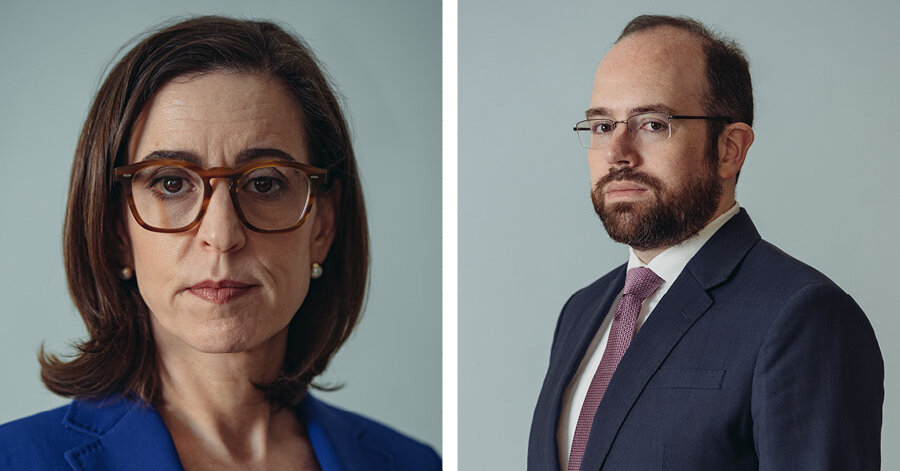
Hoping to understand what was happening inside a tumultuous time for the department, Ms. Bazelon teamed up with Rachel Poser, an editor for the magazine. The pair interviewed more than 60 Justice Department attorneys who were fired or had recently resigned. Their investigation appeared in The Times Magazine last month as an oral history, with the lawyers’ perspectives beginning on Inauguration Day.
In an interview with Times Insider, Ms. Bazelon and Ms. Poser discussed how they got dozens of sources to open up, and why their stories matter. This interview has been condensed and edited.
What were the unique challenges of reporting this story?
EMILY BAZELON: It’s really important for the standards of The New York Times, for credibility, that we get people to be on the record. At the same time, we were hungry for the kind of information and detail that sometimes people don’t feel comfortable sharing. Lawyers have lots of concern about attorney-client privilege and confidentiality. And career attorneys at the Justice Department are mostly trained not to talk to the press. Even though these people had left, old habits die hard. Some people were concerned about retaliation, understandably.
RACHEL POSER: D.O.J. lawyers tend to speak with a lot of legal jargon, referencing the statutes they enforced by number, using acronyms. They were used to being in the weeds. So we thought a lot about how to ask our questions to elicit more plain-spokenness and clearer statements about the big picture.
Why do you think so many attorneys ultimately agreed to go on record?
POSER: I heard again and again: “I’ve worked in government for 10, 20, 30 years. I’ve never spoken to a reporter. But I just feel so alarmed by what’s happening.” Also, I think there was safety in numbers. Once we got a certain group of people on the record, it was easier to get others to sign on.
BAZELON: This was only going to work as a collective piece, a kind of Greek chorus. For some people, it was a level of attention that felt OK to them. Whereas something that was individually spotlighting them, they wouldn’t have been comfortable with.
You spoke with dozens and dozens of sources. How did you figure out whose voices to use?
POSER: We wanted to give readers a mix of more detail about things that had already made headlines at the time and new, on-the-ground material.
Trump Administration: Live Updates
Updated
- The Justice Department sues Illinois over a law limiting immigration enforcement.
- Trump administration orders nearly 30 U.S. ambassadors to leave their posts.
- White House invitees are asked about donations to Trump’s ballroom.
BAZELON: We took our first wave of 20 or 30 interviews as a way of figuring out what to cover. There were certain news events that we knew people would talk about, like Trump pardoning all of the Jan. 6 rioters on his first day. Or Pam Bondi issuing this flurry of memos, which one of our interview subjects memorably called a “mixtape.”
You got pushback from the Justice Department and the White House. During your reporting, one department spokeswoman called the story a “collection of recycled, debunked hearsay from disgruntled former employees.” How much credence did you give that accusation?
POSER: It was definitely on our mind. We corroborated all of the stories that we heard from these lawyers with their colleagues. We looked at court documents and contemporaneous notes. We were aware that some of these people have personal reasons for criticizing the administration, which is why we wanted to double- and triple-check what they were saying.
BAZELON: One of the things we thought we could do by gathering the experiences of 60 people, and quoting many of them, was to address the natural skepticism we’d all have if just one person were to have had this bad experience.
POSER: And they were spread across this vast organization in different offices, and you’re hearing some of the same themes come up again and again.
Why do you think this story is important for readers?
BAZELON: The Justice Department is the most powerful law enforcement agency in the country and one of the most powerful in the world. And it is transforming in front of our eyes. Law is a dense, kind of stubbornly alienating topic for many people. It has a thicket of rules attached to it. So it can be easier to try not to pay attention to it. But it matters a great deal to people’s lives.
One example is a shift of a lot of F.B.I. and Justice Department resources toward immigration cases. That means those people are being taken away from national security work or counterterrorism or white-collar crime. We wanted to help people understand what that means, what that looks like from the inside.
POSER: We were trying to get beyond knee-jerk partisan reactions to the things that were happening and trying to help the people who worked through both Republican and Democratic administrations articulate what felt so different to them about this than anything they’d seen before.
The post Untangling a Year of Upheaval Inside the Justice Department appeared first on New York Times.