Jane Griffin, 71, knew that her husband was dying — he had been living with Lewy body dementia for more than a decade. But she didn’t anticipate how losing him this April would affect her.
Something small, like seeing one of his favorite foods at the grocery, could “send me on a downhill spiral,” Ms. Griffin said.
She would feel unexpectedly tense up, her heart racing as a wave of emotions washed over her. “Nobody could have prepared me for this feeling of extreme anxiousness,” said Ms. Griffin, who lives in Arizona.
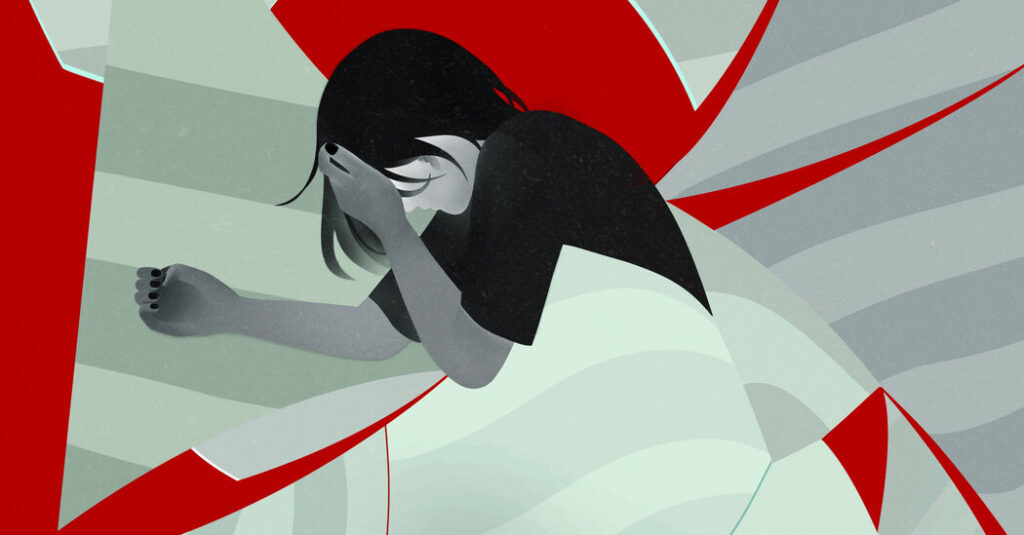
She was having what some researchers call a “grief attack,” a term that has been used for years to describe a sudden surge of overwhelming anguish rooted in grief. It has other names as well: pangs of grief, grief spasms or loss-related panic, to list a few. While the phenomenon is familiar to therapists and many who have lost a loved one, grief experts are now studying the specific symptoms and circumstances associated with grief attacks and attempting to rate their severity, which can range from uncomfortable to debilitating.
“It’s like a panic attack, which — I can personally attest — are horrible, but with the deepest grief on top of it, and all of those symptoms hitting you at the same time,” said Sherman Lee, an associate professor of psychology at Christopher Newport University in Newport News, Va. “It is really a fascinating phenomenon that really shakes you to the core if you ever experience one.”
What does a grief attack look like?
Dr. Lee is the co-author of a study published in November that surveyed 247 bereaved adults who said they had experienced grief attacks, nearly half of them once or twice a day.
The study found that grief attacks often presented through panic attack symptoms, such as shaking, sweating, numbness and dizziness. They were also accompanied by any of three aspects of grief: yearning, despair or a breakdown in coherent thinking.
Grief attacks can strike at any time. They might be precipitated by something that evokes memories of a loved one, said Robert A. Neimeyer, the director of the Portland Institute for Loss and Transition in Oregon and Dr. Lee’s co-author. But more commonly, Dr. Neimeyer said, they arise unexpectedly during quieter times at home: “Something regarding the loss just comes to us and — boom — the floodgates open.”
Grief attacks are especially concerning, Dr. Neimeyer said, if they put someone in physical danger (for example if someone experienced one while driving) or if the grief attacks last too long, fail to decrease over time or interfere with a person’s ability to function in daily life.
In less severe cases, while grief attacks can be difficult and unpleasant in the moment, they generally pass quickly and can even have some positive benefits.
How can grief attacks be a good thing?
Therese A. Rando, a clinical psychologist at the Institute for the Study and Treatment of Loss in Warwick, R.I., said grief attacks were a common and potentially therapeutic part of the grief process.
If you have been suppressing your grief over a loved one’s death, for example, a grief attack could make you face “the reality that they are gone,” Dr. Rando said. And if a grief attack brings back memories of a loved one, it might prompt you to reflect upon different aspects of that loss. For example, if parents are coming upon the year their child would have graduated from high school, they might need to mourn that milestone.
Dr. Rando, who lost both of her parents when she was a teenager, said that she hasn’t had a grief attack in decades, but has occasionally experienced surges of grief without panic symptoms. Last December, while listening to Judy Garland sing “Have Yourself a Merry Little Christmas,” she broke down in tears thinking of her parents.
It felt cathartic to have “a moment of real sadness for the fact that I miss these two extraordinary people who I was robbed of so young,” she said. “You never totally get over a loss.”
What are some coping strategies?
Dealing with a grief attack is similar in some ways to addressing a panic attack, the experts said. Breathing slowly from the belly can help. So can repetitive physical movements like stomping your feet.
Linita E. Mathew, a guidance counselor in Calgary who has written two books about grief, said she had grief attacks frequently after her father died nine years ago.
“I would have to run to the washroom because I thought I was going to vomit at any second,” she said. Holding her hands under cold running water helped.
In addition, “my eyes would shift back and forth,” she said, “like my eyeballs were trembling or shaking.” Later, she discovered that if she focused on picture of her father, her eyes would steady.
Given that grief attacks can be connected with certain triggers like a loved one’s belongings, it’s also important to develop coping skills that gradually expose us to those items, so that their power diminishes, Dr. Neimeyer said.
And oftentimes, he added, we need to find ways to continue showing our love for those who have died, even in their absence.
The goal is not to move on, “but to find a way of holding on differently,” he said.
Christina Caron is a Times reporter covering mental health.
The post What Is a Grief Attack? appeared first on New York Times.