A congressional panel examining January’s fatal midair collision between an Army Black Hawk helicopter and an American Airlines regional jet found fault with the military’s procedures for operating in the airspace around D.C., according to a report issued Monday.
The bipartisan review, led by Reps. William Timmons (R-South Carolina) and Suhas Subramanyam (D-Virginia) of the House Oversight subcommittee on Military and Foreign Affairs, reflects a growing concern with the military’s tendency to fly aircraft in congested areas without transmitting their location data and, in the case of Reagan National Airport, without having the proper training to be fully aware of the region’s complex airspace.
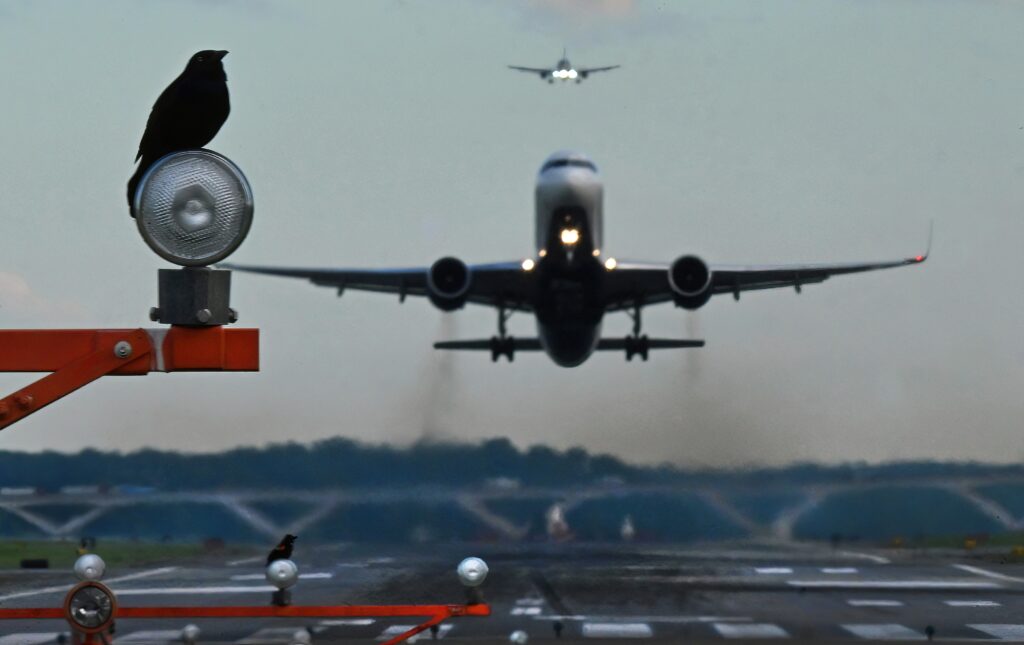
The report also highlights a close call on May 1, when two commercial jets were directed to abort their landing approaches at National Airport to avoid military traffic landing at the Pentagon’s helipad.
Taken together, the report says, these incidents exposed “significant lapses in both operational judgment and coordination between military and civilian aviation authorities” and “systemic vulnerabilities in how military flights are coordinated in this highly regulated and sensitive airspace.”
Lawmakers have asked the Pentagon’s inspector general to review how military aircraft operate in civilian-controlled airspace and what coordination mechanisms are in place to ensure appropriate deconfliction.
The Army did not immediately respond to a request for comment on the new report.
The Jan. 29 collision over the Potomac River claimed 67 lives, including the three-person crew operating the Black Hawk. Last week, the federal government accepted liability for the disaster, placing fault with the Army and the air traffic controllers involved.
In the months since the crash, the FAA has closed the helicopter route along the eastern bank of the Potomac that intersected with the regional jet’s landing path and limited access to other routes. After the May 1 close call, the military halted use of the Pentagon helipad.
The Army’s 12th Aviation Battalion, the unit involved in the January collision, had used the river routes and the Pentagon’s helipad when training to evacuate the nation’s leaders in the event of an attack on the national capital region. It has not been able to fully train for its mission since the routes and helipad were closed.
Multiple federal entities continue to look at how the airspace around National Airport is managed. Beyond the commercial aircraft that fly into the relatively small airport, several federal agencies — including the military, the National Park Service and federal law enforcement — operate aircraft around the facility.
In August, at the request of Senate leaders, the Transportation Department’s inspector general launched an audit of the FAA’s oversight of the airspace around National Airport. As part of its work, the inspector general’s office will examine why the military and other users of the airspace were allowed to operate without technology that broadcast their position to other aircraft.
A report from the National Transportation Safety Board will be the official record. It is expected within weeks.
The post Congressional probe of DCA collision faults Army, seeks Pentagon review appeared first on Washington Post.