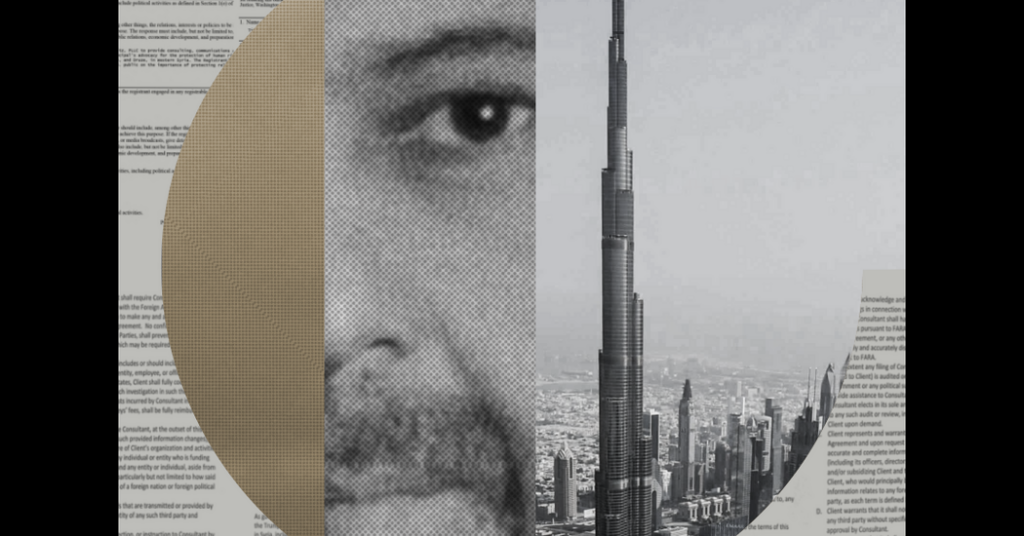
The apartments at the Four Seasons in Moscow offer living rooms with crystal chandeliers, views of the Kremlin and access to a concierge ready to book anything from Bolshoi Ballet premieres to private jets.
The residences, topping out at $13,000 a week, are billed as “perfect for family gatherings, cocktail parties and business events.”
Or perhaps, in the case of some of the world’s most-wanted war criminals, for a five-star beginning to life in exile.
For decades, President Bashar al-Assad of Syria and his allies tortured and disappeared hundreds of thousands of people. With Russian air power, they waged a 13-year war to suppress a popular uprising.
But in December 2024, a whirlwind rebel offensive sent Mr. al-Assad and his innermost circle fleeing to Russia, where they regrouped at one of Moscow’s swankiest addresses. The Russian authorities wanted them in all one place for security surveillance, according to witnesses and acquaintances of those present.
Maher al-Assad, 58, Bashar’s brother and the head of Syria’s long-feared shock troops, the Fourth Armored Division, was spotted by one ex-official at the hotel gym muttering about “the disgrace.” Others pondered their future over the breakfast spreads, three members of the regime’s hotel entourage recalled.
A New York Times investigation has located many of the top-ranking government and military figures linked to the deadliest chapters of Syria’s recent history — including scientists who developed chemical weapons and spy chiefs accused of torture — and uncovered new details of their current circumstances and recent pursuits.
The Times sought to understand the fate of 55 former regime leaders who disappeared when Mr. al-Assad fell from power, and found that many are living large or lying low in their first year of exile, and almost all appear to have evaded justice.
There have been extravagant birthday parties for the Assads’ daughters at a Moscow villa and on a Dubai yacht, according to relatives, friends and social media posts. Former top spymaster Ali Mamlouk, 79, two people close to him say, lives in a Moscow apartment on Russia’s dime and is staying out of sight, declining to see most visitors. Ghassan Bilal, 59, considered a kingpin in the regime’s drug empire, is in Moscow too but supports his family’s comfortable lifestyle abroad, from Spain to Dubai, three fellow ex-officers said.
Many Assad henchmen had a less cushy landing. They bribed their way onto crowded cargo planes flying to Moscow, and were herded into military accommodations. Jamil Hassan, 73, the air force intelligence director accused of leading the systemic torture and execution of prisoners, was among them, according to three people who say they have met with him since.
Some scattered beyond Russia, to the United Arab Emirates and Lebanon. Others never left Syria and are lying low there.
Meanwhile, the victims of more than five decades of Assad family rule are left to wonder where the people behind some of this century’s worst atrocities are — and whether they will ever face justice.
The 55 people examined by The Times were men with immense power but limited public profiles. They had decades to perfect the art of obscuring their identities with fake names and purchased passports. All are under international sanctions; several face international arrest warrants.
To fill in the many blanks about them, we searched abandoned regime villas, scoured the open web and consulted Syrian activists and lawyers hunting down their former oppressors. We interviewed international law enforcement and ex-regime figures. In some cases, we confronted them face to face.
Our reporting effort identified the whereabouts of half these 55 enforcers. We found only one who had been detained. Others have gone dark or left little trace.
Nearly all those interviewed spoke on the condition of anonymity because they were involved in confidential efforts to pursue justice or were worried about retaliation, from former regime figures or from those who suffered at their hands.
The lawyers and activists laboring to find Assad-era perpetrators and hold them to account say they are stymied by a lack of political will. The new Syrian government is focused on cementing control of the country. And some foreign governments, they say, are reluctant to turn over old allies or prefer to use the fugitives as intelligence sources.
Shopping Sprees and Soviet Housing
For some members of the regime elite, the first months in Moscow looked like a kind of exile tourism.
Jamal Younes, 63, accused of giving direct orders to fire on unarmed protesters, was seen riding a scooter around Russia’s national stadium in a video that was posted online and confirmed as authentic by acquaintances from his hometown.
The former defense minister, Ali Abbas, 64, and military chief of staff, Abdul Karim Ibrahim, 62, both accused of torture and sexual violence during the Syrian uprising, were spotted by an old acquaintance browsing Moscow’s gleaming, eight-story European Mall.
Kifah Moulhem, 64, according to two people in touch with him, lives in a large Moscow villa with his brother-in-law, Ghassan Ismail, 65. The two former intelligence generals are accused of overseeing the torture and detention of protesters.
Mr. Moulhem was one of the few officials The Times was able to reach for comment. He sent a lengthy rebuttal to accusations of crimes against humanity. Any Assad regime abuses, he argued, paled in comparison to crimes committed by Syria’s new leaders, who led an Al Qaeda affiliate before taking a more moderate path.
“This is not about hiding the crimes or violations of the former regime — mention these crimes truthfully and fairly — but do you really believe that the former regime can be compared to Al Qaeda?” he wrote, adding that documented cases of mass torture and execution in prisons like Sednaya were faked.
Asked to describe his life in Russia, Mr. Moulhem said only: “We live as normal citizens.”
For people long accustomed to privilege and power, Russian exile has its indignities.
Officials who once brutally silenced their opponents are now the ones being muzzled. Russia demanded strict prohibitions on using social media or speaking in public, several ex-officials and their relatives said. Security protocols strictly curtail the movements of many top officials, they said.
The Russian authorities did not respond to questions about Assad officials living in the country.
An even more humbling new reality began for more than 1,200 Syrian officers when they scrambled — and sometimes paid bribes — to board Ilyushin jets headed to Moscow from a Russian base on Syria’s coast. Upon arrival, people who have spoken to them said, the officers filled out applications for temporary asylum that left many feeling their status in Russia was precarious.
These Syrian officers did not get the Four Seasons treatment. They were sent to Soviet-era facilities, often with dormitory-like accommodations, with three to four people per room, four former officers said. They grumbled about Russian food and regimented meal times.
While thrown together, they sometimes settled old scores.
In a widely discussed incident at one of these Moscow accommodations, some resentful officers beat and spit on Asef al-Deker, 60, a military police commander accused of overseeing the torture of prisoners — and by many of his own subordinates of extortion. The story, described by the four former officers, was also confirmed by an aide still in touch with Mr. al-Deker.
Weeks into exile, several people in touch with the officers said, the officers were given a choice: Move out and live freely with your own money, or remain on state subsidies and be distributed across Russia. Some who chose the latter were said to have ended up as far as Siberia.
Many top commanders, fellow regime figures said, secured their own, often luxurious, apartments.
One who initially did not was Aous Aslan, 67, an army major general suspected of overseeing mass killings and violent crackdowns against civilians.
He was sent to Kazan, about 450 miles east of Moscow, according to three friends and a fellow officer who said he told them he had no savings to rely on.
But the humbling life on offer soon triggered an about-face, they said, and months later, Mr. Aslan reappeared in a multimillion-dollar apartment in Moscow.
“He tried to play poor,” one friend in Damascus joked. “But he couldn’t keep it up. Now he’s living his best life.”
Gulf State Spending
Several regime insiders said the United Arab Emirates is their preferred haven, because of its shared Arabic language, warm weather and upscale lifestyle.
Many top Syrian officials were on good terms with its autocratic leadership, which has been willing to host some of them, albeit with strings attached.
The Emirati authorities made fleeing Syrian leaders sign an agreement not to make any political statements, and also told them not to use social media or draw attention to themselves, according to two former Syrian officials who acquiesced.
Emirati officials did not respond to questions about Assad officials living in the country.
Among those The Times tracked to the Emirates is Mohammad al-Rahmoun, 68, a former interior minister and Air Force intelligence head accused of overseeing mass detentions and extrajudicial killings.
We spoke to three people who said they had met with Mr. al-Rahmoun in the United Arab Emirates. Shortly after the regime fell, social media accounts verified by The Times also showed his daughter selling jewelry and his son starting a luxury car repair shop in Dubai.
Several prominent businessmen involved with managing the Assad family’s wealth live there freely, frequenting luxury restaurants and cafes, according to several Syrian businessmen and former officials.
But Emirati officials have asked top government and military figures not to stay, those same people said — though they said these former officials were still able to invest in the country.
One such case is the former general Ghassan Bilal, according to two fellow officers and a family friend. U.S. and European sanctions accuse him of facilitating the trafficking of captagon, a highly addictive amphetamine estimated to have earned more than $5 billion for the regime.
In Damascus, The Times visited two sprawling properties that neighbors said belonged to Mr. Bilal — one featured swimming pools, a Turkish hamam, an outdoor cinema and family photos on the walls.
France issued a warrant for Mr. Bilal’s arrest in August, accusing him and six other officials of ordering the targeting of civilians during a brutal siege of the central city of Homs in 2012. Investigators also accused them of orchestrating the 2012 bombing that killed the French photographer Rémi Ochlik and the American war correspondent Marie Colvin.
Nevertheless, two fellow officers said, the ex-general has invested in Emirati real estate since the regime’s fall, including in two villas on The Palm, a man-made archipelago dotted with glitzy hotels and residences.
His wife and children live part of the year in Spain, where the family owns property, according to the two fellow officers and two family friends, who said the family has maintained this arrangement for many years. Mr. Bilal’s daughter attends a private university north of Madrid, according to the family friends, appears to post on a social media account about her studies there and was seen by a Times journalist who visited the campus.
The Ministry of Foreign Affairs in Spain declined to comment, saying it “cannot provide data on specific individuals.”
Another general, Yassin Dahi, 64, has run into health and financial problems in Dubai, according to one of his daughters.
Mr. Dahi, who retired before the regime fell, headed the Military Intelligence Directorate’s Branch 235 in Damascus — more commonly known among Syrians as the dreaded “Palestine Branch,” notorious for systematic torture and forced disappearances.
Mr. Dahi waited two days for a Russian evacuation flight but, suffering from a heart condition and fearing for his safety, instead joined his family in Dubai on a tourist visa that has now expired, one of his daughters told us.
Fearing deportation, he has been unable to seek treatment at any hospital and is “close to running out of money,” she said.
Mr. Dahi is afraid to return to Syria, she said, in part because a son-in-law, an engineer at the presidential palace, was killed in an apparent act of vigilante justice.
Chasing Ghosts
There is another category of former regime officials: those who never fled. Some are in hiding. At least one is in custody. Others are hidden in plain sight.
One general we were told is in Syria is Issam Hallaq. He oversaw Syria’s air force from 2010 to October 2012, the period when the Assad regime began using airstrikes against its own people to suppress revolt.
After the regime’s fall, Mr. Hallaq and several retired officers formed a veterans’ committee and sought to work with Syria’s new leaders. They offered their technical knowledge on subjects such as tank and aircraft maintenance to its nascent ministry of defense, according to three fellow officers.
The collaboration was short-lived. Months later, they said, the new government decided to only work with — and provide pensions for — officers who retired before the start of the country’s popular uprising in 2011.
The officers said Mr. Hallaq is now destitute and stays out of sight in his Damascus apartment, fearing he may be arrested. He declined, through an intermediary, to be interviewed.
Of the 55 regime figures we investigated, we discovered only one who appeared to have been detained: Tahir Khalil, 70, who as former head of the artillery and missile directorate oversaw chemical weapons and other strikes on civilian areas, according to the European Union.
For years, he was a ghost — his face and biographical details virtually unknown to the public. But we found his photo, date of birth and hometown in government personnel files.
Those findings led us to Safita, Mr. Khalil’s birthplace, about 90 miles northwest of Damascus. There, a local security official, who gave only his nom de guerre, said Mr. Khali had been detained in February after originally trying to escape notice by passing himself off as a harmless retiree.
The official shared a photo of Mr. Khalil in custody and other corroborating details, and said he is being held in Damascus.
The Syrian government has not publicized Mr. Khalil’s detention — a sign perhaps that it is still wrestling with how to handle such cases.
A Clear Conscience
Nestled in the heart of a historic Damascus neighborhood, draped beneath flowering vines, is an elegant stone building familiar to many Syrians — it was a backdrop in a recent popular soap opera.
But few know it is also the home of Amr al-Armanazi, 81, the former director of the research center that developed Syria’s chemical weapons program. He retired in 2021, by all appearances comfortably.
He answered the door in his bathrobe, inviting a Times journalist into an apartment of marble floors draped with oriental rugs, ready to discuss anything from his life story to Syrian history — except the work that prompted 33 countries to ban him from entry.
According to American, European, and British sanctions, Mr. al-Armanazi played a key role in the production of chemical weapons deployed against Syrian civilians.
Mr. al-Armanazi has submitted to questioning by the U.N. agency responsible for enforcing the international ban on chemical weapons, according to two U.N. investigators who were told of the session. But they said he has not been questioned about potential war crimes.
It is unclear if the Syrian authorities have questioned Mr. al-Armanazi, who joined the board of trustees of a Syrian university in July, according to a Facebook post by the university.
Mr. al-Armanazi is among several cases of significant Assad-era officials who appear to be free in Syria, with no official clarification as to whether they have been exonerated or have made deals to cooperate in exchange for leniency.
The Syrian information ministry said the government has not offered immunity to regime figures. It did not respond to multiple requests for more information about the status of high-ranking regime figures or investigations into their crimes.
Two Syrian officials, who insisted on anonymity because they are not authorized to speak publicly on behalf of the government, said the government’s priority is to bring to justice people who ordered or committed attacks, not scientists who enabled them.
But Mr. al-Armanazi “was far more than a bureaucrat,” said Nidal Shikhani, director of the Chemical Violations Documentation Center of Syria as well as Same Justice, which researches human rights abuses. He said Mr. al-Armanazi had been the research center’s “chief architect — of both its scientific aspirations and its most sinister legacies.”
During two visits to his home, the 81-year-old repeatedly refused to speak about this past. But he insisted on making a point that nearly every former regime official reached by The Times has made.
His conscience, he said, was clear.
Additional reporting by José Antonio Bautista García and Devon Lum. Muhsen AlMustafa contributed research. Aaron Byrd contributed motion graphics production.
Christiaan Triebert is a Times reporter working on the Visual Investigations team, a group that combines traditional reporting with digital sleuthing and analysis of visual evidence to verify and source facts from around the world.
The post Assad’s Enforcers Brutalized Syria. Now They’re Living Large, Lying Low and Evading Justice. appeared first on New York Times.