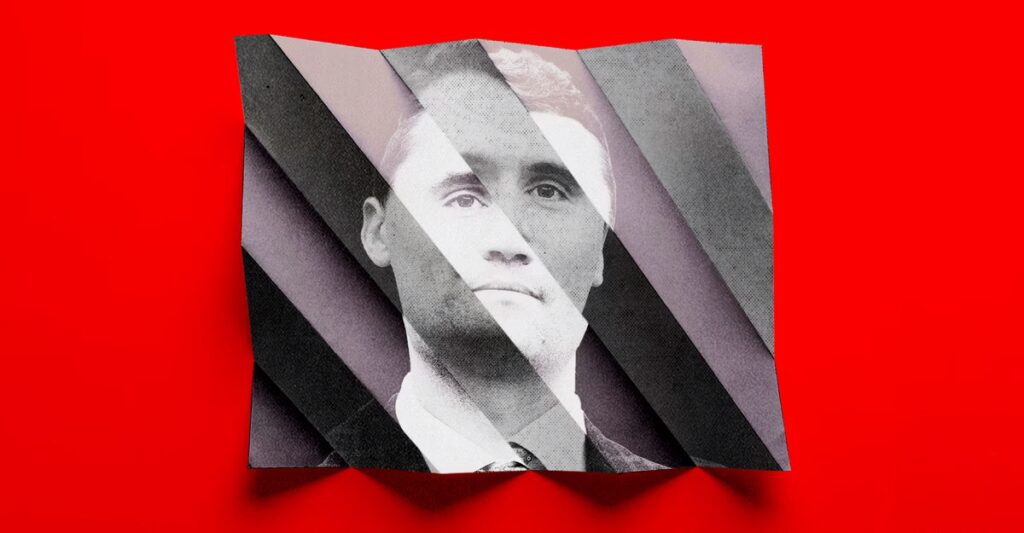
Charlie Kirk’s last book, Stop, in the Name of God, was released on the morning of December 9. By afternoon, it had jumped to No. 1 on Amazon and then sold out. On one hand, this should surprise no one. Kirk had a huge following even before his assassination made him, for many, a martyred saint and drove an online surge of both mourning and recrimination over insufficient mourning. On the other hand, this is a book about the Sabbath. Living authors of books investigating the day of rest, a small but select sodality, are probably feeling dizzy right now. I know I am. (Kirk seems to have read my book, The Sabbath World, and mentions me once.) The Sabbath is generally regarded as a topic of specialized interest. I can’t think of any other work of Sabbatarian theology that has attained instant best-seller status.
I should probably define my terms. Sabbatarianism is the doctrine of the Sabbath—the day of the week when, according to the Bible, humankind is commanded to rest, meaning, mostly, not to work. “Remember the Sabbath day, to keep it holy,” says the Fourth Commandment. Kirk began keeping the Sabbath in 2021. His reasons, he explains in the book, had partly to do with mental hygiene and partly to do with God.
Kirk obviously didn’t mean for a book about the Sabbath to comprise his last words. But his turn toward the Sabbath took him in an unexpected direction, and the book contains evidence of genuine spiritual struggle, which is the best testament a man of faith can leave. Americans knew Kirk as a political figure—the right-wing prodigy who had co-founded the conservative youth group Turning Point USA at the age of 18 and was a close adviser to President Donald Trump. But he was moving closer to Christianity when he died. Not that he wasn’t plenty Christian already: Growing up, he went to church, attended a Christian academy, and accepted Jesus as his personal savior in the fifth grade. But Kirk renewed his spiritual journey in 2019 when he gave a sermon at an evangelical church at the pastor’s request. When that pastor—who became Kirk’s pastor—and others resisted church lockdowns during the coronavirus pandemic, Kirk mobilized them for political action. TPUSA already had a spin-off, the political-advocacy group Turning Point Action; in 2021, Kirk created TPUSA Faith, which is meant to “unite the Church around primary doctrine and eliminate wokeism from the American pulpit,” in the words of its website.
All of this additional activity took a toll on Kirk. As he recalls in the book, he was supervising 300 employees and had to meet a fundraising goal of $50 million a year, even as he was spending three hours a day on his radio program, The Charlie Kirk Show. Pretty soon he was “fatigued, tired, and spiritually confused.” A pastor advised him to start keeping the Sabbath. Kirk had some idea of what that entailed because a close friend and mentor, Dennis Prager, who was raised an Orthodox Jew, often talked about Shabbat, the Jewish Sabbath, on his show—Kirk remembers him calling it “the best part of his week.” Kirk had “Shabbat envy,” he writes, but he doubted that he could solve the problem of having too much to do by doing nothing one day a week. Eventually, though, he gave it a try. He turned off his phone and kept it off from Friday night to Saturday night, putting himself out of range of the daily barrage of work messages.
Americans, religious or not, kept the Sabbath for centuries. Blue laws, or Sunday-closing mandates that decreed a 24-hour pause from most work and commerce, were a legacy of the Puritans, who believed in keeping the Sabbath as stringently as possible. Over the past century or so, however, Sunday has come to mean mainly football and kids’ soccer and shopping, and the faithful adding church into the mix. A small minority, including the Amish, keep an old-fashioned Sabbath, putting all work on pause. Others, mainly observant Jews and members of Seventh-Day churches, such as the Adventists, do too, albeit on Saturday.
[Read: Charlie Kirk and the third ‘Great Awakening’]
“The first Saturday was extremely challenging,” Kirk writes, adding a bit later, “What if President Trump calls me and my phone is off?” But before long, he found relief and spiritual reorientation. He was giving up control, and that was a blessing: “The Sabbath calls you to lay down your illusion of self-sufficiency and remember that your life is not your own—it is a gift.”
For the work of a nonhistorian, Stop, in the Name of God is a serious book. I must admit I hadn’t expected that, for two reasons. First, as Kirk says, he was a very busy man. (No writing partner is credited in the book.) Second, he was becoming a popular evangelist, a 21st-century Billy Graham, and I came to his book expecting a conversion narrative and some avuncular advice. Kirk gives advice, but it is not avuncular, and the conversion narrative takes up only three pages. The bulk of his book is apologetics in the classical sense: It mounts a theological argument in defense of a religious doctrine. Kirk does not talk down to the reader, and that is a feat.
The Sabbath goes back thousands of years and is a cornerstone of Western civilization. The rhythm in which six days of work were followed by one day of rest produced basic units of time such as the seven-day week and, ultimately, the weekend, along with foundational principles such as universal equality. After all, when the Bible declares that everyone has a right not to work, it is contending that all human beings have worth beyond their social status and productive function. That was a radical claim to make in an ancient world built on slave labor. In short, as soon you start talking about the Sabbath, you find yourself wrestling with big concepts.
Kirk has two main theses in his book, and expresses each in a very different tone. One celebrates the beauty and moral uplift of the Sabbath; the other denounces the immorality of the godless in the fiery manner of a tent-revival preacher. The inspirational Kirk dwells lovingly on God’s rest at the end of Creation and compares the Sabbath to a “cathedral in time,” echoing the rabbi and philosopher Abraham Joshua Heschel’s famous description of the Sabbath as “a palace in time.” (Kirk quotes Heschel often.) The Sabbath provides what Kirk calls “the moral architecture of a free society.” It has a countercultural force. Keeping it “is a spiritual act of civil disobedience—an embodied rejection of any system that commodifies the human being.”
Kirk’s skepticism of the marketization of every aspect of life will probably have a broad appeal. But much more often, we hear from the divisive Kirk. This Kirk thunders against the false gods of modernity and cites the Bible to support his hard-right critique of liberalism. Among the supposedly idolatrous cults of our time are atheism, anti-racism (“societal deconstruction, not personal redemption”), climate-change activism (“a millenarian movement, complete with saints” such as Greta Thunberg), and the credulous worship of science: “What motivates someone to bend the knee at the altar of their ninth booster shot?” The link between Kirk’s Sabbath experience and his attacks on his bêtes noires, he says, is humility: The Sabbath demands it, and he thinks that liberals lack it. They believe that they can remake God’s world in their own image.
[Read: What Charlie Kirk told me about his legacy]
Kirk isn’t particularly humble himself. Perhaps speaking in the harsh style of the prophets gave him an unearned moral certitude. He doesn’t make reasoned arguments to justify equating heathens and leftish social movements; he just throws around pagan metaphors. Nor does he try very hard to understand activists’ worldviews before condemning them, which would have been the intellectually honest move.
The point that I suspect will really resonate with readers, though, is also the most nonpartisan. If one sentiment unites the left and right in the United States today, it is that technology exercises a tyrannical control over our habits of mind. You don’t have to be religious to understand the discomfort—or allure—of spending a day a week without a cellphone. This is why a secular “tech sabbath” has gained cultural currency over the past decade. The Sabbath can promote physical as well as spiritual healing, Kirk says. It can interrupt the cycle of social-media addiction, in which dopamine highs meant to keep us scrolling are followed by lows, making us anxious or depressed. “The Sabbath is a living dopamine fast,” he writes.
The day of rest Kirk proposes is optional. One reason Americans took such a dislike to the day in the past is that they had no choice but to keep it. But I suspect Kirk had another motive for insisting on a voluntary Sabbath, rather than one mandated by law: He didn’t want to be perceived as advocating a Jewish practice. I am not accusing him of having been anti-Semitic. A core tenet of Christian theology holds that Jesus liberated Christians from Mosaic law, superseding its picayune rules; in traditional Christian-supremacist terms, the new faith represented the fulfillment of Judaism, the mother religion. The doctrine is actually called “supersessionism.” In the Gospels, Jesus faults the Pharisees for insisting on a legalistic Sabbath. Yet the Sabbath “is not legalism—it is liberation,” writes Kirk.
From the beginning, Christians have argued about whether they were required to keep the Sabbath. Early Christians moved the rest day to Sunday and renamed it the Lord’s day. From the second century on, Christian leaders castigated those who clung stubbornly to a Saturday Sabbath, saying they “sabbatized” and “Judaized.” Kirk goes into all of this, and yet at the same time he skirts the darker side of the debate—its vitriolic language, its punitiveness. John Calvin, for example, railed against “the gross and carnal superstition of sabbatism.” And Martin Luther himself mocked Christian Sabbath observers, recommending that they also practice circumcision, since they were already behaving like Jews.
Kirk was clearly aware that he could be accused of “sabbatizing” himself. Yet he never fully explains his decision to keep the Sabbath on Saturday. He does not appear to have belonged to one of the Saturday Sabbath churches or had any Christian Sabbath community at all. He mostly defends his choice of day on the grounds that he loves the Jewish Sabbath—the lighting of the candles on Friday night, the songs welcoming the Sabbath bride, the lingering festive meal.
[Read: End the phone-based childhood now]
After this book came out, I began watching Kirk’s videos, and I found two Kirks in them, too. One scathingly ridiculed his political enemies. The other showed genuine warmth, even sweetness, when he talked about his wife and family and faith and, yes, the Sabbath. I’d like to think that the latter is the Kirk who dedicated his book to Dennis Prager, whose “life’s work brought me to honoring the Sabbath.” Maybe this is just me indulging in Jewish fantasies, but I imagine that Kirk declined to dispel the ambiguities surrounding his Saturday observance because he couldn’t. He understood that the aversion to the Jewish Sabbath is part of a larger Christian unease about Judaism itself, and he was loath to get caught up in it.
Do I think that Kirk wished he were Jewish? Definitely not. Could the fact that he essentially Judaized refute Candace Owens’s assertion that he was about to withdraw his support of Israel—which she went on to imply had abetted his murder? No again. Owens’s conspiracy theories are despicable, but Kirk’s affection for the Jewish Sabbath does not, by itself, prove anything: Lots of Christians have loved Judaism and disliked Jews; philo-Semitism is no safeguard against anti-Semitism.
Rightly or wrongly, though, I picture that kind of anti-Semite as unable to acknowledge that they don’t have all the answers. Kirk does acknowledge it. He can seem too sure of himself in this book, but sometimes a less cocky Kirk emerges. “So here I am—still a bit raw. Still tender about it,” he writes in one of the few passages that directly address his Saturday observance. “I honor Saturday as my day of rest, not because I believe it earns me righteousness, but because it reminds me that I’m not God.” We will never know what a lifetime of being reminded on a weekly basis that he is not God would have done for Kirk. This small, diffident moment is one more reason to mourn his death.
The post The Unifying Potential of Charlie Kirk’s Last Words appeared first on The Atlantic.