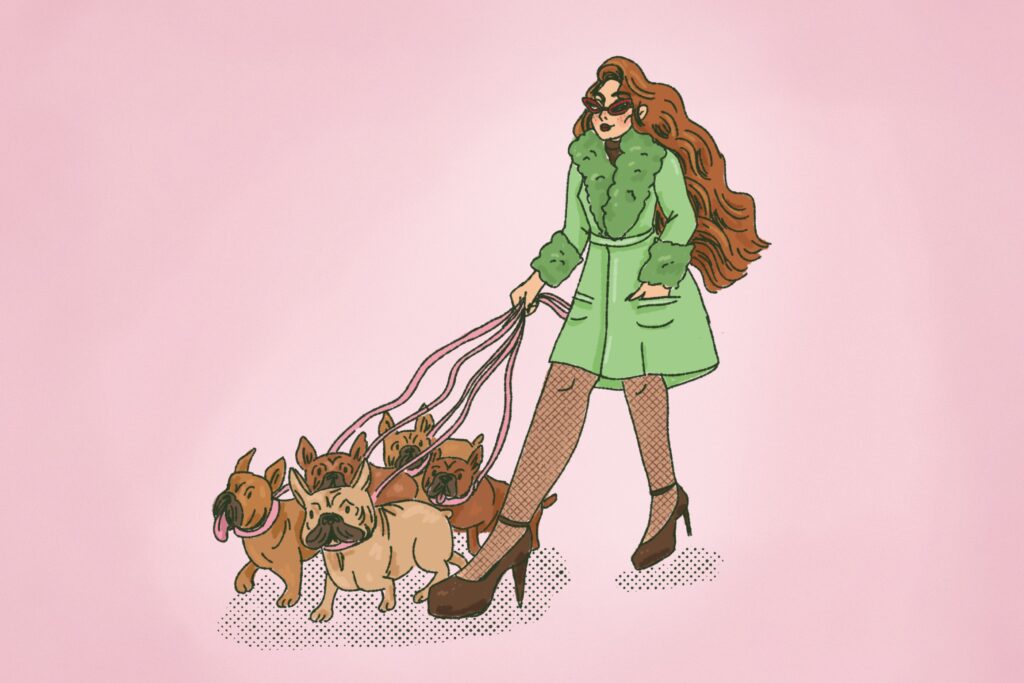
Six months ago, I purchased a French bulldog puppy from a breeder. While I was prepared for the $5,000 price tag, after six visits to the vet, two surgeries and multiple vet visits in the first year, next time I’ll try a different breed. How can I prevent this from happening again?
Last month I saw a 3-year-old female French bulldog that had — I kid you not — partial duplication of her back end, with three back legs and two vulvae. Her bone marrow was failing so she had no circulating white blood cells. Because we were worried about estrogen toxicity (from excessive ovarian tissue), we had to spay her, despite the high risk of infection. One of her legs had already been removed surgically, although she still couldn’t walk normally.
Just a few days later, while watching the Georgia vs. Mississippi State football game, I listened to commentators laugh as bulldog puppies tumbled around in the grass during a break. True, bulldog puppies are adorable and can have lovely personalities, but they suffer from what’s been called “torture breeding”: Breeding to select for pets with features that appeal to people, but that put animals at risk of painful or life-threatening illnesses. The illness could be the result of the features themselves or the effects of excessive inbreeding to select for those features. The daily presence of young adult Frenchies in our waiting room and wards that can’t breathe properly, regurgitate food, have skin and eye problems or issues with urination and defecation, or are neurologically abnormal has led vets and animal welfare rights organizations to request action from lawmakers to control breeding practices.
Why are flat-faced breeds so popular?
Flat-faced dogs and cats are known as brachycephalic breeds (from Greek brachys, meaning short). It’s been suggested that people are drawn to their infantile features, such as flat faces and wrinkly skin. This has combined with their convenient size, good-natured personalities and low exercise needs to make them increasingly popular. Media attention to celebrities’ ownership of such breeds (including the “dognapping” of Lady Gaga’s French bulldogs) has added to the craze. The French bulldog has been the most popular breed for three years running in the United States.
What’s the problem with flat-faced breeds?
Brachycephalic breeds often have serious health problems. One of the most common is a condition called brachycephalic obstructive airway syndrome (BOAS), which consists of the combination of narrow nostrils and windpipe, malformation of the larynx and an overlong soft palate. There’s no space for air to flow into the lungs — which is why these dogs snort when they exercise, snore while sleeping and may collapse with exertion due to lack of oxygen (a life-threatening situation). These breeds also often have other congenital problems. They are prone to sliding hiatal hernias, where the stomach slides through the diaphragm into the chest, leading to regurgitation (where undigested food moves back up the esophagus toward the mouth after eating). Affected dogs can inhale regurgitated food into their lungs, leading to serious pneumonia, which in turn is worsened by BOAS. Our neurology service is also inundated with French bulldogs that have back problems from slipped disks as well as other neurological issues.
Although the list of breed-associated health problems is long, popular breeds that have received attention for genetic health problems include dachshunds, Cavalier King Charles spaniels and Yorkshire terriers. For example, around 15 percent of dachshunds experience slipped disks during their life; when severe, this leads to pain, paralyzed back legs and emergency surgery. Cavalier King Charles spaniels are 20 times more likely than other breeds to develop a heart problem called mitral valve disease. They’re also prone to neurological problems. Yorkshire terriers are predisposed to portosystemic shunts — a condition that causes blood from the intestines to bypass the liver — leading to stunted growth, lethargy and neurological signs such as staring at walls and apparent blindness.
After paying a breeder thousands of dollars, owners of such dogs are then faced with thousands of dollars in vet bills, and possibly euthanasia. Owners can develop deep bonds with a pet in a matter of days after purchase and will go to any lengths to treat their pet rather than return it to the breeder, despite a dismal prognosis. A common story is the owner who bought one of the smallest and calmest dogs in the litter, attracted by its cuteness or temperament, without an understanding that its small size and quiet nature reflected an underlying congenital problem. One of the most distressing cases I ever managed was a sweet young English bulldog that, immediately after BOAS corrective surgery, regurgitated, aspirated and died on recovery from anesthesia. Fuming with anger, the owners left to bury their dog at home.
What’s being done to protect animals and consumers?
Several European countries now have regulations that restrict the breeding and sale of pets with “extreme conformational traits” exaggerated anatomical features such as very short legs, a very long body or a very flat face. For example, in Norway the breeding of Cavalier King Charles spaniels was banned in 2023. In the Netherlands, breeders are no longer allowed to issue pedigrees for brachycephalic dogs, including pugs and French and English bulldogs. This past March, citing concerns about welfare, members of the European Parliament proposed a ban on the breeding of dogs or cats with “excessive conformational traits,” as well as prohibition of the use of these animals in shows, exhibitions or competitions. In Germany, proposed bans on breeding dogs with skeletal abnormalities — including the country’s beloved dachshund — led to outrage from kennel clubs and breeders across the globe. Last year, state Rep. Ellen Read of New Hampshire introduced the first bill to ban the breeding and sale of brachycephalic dogs and cats in the United States. And in October 2024, the city of Ojai in Southern California voted to adopt a law that prohibits breeding of dogs and cats “with certain anatomical features likely to harm the animal or its offspring’s welfare.”
However, such laws leave room for interpretation surrounding what constitutes harmful anatomical features. They also anger devoted pet owners and don’t necessarily work; people just import dogs from places where legislation does not exist. Laws like these also don’t address other genetic health problems, such as cancer in golden retrievers and heart disease in Doberman pinschers.
Last month, Britain launched the Innate Health Assessment tool for breeders. Developed by Dan O’Neill, a professor at the Royal Veterinary College, it scores a dog based on favorable features (such as a high muzzle-to-head length ratio). If the score is high, the tool issues the breeder a free digital certificate that they can provide to potential buyers. The goal is to encourage people to breed dogs with healthy traits and to help potential owners make wise purchasing choices. If tools like this are successful, the bulldog mascot might live on — just with a longer snout, fewer facial wrinkles and longer legs.
If you want to reduce the chance of genetic problems, choose a pet that’s been bred for health, rather than appearance — or adopt a mutt. Every year in the United States, thousands of healthy pets are euthanized in shelters. If you want a purebred pup, the American Kennel Club has resources for breeders and buyers on responsible dog breeding. Your vet can also counsel you on breed-related disorders and provide advice on the right pet for your lifestyle.
Have questions about your pet’s behavior, health or other issues? Use this form to submit them to Dr. Sykes.
The post Ask a Vet: Is it ethical to buy a flat-faced dog? appeared first on Washington Post.