Dramatic readings of Charles Dickens’ “A Christmas Carol” have long been a feature of the holiday season, and Dickens himself performed the tale more than 100 times as he toured around Britain.
The readings, which Dickens began in 1853 in Birmingham, England, made him perhaps even more famous than his books, and eventually they were also highly lucrative. Sometimes thousands of would-be spectators were turned away, and there were reports of audience members fainting during the shows.
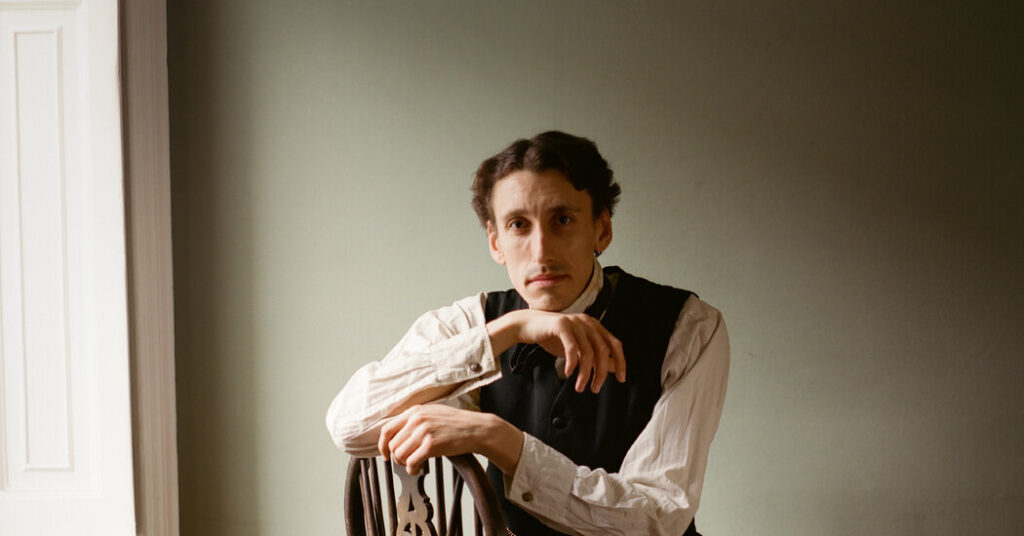
This month, the actor James Swanton has been invoking that Dickens spirit with his expressive recitations of “A Christmas Carol” at the Charles Dickens Museum, which is housed in the writer’s former central London home. And while Swanton’s performances may not cause the same level of swooning, he is finding delight in keeping alive Dickens’ tale — even if it has a gloomier undercurrent than contemporary audiences may realize.
“A Christmas Carol” is “a story of enormous melancholy,” Swanton said. “Which is something, as we grow older, that I think we all find is central to the Christmas experience.”
Dickens wrote “A Christmas Carol,” which was published in 1843, in response to mass child poverty in Britain, and part of his aim was to evoke a spirit of generosity, according to Lucinda Dickens Hawksley, a descendant of the writer who is also a patron of the museum. She said that Dickens, who grew up poor, had originally intended to write a pamphlet on the issue, but thought a novella would be more widely read. He based the character of Tiny Tim on his nephew, who was disabled and required costly medical treatment.
Anyone who could afford a book at that time would have been considered wealthy, and Dickens wanted readers to think, “Oh, my goodness. I’m quite like Ebenezer Scrooge myself,” Dickens Hawksley said. She added: “He wanted them to think, ‘What can I do to help other people? Why am I not helping those living in desperation?’”
Swanton has been giving performances at the museum since 2017. For the shows, he dresses in Dickensian-era clothing and uses different voices and physicalities for each character, much as the writer would have done. In “A Christmas Carol,” his props include a lantern and a heavy iron chain, which he occasionally slams around, often making audience members jump.
The effort can be intense, Swanton said, but it reflects how Dickens, in the last 15 years of his life, devoted himself to public readings with such fervor that it likely contributed to his declining health and early death.
“I don’t believe you can spare yourself if you’re going to commit to doing Dickens properly,” Swanton said. “You have to bring to it a little of the passion and the intensity that Dickens himself brought.”
Swanton, who frequently acts in gothic horror roles for film and television, said that this background pushed him to play up how “frightening” Dickens can be. “You have not only the ghosts, but you have moments where Scrooge is contemplating his own corpse lying on a bed,” he said.
That element of the story was important, too, he added: “We’re so often in danger of ‘A Christmas Carol’ becoming too much about turkeys and jolly, red-faced children and plum puddings.”
The actor has also been performing “The Haunted Man” and “The Signal-Man” this month at the museum — two Dickens ghost stories that Swanton chose as even more sinister counterpoints to “A Christmas Carol.”
Dickens wrote “The Signal-Man” after surviving a train crash, and “The Haunted Man” not long after his sister died. Dickens never publicly performed either of them, Swanton said, possibly because they were too personal and, thematically, not as much of “a crowd pleaser.”
Compared to “A Christmas Carol,” he said, the two stories “don’t seem to have as much of the quintessential Dickensian spirit.”
That’s what 19th-century audiences were chasing when they flocked to the writer’s public performances. One in New York in December 1867 was such a hot ticket that it led to some of the first ticket scams and scalping operations by enterprising locals. A reporter for The New York Times wrote that “Mr. Dickens fully proves in these readings the truth of what has often been said: that he is one of the best living actors.” (Some reviews were less effusive, though: Mark Twain wrote that he was “a great deal disappointed” in the reading.)
Dickens returned to Britain in 1868 and gave a series of farewell performances, saying in a final reading in 1870 that he had been “uniformly cheered by the readiest response, the most generous sympathy, and the most stimulating support.” He died from a stroke at age 58 that year.
Swanton said he felt the weight of this history in his shows, especially performing in Charles Dickens’ only surviving London home right before Christmas. “What Dickens did and what I therefore try to do, it’s the purest form of theater,” he said. “It’s all storytelling, it’s all imagination.”
The post Reading ‘A Christmas Carol’ Aloud, and Leaning Into Its Dark Side appeared first on New York Times.