One photo shows him sitting on a private plane, smiling and slightly red-faced, with a young blonde draped across the arm of his chair. In another image, he is relaxing, shirtless, in a hot tub with his arms behind his head, the face of the person beside him redacted in a black box.
There he is, grinning next to Mick Jagger in a button-down shirt and blazer. And again, swimming in a luxuriously marble-tiled indoor pool alongside Ghislaine Maxwell, who helped run Jeffrey Epstein’s sex trafficking operation.
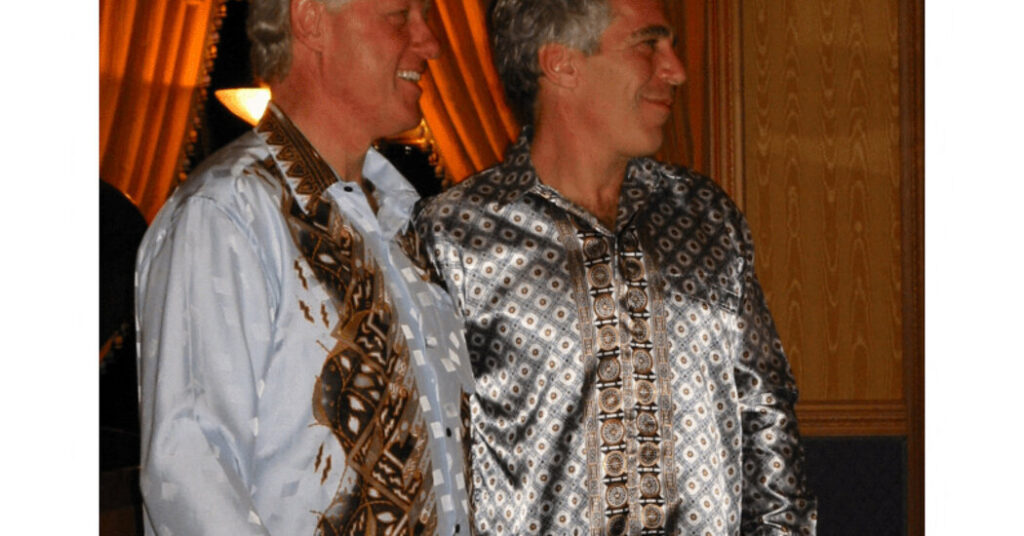
And smiling broadly in a silky patterned shirt, standing shoulder to shoulder with Mr. Epstein.
The photos were released without context by President Trump’s Justice Department, and lacked information about where they were taken, when and why.
But the man in them is unmistakable: Bill Clinton, the former two-term president, globe-trotting philanthropist and one of the most recognizable symbols of the Democratic Party.
Over the quarter-century since he left the White House, he has painstakingly worked to overcome the personal scandals that marred his presidency. At 79, Mr. Clinton has been enjoying the lifestyle of an elder statesman, traveling the world to deliver speeches and eulogies, writing memoirs and political thrillers, and continuing his philanthropic work.
But the Justice Department’s avalanche-like release on Friday of more than 13,000 files related to Mr. Epstein served as a powerful reminder of Mr. Clinton’s long-scrutinized ties to the disgraced financier as well as some of the former president’s less statesmanlike traits — his womanizing, reckless judgment and impulsivity.
The rise of the #MeToo movement in 2017 prompted a new generation of Democrats to grapple with the accusations made by women against Mr. Clinton. The party confronted uncomfortable questions about its complicity in defending him from allegations that included groping, exposing his genitals without consent and rape — which Mr. Clinton has denied.
Now, thanks to the Republican-led Justice Department, the never-before-released images in the Epstein files will introduce yet another generation to the former president’s flaws, scandals and misconduct.
Notably, the collection of documents, photographs and files disclosed on Friday included many photos of Mr. Clinton but few mentions of Mr. Trump, himself a longtime friend of Mr. Epstein’s.
The Justice Department said more documents would be released in the coming weeks. But the political motivations of the White House in this first drop were obvious and well-worn: Distract from Mr. Trump’s involvement in the scandal by pointing the finger at Mr. Clinton.
“Slick Willy! @BillClinton just chillin, without a care in the world. Little did he know…,” Steven Cheung, the White House communications director, wrote on X, posting the photo of Mr. Clinton in the hot tub and using an epithet that dates back to his time as governor of Arkansas.
The New York Post, a longtime antagonist of Mr. Clinton’s, resurrected another moniker for him on its front page, which blared, “Tubba Bubba.”
A spokesman for Mr. Clinton said the Justice Department was releasing photos of the former president to try to deflect from whatever might be coming in future disclosures.
“It’s obvious what the Republicans in the White House and at Justice and their desperate congressional cronies are doing,” said Angel Ureña, deputy chief of staff for Mr. Clinton. “What they’re hiding is not obvious. But it must not be good.”
The photographs are unlikely to be the end of Mr. Clinton’s troubles surrounding his involvement with Mr. Epstein. The Clintons have spent months trying to avoid appearing in person before the House Oversight Committee to testify in the Epstein investigation. Such an appearance would be highly unusual: No former president has appeared before Congress since 1983, when President Gerald Ford did so to discuss the celebration of the 1987 bicentennial of the enactment of the Constitution.
The release of these images could intensify public pressure on the couple to publicly participate and raise fresh questions about Mr. Clinton’s description of the relationship. He has said that he did not know about Mr. Epstein’s crimes and that he stopped contact after reports began to emerge in 2005 that the financier was being investigated.
“There are two types of people here,” Mr. Ureña said in a statement posted on X. “The first group knew nothing and cut Epstein off before his crimes came to light. The second group continued relationships with him after. We’re in the first. No amount of stalling by people in the second group will change that.”
While the photographs may be striking, the political back-and-forth over Mr. Clinton’s personal conduct is by now familiar. In the decades since he left office, Republicans have wielded the accusations that Mr. Clinton abused women as a political cudgel, a way of deflecting the claims from more than a dozen women who have accused Mr. Trump of sexual misconduct.
At times, Republicans have injected not only the accusations but also the women themselves into the highest-profile moments in American political life.
In 2016, less than two hours before the second presidential debate, Mr. Trump and his campaign chief executive, Stephen K. Bannon, staged an impromptu news conference with three women who said that Mr. Clinton and Hillary Clinton had minimized and belittled their claims of sexual misconduct.
In 2019, hours after Mr. Epstein was found dead by suicide in his prison cell, Mr. Trump posted a conspiracy theory on social media claiming without evidence that Mr. Clinton had been connected to his death.
Since then, Mr. Trump has maintained a steady drumbeat of claims that Mr. Clinton spent significant time visiting Mr. Epstein on his private island — an accusation Mr. Clinton denies. Those claims have also been undercut by Susie Wiles, the White House chief of staff, and Ms. Maxwell.
But Republicans aren’t the only ones who see the accusations of sexual assault and harassment against Mr. Clinton as a political liability.
While only a handful of prominent Democrats have publicly distanced themselves from Mr. Clinton’s behavior, their party has quietly tried to leave the former president and his baggage behind.
He has been welcomed on the campaign trail far less than he once was, with some candidates avoiding his presence altogether. At the party’s convention in 2020, Mr. Clinton was little more than an afterthought, speaking for less than five minutes in a prerecorded message that aired before prime time. He returned to the stage four years later and spoke for 27 minutes — 15 more than his allotted time.
With the latest disclosure of the photographs, Mr. Clinton’s detractors appear to have new leverage on an old chapter that he has long struggled to close.
In a memoir published in 2024, Mr. Clinton said he had only two “brief meetings” with Mr. Epstein, one at his office in Harlem and another at Mr. Epstein’s house in New York.
He flew on Mr. Epstein’s plane with his staff and Secret Service detail several times in 2002 and 2003 to “support the work of his foundation,” Mr. Clinton said. On each trip, in exchange for the flight, the former president would take “an hour or two” to discuss politics and economics with Mr. Epstein.
“That was the extent of our conversations,” Mr. Clinton wrote. “Even though it allowed me to visit the work of my foundation, traveling on Epstein’s plane was not worth the years of questioning afterward.”
He ended the brief section of his book with a line that was more revealing, perhaps, than even the photographs.
“I wish I had never met him,” he wrote.
Lisa Lerer is a national political reporter for The Times, based in New York. She has covered American politics for nearly two decades.
The post Bill Clinton, a Main Character in the Epstein Drop, Just Can’t Escape Scandal appeared first on New York Times.