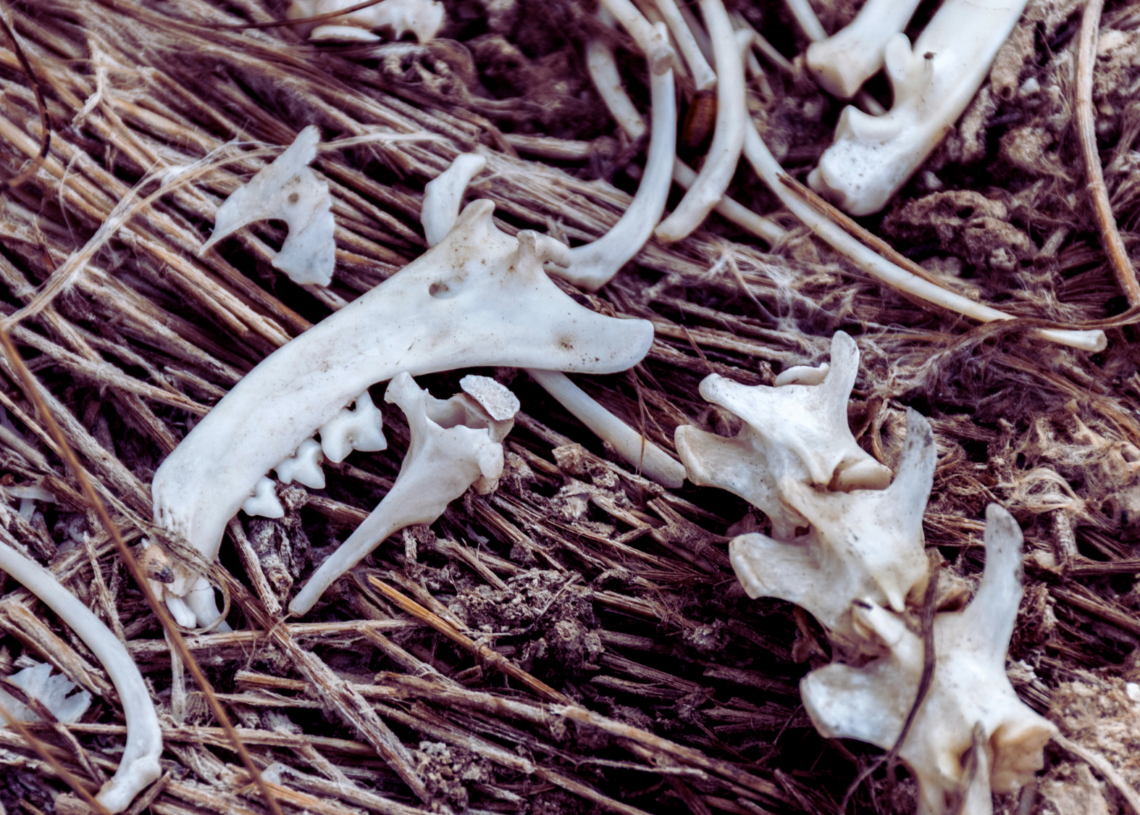
More than 5,000 years ago, bees in the Caribbean nested inside dead animals. They built their brood chambers in the hollow teeth and vertebrae of rodents buried in a cave.
According to a new study published in Royal Society Open Science, ancient burrowing bees nested inside piles of rodent bones on Hispaniola, the island now shared by the Dominican Republic and Haiti. The fossils were discovered in a cave filled with the remains of hutias, stocky rodents that resemble a squirrel–beaver hybrid, along with a few bones from an extinct sloth.
The bees weren’t grave-robbing so much as problem-solving. Burrowing bees prefer to nest at specific depths underground. While digging through sediment inside the cave, they encountered hollow bones with ready-made chambers that happened to be exactly the right size for brood cells. Rather than drilling new tunnels, they took what was already there.
“The cells of Osnidum almontei appear highly opportunistic, filling all bony chambers available in the sediment deposit,” the researchers wrote in the study, referring to the name given to the fossilized nests.
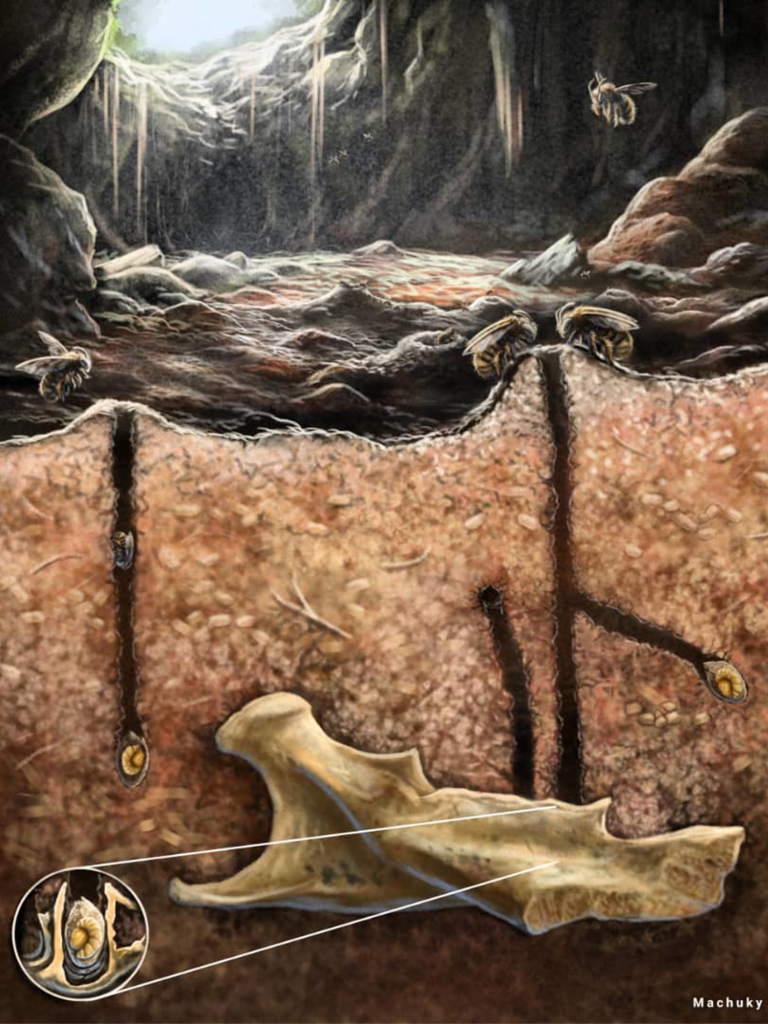
The bones themselves had been in the cave for a long time before the bees arrived. Researchers believe they were deposited by an extinct species of barn owl, Tyto ostologa, which hunted hutias and either carried them into the cave whole or regurgitated pellets filled with bones. Over time, sediment washed into the cave and buried these remains. Generations later, bees moved in.
One tooth cavity contained six separate nests, stacked inside one another, suggesting that multiple generations returned to the same spot after earlier nests were abandoned. It’s the first known example of bee nests built inside preexisting fossil cavities and only the second documented case of burrowing bees nesting inside a cave at all.
Why the cave? The surrounding landscape likely left them few other options. “The area we were collecting in is karst, so it’s made of sharp, edgy limestone, and it’s lost all of its natural soils,” study co-author Mitchell Riegler of the University of Florida said in a statement.
The cave itself nearly disappeared. After one of the team’s final visits, plans surfaced to convert the site into a septic storage facility. “We had to go on a rescue mission and get as many fossils out as possible,” lead author Lazaro Viñola Lopez of the Field Museum said.
Those plans fell through, but the fossils were removed anyway. Many remain unstudied, which means this strange collaboration between bees, owls, and rodents may have more to say.
The post Ancient Bees Made Nests in the Bones of Dead Rodents, Study Finds appeared first on VICE.