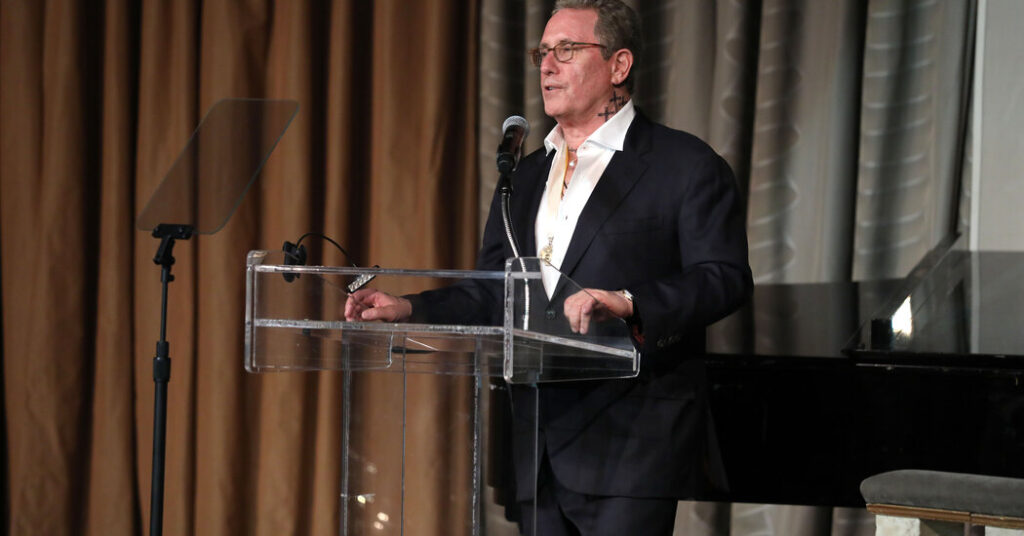
Andrew Farkas, the New York real estate mogul who co-owned a marina in St. Thomas with Jeffrey Epstein, has worked hard to distance himself from the convicted sex offender.
After Mr. Farkas’s name appeared in Mr. Epstein’s diary and in emails released by Congress earlier this year, Mr. Farkas told investors in a letter that he and Mr. Epstein had merely been business partners, never friends.
But in emails obtained by The New York Times, Mr. Farkas told Mr. Epstein that he considered him one of his best friends, advised him not to sell his stake in a Caribbean marina the two men owned together and told Mr. Epstein that he loved him.
Mr. Farkas signed the final message in the exchange with “Xoxo.”
The emails, which have not been previously reported, were sent in May 2018, a little more than a year before Mr. Epstein was arrested on federal charges of sex-trafficking minors.
For more than 10 years, the emails obtained by The Times also show, Mr. Farkas gave Mr. Epstein significant discounts as part of a deal in which the two split ownership of a marina in the U.S. Virgin Islands, just a few miles north of the private island at the center of Mr. Epstein’s alleged sex-trafficking operation. Those discounts amounted to nearly $200,000 a year.
In a statement, Mr. Farkas acknowledged sending the email but said he had “used flattering language” with Mr. Epstein “in the hopes that he would sell his interest in the property” — even though his advice in the email had been to do the opposite.
Asked to clarify, Mr. Farkas said, “This email alone lacks context, including our obvious desire for him to sell his interest in the property, which we discussed at many points.”
“I have already acknowledged that the basis of my relationship with Mr. Epstein was our business dealings, and we had many conversations about this deal,” Mr. Farkas said in the statement. “Again, I regret ever associating with him and condemn his crimes.”
None of the emails reviewed by The Times suggested that Mr. Farkas was involved in criminal behavior or impropriety.
Unlike other business partners of Mr. Epstein, Mr. Farkas has kept a low profile. Many New Yorkers have never heard of him.
He was born into real estate royalty, the scion of a family that built the department store chain Alexander’s, which for much of the second half of the 20th century was a fixture of working-class life in New York.
Mr. Farkas has since worked on projects that include Dubai banks, multifamily apartments and the Sheraton Times Square hotel.
In 2003 he founded Island Capital, a private equity and merchant banking firm that has handled hundreds of billions of dollars in real estate transactions worldwide.
And he has been a powerful political benefactor, especially to former Gov. Andrew M. Cuomo, to whom he has donated millions. He is also friendly with President Trump and has invested in projects of Jared Kushner, the president’s son-in-law.
Nearly 20 years ago, Mr. Farkas went into the marina business with Mr. Epstein, offering him 50 percent ownership of American Yacht Harbor, a lively marina in the St. Thomas town of Red Hook that also houses restaurants, bars and retail space.
He kept the partnership secret, and since Mr. Epstein’s 2019 arrest, has sought to frame the relationship in emails to stakeholders as an “arms-length commercial transaction,” painting Mr. Epstein as a passive investor largely uninvolved with the business.
When Bloomberg News reported on the existence of the partnership in 2019, Mr. Farkas insisted that the transaction was “entirely commercial” and negotiations had begun before Mr. Epstein was charged with any crimes. “Had we been aware of the vile and unspeakable allegations made recently,” he would never have entered into the partnership, Mr. Farkas told Island Capital board members at the time. “Having a legacy relationship with an individual of this sort is an untenable matter,” he said.
He repeated the claim recently as a congressional inquiry began focusing attention on Mr. Epstein’s inner circle, and emphasized that the pair had never socialized.
For Mr. Epstein, the marina deal was strategic. At a time when investigators were circling and his finances were under scrutiny, Little St. James, his private island, was a hideaway accessible only by helicopter or private boat.
While St. Thomas has no shortage of slips, only a handful can handle the mega-yachts of the superrich. None was closer to Little St. James than American Yacht Harbor. Mr. Epstein put Cecile de Jongh, the first lady of the U.S. Virgin Islands at the time, on the marina’s payroll as an office manager, a move that has been described in lawsuits as a way to curry favor with St. Thomas’s government leaders.
But in May 2018, Mr. Epstein was considering selling his stake in the marina back to Mr. Farkas, the emails obtained by The Times show. He sent Mr. Farkas a message asking him to crunch the numbers.
Mr. Farkas responded, noting that the marina was currently valued at around $20 million before his language became much warmer.
“As someone who considers himself to be amongst your best friends,” he wrote, he advised Mr. Epstein not to sell.
Then he revealed something else about his relationship with Mr. Epstein: Mr. Farkas was providing his friend with steep discounts on services across the marina, “from fuel to dockage to office space,” amounting to a value of around $180,000 each year. And he intended to keep offering those perks even if the partnership was dissolved.
“I would not be so petty as to do anything less than just maintain those benefits to you,” Mr. Farkas wrote. “Anyway, it’s your call. And I love you.”
Then he signed off.
“I do not wish to compel you either way,” Mr. Farkas wrote. “Xoxo.”
Debra Kamin is an investigative reporter for The Times who covers wealth and power in New York.
The post He Said He Was Not Close With Epstein. His Emails Suggest Otherwise. appeared first on New York Times.