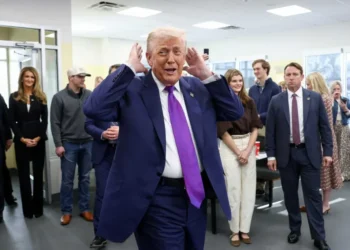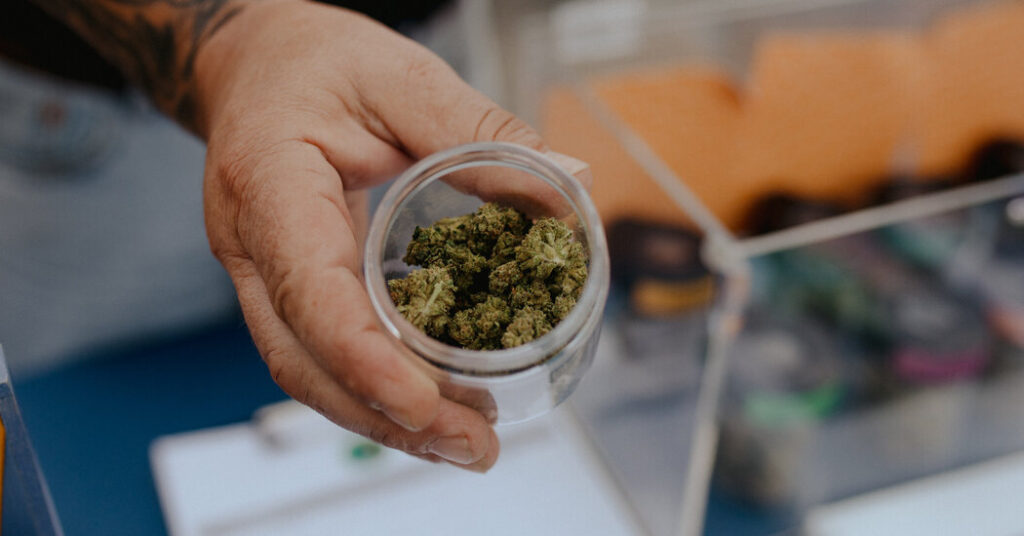
President Trump on Thursday ordered cannabis to be downgraded to a lower category of drugs, a change that would allow for more widespread use by patients and permit cannabis producers to take advantage of standard business tax breaks.
While the change sounds highly technical — moving it from Schedule I to Schedule III — it has a number of significant implications. Here are answers to some questions.
Why are restrictions on cannabis being eased?
Mr. Trump said the main reason was to allow research into cannabis to be intensified. Cannabis is listed alongside LSD and heroin in the federal government’s most restrictive drug category, which is labeled Schedule 1. These drugs are deemed to have no medical benefit and a high potential for abuse. As a result of that classification, funding for research on the effects of cannabis use has been limited and tightly restricted.
Now, cannabis will be listed in the same category as Tylenol with codeine, ketamine, testosterone and buprenorphine, the opioid-use treatment medication, opening it up to more research funds.
Does this change mean cannabis will become legal nationwide?
No. State laws will still determine the legality of cannabis. Currently, it is legal for adult recreational use in two dozen states and the District of Columbia and for medical use in 40 states and D.C. On the federal level, cannabis will still be subject to controls, such as special licensing for prescribers and constraints on the frequency with which a prescription can be written.
Still, the reclassification could eventually lead to an easing of federal sentencing guidelines, resulting in lighter penalties for cannabis trafficking and a reduction in prosecutions.
What impact will the reclassification have on the cannabis industry?
Cannabis is a booming, multibillion dollar industry but many manufacturers say expansion has been stymied by rules governing Schedule 1 drugs. When cannabis is listed in Schedule III, it’s likely that companies that sell or manufacture its products will be able to take many standard tax deductions for expenses like rent, payroll and utility bills.
Does the executive order effect CBD?
To some extent. CBD has been legal for the past several years.
Cannabis has many ingredients. The two best-known are THC, the psychoactive compound, and CBD (cannabidiol), which is nonpsychoactive and increasingly used for sleep and relaxation, among other purposes. CBD is typically extracted from hemp, a type of cannabis plant with high concentrations of CBD but very little THC. For years, CBD, as a derivative of a Schedule 1 drug, was technically considered illegal. But Congress carved out CBD from Schedule 1 cannabis, as part of sweeping farming legislation.
In November, however, Congress passed a bill to end the government shutdown that included provisions to ban many hemp products. In the executive order, President Trump said his staff would work with Congress to clarify and protect CBD’s status.
What kinds of cannabis research is needed?
Medical societies have long requested more and better research that evaluates the effectiveness of different dosages and potencies of cannabis for certain illnesses, particularly compared with approved medications. They also want better testing that addresses quality control and labeling for cannabis products, which are overseen unevenly by states and not widely standardized.
Trump Administration: Live Updates
Updated
- U.S. accuses a Venezuelan man of masterminding Tren de Aragua’s expansion.
- Trump and his loyalists move to name the Kennedy Center for him.
- Trump signs an executive order that eases restrictions on marijuana.
Until now, randomized controlled trials of cannabis, considered the scientific gold standard, have been difficult to conduct because of restrictions imposed by scheduling.
Some studies have been conducted. Existing evidence shows that cannabis use for pregnant women has been associated with low birth weights and developmental disorders. Doctors dissuade people with mental health diagnoses from using cannabis to self-medicate, because it can exacerbate their conditions.
The National Institute on Drug Abuse said it is currently investigating the impact of cannabis use on adolescents, whose brains are continuing to develop.
Did the government announce additional funds for cannabis research?
No.
Andrew Nixon, a spokesman for the Department of Health and Human Services, said that overall funding for the National Institutes of Health “remains the same, and the Executive Order enables more targeted research to inform public health and medical guidance.”
Why was cannabis a Schedule 1 drug?
In 1970, President Richard M. Nixon signed the Controlled Substances Act, which delineated classifications of drugs to be regulated and monitored. Cannabis was provisionally included in Schedule 1, until research could make firmer determinations about its costs and benefits.
Although a federal commission investigating marijuana recommended that personal use be decriminalized, President Nixon ignored the finding.
The federal effort to reclassify cannabis began during the Biden administration. Among the reasons that President Biden gave for pressing reform is that cannabis regulation was out of step with modern times: cannabis was, he noted, in a more restrictive category than fentanyl, which is legal in certain doses as a treatment for severe chronic and cancer pain. Prosecution of cannabis cases had fallen disproportionately on Black and brown communities, he said.
In 2024, the Biden Department of Justice recommended changing the classification, setting in motion a cumbersome process that ended with the Trump announcement, ordering the Attorney General to move expeditiously to complete the rescheduling.
Jan Hoffman is a health reporter for The Times covering drug addiction and health law.
The post Why the New Cannabis Classification Matters appeared first on New York Times.