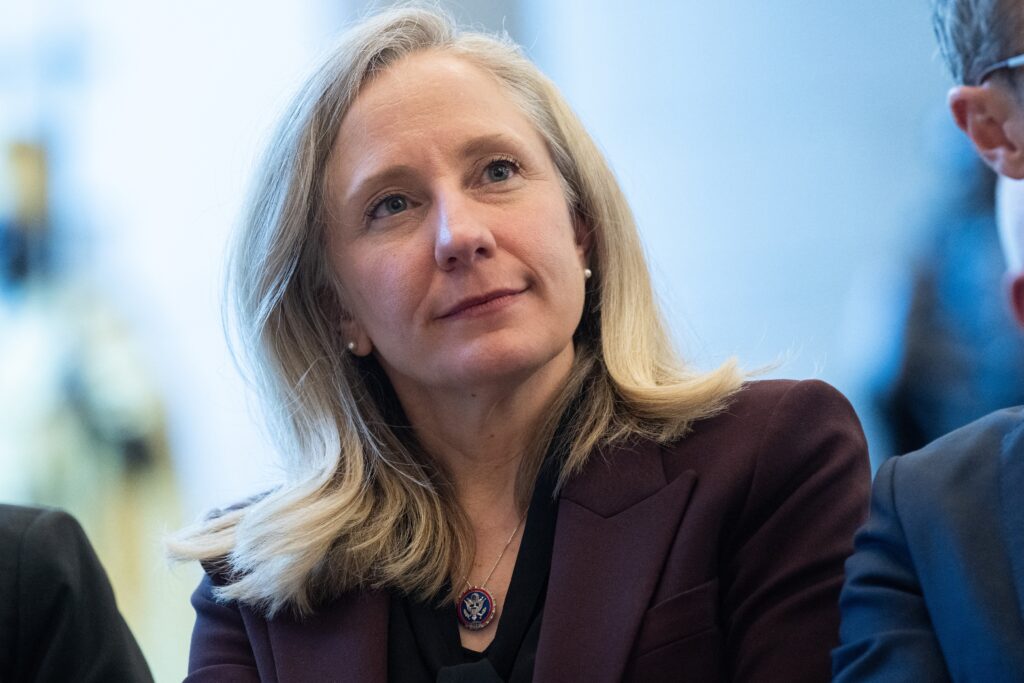
RICHMOND — Gov.-elect Abigail Spanberger (D) began rolling out specifics Thursday of how she plans to deliver a more affordable Virginia, offering proposed legislation in areas of health care, housing and energy that she said uphold the promises that got her elected last month.
“Lowering costs for everyone is essential for the success of our economy,” Spanberger said in a news conference at the General Assembly Building alongside legislative leaders. “It isn’t just a family budget issue. It’s an economic competitiveness issue.”
From offering help paying premiums on the Affordable Care Act marketplace to requiring utility companies to expand energy-efficiency efforts in low-income households, the slate of proposed policies shows how difficult and incremental such change is likely to be.
Spanberger and Democrats who control majorities in the House of Delegates and state Senate said they realize the clock is ticking for them to show results after winning landslide victories on Nov. 4. The party will have consolidated control of state government once the General Assembly convenes Jan. 14 and Spanberger is sworn in three days later.
As she has before, Spanberger cautioned that no one can lower costs for Virginians with “the flip of a single switch.” But the political pressure to act is high, as evidenced by the prime-time television address President Donald Trump delivered Wednesday night to defend his record on the economy, as polls show Americans are unhappy with his stewardship of high prices and uncertain employment.
Outgoing Virginia Gov. Glenn Youngkin (R) applied some pressure of his own this week, assuring lawmakers that the state’s economy is “rip-roaring” and presenting the final budget proposal of his administration with the warning that Virginia will suffer if Spanberger and Democrats don’t maintain his business-friendly policies.
But Spanberger and other Democrats — backed by nonpartisan legislative budget analysts — argue that Republican policies have teed up an uncertain outlook. They cite increased burdens on consumers and state government from tariffs, federal job cuts and inflation (though consumer price increases slowed last month).
“Thanks for nothing, Mr. Trump,” House Speaker Don Scott (D-Portsmouth) said Thursday. “We got it from here. You can focus on building ballrooms; we’ll focus on lowering costs for working families.”
Much of the legislation unveiled Thursday is aimed at changes to systems that, over time, could lead to lower costs — such as authorizing localities around the state to create affordable housing unit programs through zoning changes, something only certain areas of the state are now permitted to do. Youngkin vetoed such a bill this year.
“We recognize that … as I sign these bills into law, some of them will have more immediate impact than others,” Spanberger said. She said a few could show results almost right away, including one that would prevent health insurance providers from charging extra fees for tobacco users — a change that some experts say would actually lower overall costs by expanding the insurance pool.
Another example: a bill to prevent pharmacy benefit managers from steering patients to affiliated pharmacies, which Spanberger said would help small, independent pharmacies survive and block middlemen from boosting the cost of drugs.
“Policy to policy, the whole goal of this agenda is that when taken in a complementary fashion, there will be impact across the board for Virginians,” she said.
Spanberger added that she hopes to get bipartisan buy-in on the legislation and said she’s had general conversations with Republicans about some of her priorities.
House Minority Leader Terry G. Kilgore (R-Scott) said in a written statement that he is still studying Spanberger’s proposals, “but at first blush they appear focused on the right priorities. That said, we have serious concerns about how these problems are being addressed.”
Kilgore said the housing proposals appear to be focused on existing stock, rather than generating new construction, and that plans to support renewable energy by expanding battery storage “could saddle Virginians with tens of billions of dollars in additional costs.”
Most of the proposals have yet to be drafted into bills and filed, but here are some other highlights of Spanberger’s policy proposals.
Health care: She would limit the ability of insurance companies to require that patients with chronic conditions such as diabetes and asthma get special approval every time they need to get prescriptions renewed. That would cut down on the number of health care appointments and reduce out-of-pocket expenses, Spanberger said in a fact sheet about the proposals.
With costs expected to skyrocket on the Affordable Care Act marketplace as federal subsidies run out, Spanberger proposed a pilot program to help pay the premiums of people most likely to drop coverage because of the added expense.
Another proposal would change the way the state manages health incentives programs “to ensure every Virginian can see a provider who meets their needs,” the fact sheet said.
Energy: Spanberger proposes requiring the state’s biggest electrical utilities — Dominion Energy and Appalachian Power — to increase energy-storage capacity to boost the use of renewable but intermittent sources, such as wind and solar. Youngkin vetoed similar bills this year.
She also would require the power companies to expand energy-efficiency programs for low-income households, and would have the state establish an efficiency and weatherization task force — two more proposals that passed the legislature this year and were vetoed by Youngkin.
Another proposal would encourage consumers to use small solar devices to generate power, such as on apartment balconies. This is an area that should get bipartisan support — a Republican delegate has already filed such a bill for the upcoming session.
Other measures would affect how the state forecasts energy usage to help make billing more accurate, and require the State Corporation Commission to study how the power grid is being utilized to better accommodate future development.
Housing: To give delinquent renters more time to gather funds and avoid eviction, Spanberger would require a 14-day grace period after a landlord notifies someone of the intent to terminate a lease before initiating eviction proceedings, up from the current five days. This is another measure Youngkin vetoed this year.
Spanberger also would give localities more power to zone for and incentivize affordable housing, would create a revolving loan fund to help builders construct more “mixed-income developments,” and would increase the borrowing power of the Virginia Department of Housing and Community Development to help finance more affordable homes.
The post This is how Gov.-elect Spanberger will begin tackling ‘affordability’ appeared first on Washington Post.