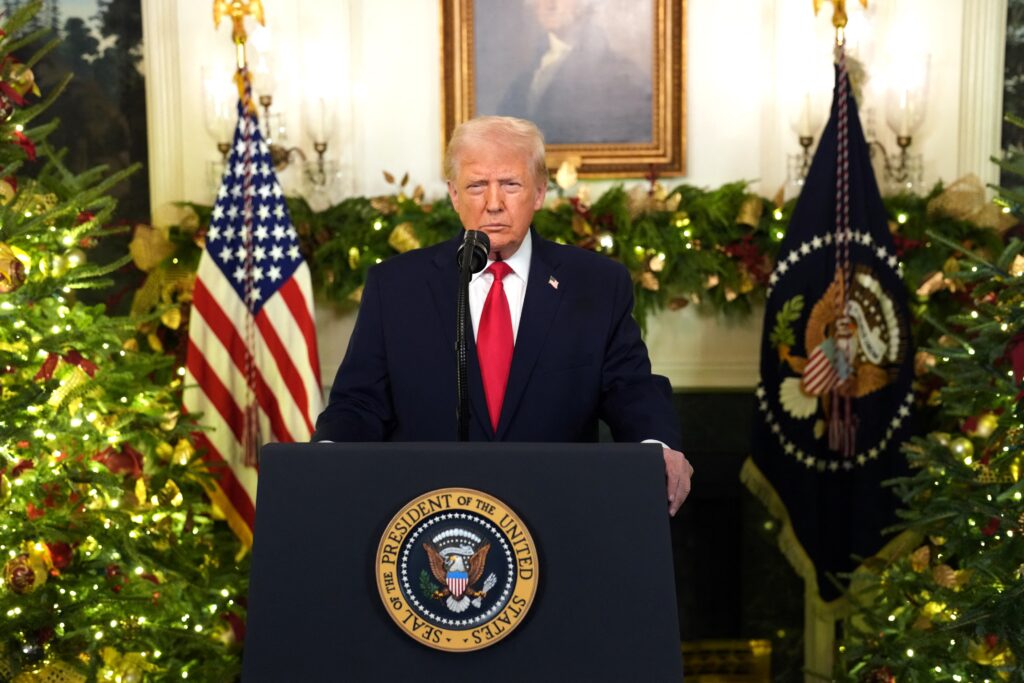
Can Americans be persuaded that the economy is performing at “A+++++” levels, as President Donald Trump insists, despite most feeling otherwise this holiday season? Perhaps, but Trump’s primetime address Wednesday didn’t get the job done.
The 18-minute speech allowed Trump to tout wins on lowering drug prices, securing the border and negotiating the return of Hamas’s remaining hostages. Mostly, though, he focused on tariffs – not a great message for a speech meant to address affordability.
Consumers face an overall average effective tariff rate of 16.8 percent, the highest since 1935, according to Yale’s Budget Lab. These new taxes – which have been wielded on a whim, often in pursuit of non-economic demands – have contributed to rising prices. Trump himself occasionally admits this in roundabout ways, such as when he tells voters they need to be less materialistic. Yet he touted the tariffs as one of his major accomplishments.
The president also announced that 1.45 million members of the military will receive a $1,776 check in the mail before Christmas. The opportunity to share this “warrior dividend,” he said, is “because of tariffs.” In fact, the money is coming from funds allocated to subsidize housing allowances for service members as part of the tax-and-spending bill he signed in July.
Four times as many Americans say they’re losing ground financially as feel they’re getting ahead; 72 percent rate economic conditions negatively (including nearly half of Republicans); 58 percent think Trump is focused on the wrong things; and 36 percent approve of his tariffs, according to a Fox News poll published Wednesday. Other surveys show similar results.
Public anxiety is rooted in reality. A report released Thursday shows the consumer price index rose in November at a 2.7 percent rate. That’s better than expected but still significantly above the Federal Reserve’s 2 percent target. Tuesday’s jobs report showed 41,000 jobs were lost over October and November, and the unemployment rate ticked up to 4.6 percent, the highest since 2021.
Trump’s penchant for hyperbole is expected, but voters aren’t buying the White House spin. The president needs a better argument than denying economic reality or simply blaming his predecessor. Policy is always more important than messaging. Trump’s economic strategy remains unchanged, so the president shouldn’t be surprised if his anemic polling numbers remain unchanged, too.
The post Trump’s unconvincing argument on affordability appeared first on Washington Post.