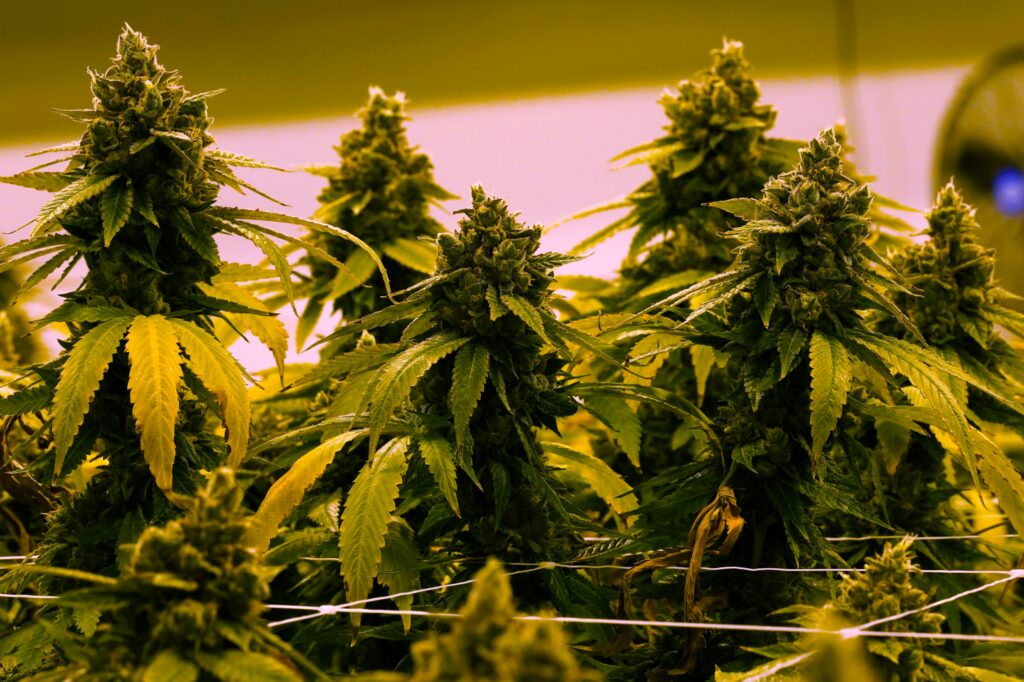
President Donald Trump is going green. On Thursday, he plans to sign an executive order to loosen restrictions on marijuana. That’s fine, but it’s going to do little to fix America’s overall approach to the drug. It would be better to legalize pot federally and let states decide if they want to restrict it any further.
Cannabis is classified as Schedule I, the strictest enforcement category under the Controlled Substances Act. Trump wants to move it to Schedule III, which means it would still be illegal for recreational purposes but could be used in approved, highly regulated medical settings. The Biden administration attempted to make the change last year, but administrative reviews prevented it from going into effect.
Rescheduling would be a tax windfall for marijuana businesses currently unable to claim deductions for operating expenses, such as rent, payroll and marketing. A Schedule III classification allows sellers to write those costs off on their taxes. Anyone interested in helping cannabis corporations make more money — and seeing a lot more advertising for their products — will be thrilled.
But it also raises thorny legal questions. Manufacturers of controlled substances are supposed to register with the Drug Enforcement Administration, which is responsible for strictly regulating the products. Given that the federal government has not approved cannabis products for any medical purposes — and that the bulk of the industry’s products are recreational and still technically illegal — it’s unclear how such a framework could ever work.
Moreover, its redesignation would mean regulators at the Food and Drug Administration lack any authority to address the drug’s many negative consequences. Research is only just beginning to uncover the long-term health implications of regular use, especially among young people. For instance, it seems to aggravate psychoses such as schizophrenia for some people. It’s also becoming increasingly addictive as manufacturers find ways to make it ever more potent.
Local police also have no standard way to punish people who drive while under the influence of cannabis. A study found that 42 percent of dead drivers in one county had THC in their blood. Yet it’s difficult for the federal government to assist in crafting tests for tolerable amounts in someone’s system when, legally, the only acceptable amount remains zero.
Tinkering with how the federal government classifies the drug administratively is a wholly inadequate solution to these problems. Congress should recognize the lamentable but inescapable reality that the cannabis industry is here to stay. Remove the federal government’s restrictions, and let the states sort it out.
The post Legalize it appeared first on Washington Post.