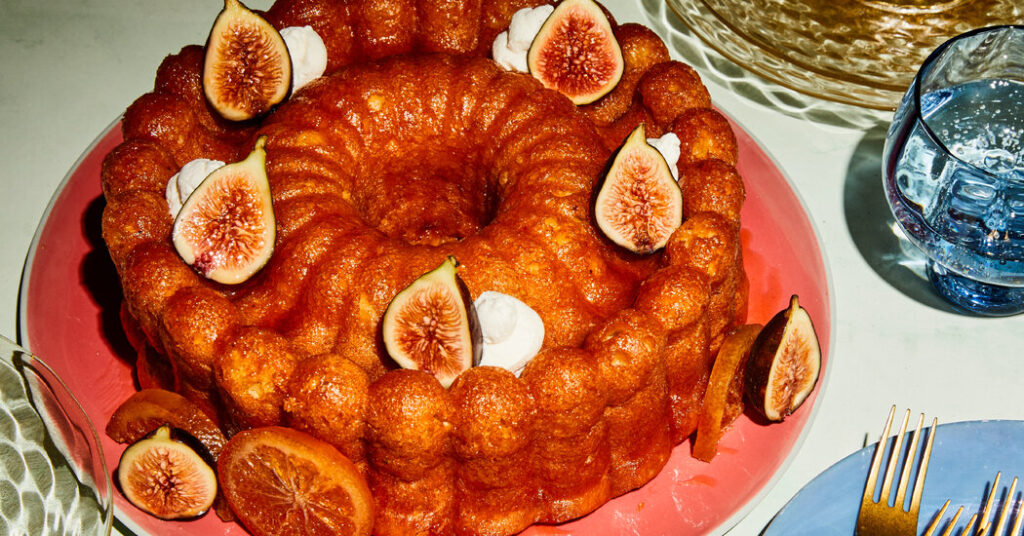
The other day, I was having an impassioned discussion with a friend about the purpose of dessert, beyond pleasure. Just two pastry chefs engaging in a little harmless “back in my day,” regretting that the meal we had just experienced — otherwise filled with pitch-perfect touches — was finished by a heartbreaking, overwrought dessert.
In our reminiscences, we waxed obnoxiously and poetically about what was important to us about dessert. It is essential, we commiserated, to send people home with a true sense of care and comfort, no matter how innovative and challenging the preceding dishes might have been. We aim for familiarity, and maybe a shake of nostalgia without abuse, even if toying with new techniques and form.
Recipe: Baba au Rhum Savarin
Ultimately, we decided that desserts are for celebration, even for small victories like simply making it through a day.
That conversation started a search for the dessert that satisfies all of that, but also allows me to feel expansive and a bit fancy in its presence. As I thumbed through my favorite recipes, the ones that pluck at my heartstrings, news came: Not only would this be my final column, it would actually be the final column. After 14 years, what started out as a Mark Bittman solo act and grew into so many more voices — from Gabrielle Hamilton to Dorie Greenspan to Tejal Rao — Eat will come to a close. So, dear readers, celebrate we shall.
This celebration called for a dish with a regal hum, but also a proletarian edge in its origins, per my rules. One recipe fit neatly into my potentially unreasonable categorizations of what makes dessert both “goooood” and “great.” Baba au rhum savarin.
It kept shining through the stack of my notebooks like the pretty little pick-me that she is. Any recipe that historically started out as old bread is a friend of mine, especially if made good by adding copious amounts of booze.
Baba au rhum means something beyond its measurements — just like every other recipe I’ve ever read, written or cooked.
There is plenty of historical oomph in the story of this dessert, but for me it will only and ever be about its subtle role in “Babette’s Feast,” the movie I credit with allowing food to finally perch itself on the humble baba-au-rhum-shaped throne of my heart as a girl. In the film, bread moves from a gruel soup to a thing baked to perfection, studded with shimmery candied fruit and dolloped with soft cream. My eyes popped at the singular dreamscape. Show me a better centerpiece, a better way to say, “Here, eat this, I love you.”
A recipe without a story is a bit like kissing a cold stone. Recipes tell us about ourselves from a time before. I can remember reading Tamar Adler in this column back in 2015, with her sentiments on the “binding” of what it means to be human, and how so much of that is found in the old stories we now call recipes. It stuck with me because it was something every cook I loved understood, and it gave us all permission for a deeper inspiration and connection that we already felt.
And that is why a baba au rhum means something beyond its measurements — just like every other recipe I’ve ever read, written or cooked. I will always yearn for more, more, more of those rich stories that imbue meaning. More glugs of rum in stale bread, more stories of people making something out of nothing, more of your humble pies and celebration cakes, more saccharine essays of our mothers in kitchens, more tales of why we do the things we do as cooks, as humans and, gloriously, as people who eat. More!
And the most “more!” I can give is a final Eat recipe, rich with all that good “binding” of human stuff and story and sentiment, only to add: Here. Eat this. I love you.
The post Let Us Eat Cake appeared first on New York Times.