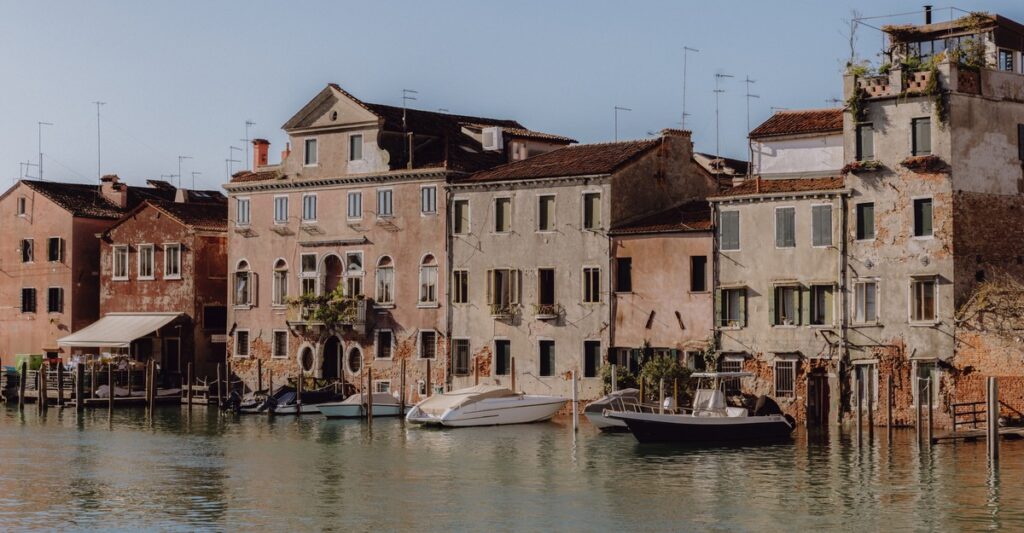
Photographs by Matteo de Mayda
In a quiet, almost empty part of Venice stands a Renaissance palazzo with an unusually large garden. The garden is invisible from the outside, blocked by a high brick wall that I recognized when I saw it. In The Aspern Papers, a novella serialized in The Atlantic in 1888, Henry James lets the narrator, a literary scholar whose name we never learn, describe the wall. “It was figured over with the patches that please a painter, repaired breaches, crumblings of plaster, extrusions of brick that had turned pink with time,” he writes. “It suddenly occurred to me that if it did belong to the house I had my pretext.”
The narrator has arrived at the dilapidated palazzo by gondola, together with his friend Mrs. Prest. He is plotting to meet the elderly owner, Juliana, the former mistress of a famous, long-dead poet, Jeffrey Aspern. She owns a collection of reputedly scandalous letters from the poet, and has guarded them from scholars and souvenir hunters for many decades. The narrator wants them. “Hypocrisy, duplicity,” he tells Mrs. Prest, “are my only chance.”
The narrator is greeted by Tita, Juliana’s middle-aged niece. Using a false name, he asks to rent some unused rooms in the crumbling palace, explaining that he adores gardens, that he loves flowers. Then he begins to insinuate himself into the lives of Juliana and Tita.
I arrived in Venice with a similar goal: to get access to that same garden. I wasn’t sure it was possible, not least because I didn’t know whether the garden really existed. But although I hoped not to use hypocrisy and duplicity, I did know that if I found it, I would be looking at Henry James’s Venice. Not Lord Byron’s decadent Venice, that is; not Thomas Mann’s pestilential Venice; and certainly not James Bond’s shootout-in-the-collapsing-palace Venice, but rather the city of intense beauty and deep secrets that James transformed into novels, letters, stories, and essays during the 10 visits he made to the city between 1869 and 1907.
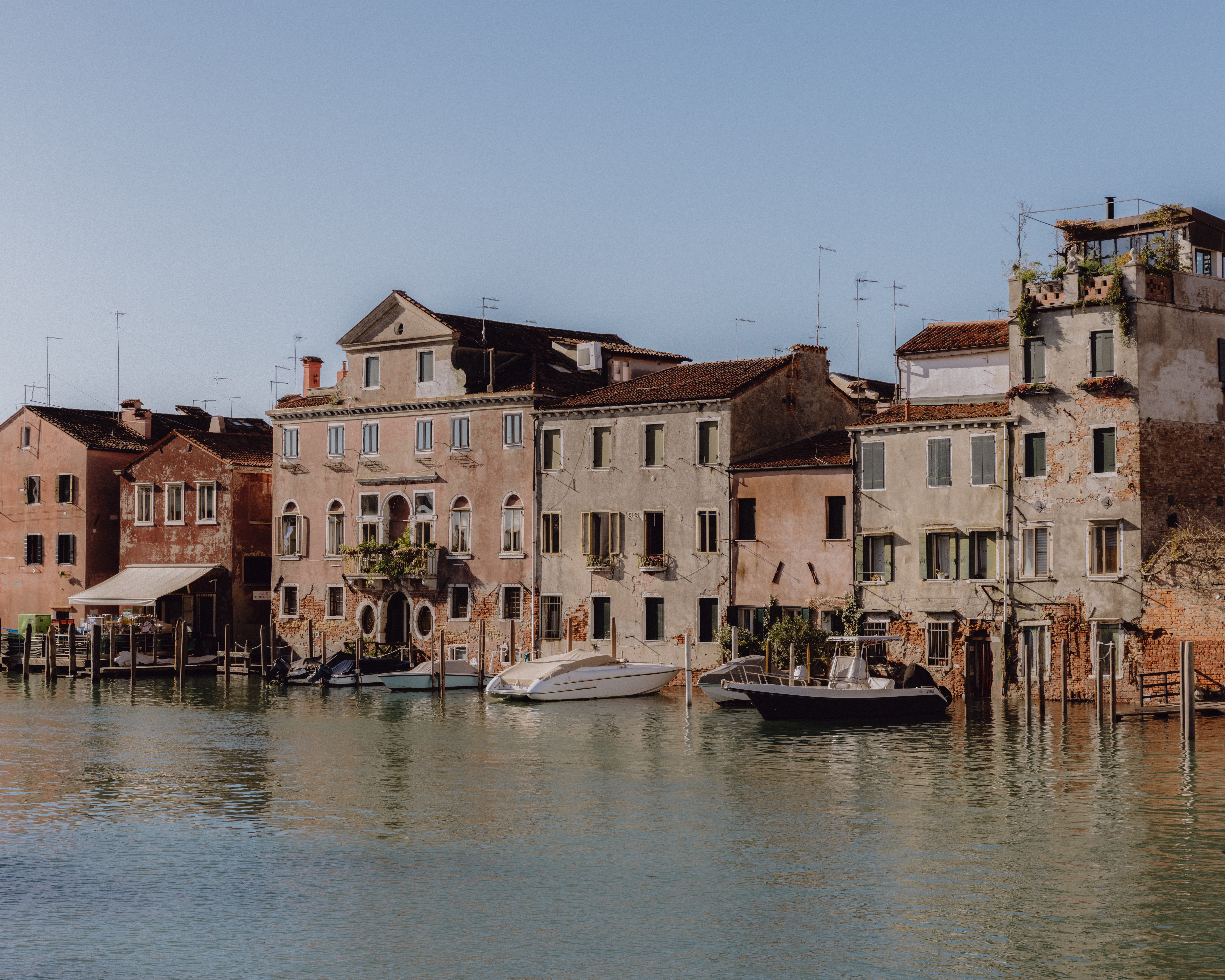
During those four decades, Venice changed. James was the scion of a wealthy American family—his brother was the philosopher William James—but he often scrambled for money, and when he first got there, Venice was cheap. Napoleon had invaded at the end of the 18th century, looting the city and putting an end to the thousand-year Venetian Republic, and even moderately wealthy foreigners could buy grand palazzi with Tiepolo ceilings and Byzantine windows. On one of his early visits, James could afford to rent rooms with one of the best views in the city, overlooking the lagoon and San Giorgio Maggiore.
[Read: A tale of sex and intrigue in imperial Kyoto]
But even during James’s lifetime, Venice transformed itself into the tourist mecca we know today. In The Wings of the Dove, published in 1902, James gives his feelings about the city’s new business model to another deceiver, this one an Englishman named Merton Densher. Densher dislikes his hotel, with its “vulgarized hall,” and longs to get away from “the amiable American families and overfed German porters.” He prefers the residence of Milly Theale, the sickly American heiress whose fortune he seeks. She has rented the Palazzo Leporelli, an abode high above the water, “hung about with pictures and relics” and modeled very precisely on the Palazzo Barbaro, where James often stayed with his friends Daniel and Ariana Curtis.
The Curtises, at the center of the “queer, polyglot, promiscuous society” James frequented in Italy, were part of his Venice too. They surrounded themselves with artists and writers—John Singer Sargent, Claude Monet, Robert Browning, and Edith Wharton, along with their son Ralph Curtis, also a painter—as well as what remained of Venetian high society. Isabella Stewart Gardner sometimes rented the Palazzo Barbaro, using it as a base to collect the art, furniture, and medieval bric-a-brac that eventually found its way to her eponymous Boston museum.
Instead of the modern city, James preferred this languid Venice, a place of leisurely afternoons, exquisite paintings, and long conversations in shabby Baroque rooms. This Venice was also the perfect backdrop to his favorite kind of story: that of the duplicitous fortune seeker who, like the hero of The Aspern Papers, fools himself in the end, as well as his intended victim; or the independent-minded, idealistic American girl who comes to Europe and is charmed, and then swindled, by corrupt Europeans. That is the plot of his most famous novel, The Portrait of a Lady—completed in Venice, serialized in The Atlantic in 1880–81—as well as, more or less, The Wings of the Dove.
This kind of plot has always interested me. As an independent-minded and idealistic American girl, I also moved, as James did, from America to Europe. I still attempt, as he did, to live in both places. Although I would argue that I escaped the fate of James’s American heroines (as would my European husband, who is annoyed by The Portrait of a Lady), I understand their intense curiosity. So did James. Like them, he wanted not just to visit other places, but to become part of them, to grasp their essence, to know what lies on the other side of the garden wall, to get hold of the letters before they are lost forever.
Before it’s too late—before Venice sinks into the lagoon, before James’s oblique writing falls out of fashion again, and, frankly, before I am so consumed by the current global political crisis that I can’t appreciate Venice anymore—I set out to find the secret city that he loved, and that I love too.
I arrived in Venice with a list: places Henry James described, paintings he admired, churches he visited. Dutifully, I started checking them off. On my first day I visited San Zaccaria to see one of his favorite paintings, Giovanni Bellini’s “mild and serene” Madonna. I contemplated an elegant Saint George, delicately stabbing a dragon, at the Scuola di San Giorgio degli Schiavoni nearby. I drank a very expensive espresso at Caffé Florian in Piazza San Marco, where James came often for “second breakfast,” otherwise known as brunch.
After a day or two, I slowed down. To see James’s Venice requires not his list but his attitude, especially his attitude toward time. “There is no simpler pleasure,” he once wrote, than “strolling into St. Mark’s—abominable the way one falls into the habit—and resting one’s light-wearied eyes upon the windowless gloom; or than floating in a gondola or than hanging over a balcony or than taking one’s coffee at Florian’s. It is of such superficial pastimes that a Venetian day is composed, and the pleasure of the matter is in the emotions to which they minister.”

I am not accustomed to having that kind of time, but having been granted a few days’ worth, I found, despite hearing many warnings to the contrary, that James’s “simple pleasures” are still available. It’s true that the Piazza San Marco is crowded, that the Rialto Bridge is a crush, and that the main Venetian thoroughfares are choked with tour groups in the middle of the day. But it’s also true, as it always was, that if you take an odd turn down a narrow pathway and head away from the main attractions, the crowds thin out, and eventually you can find yourself quite alone. As James wrote to his brother in 1869, “I have spent a good deal of time in poking thro’ the alleys which serve as streets and staring about in the campos—the little squares formed about every church—some of them most sunnily desolate, the most grass-grown, the most cheerfully sad little reliquaries of a splendid past that you can imagine.”
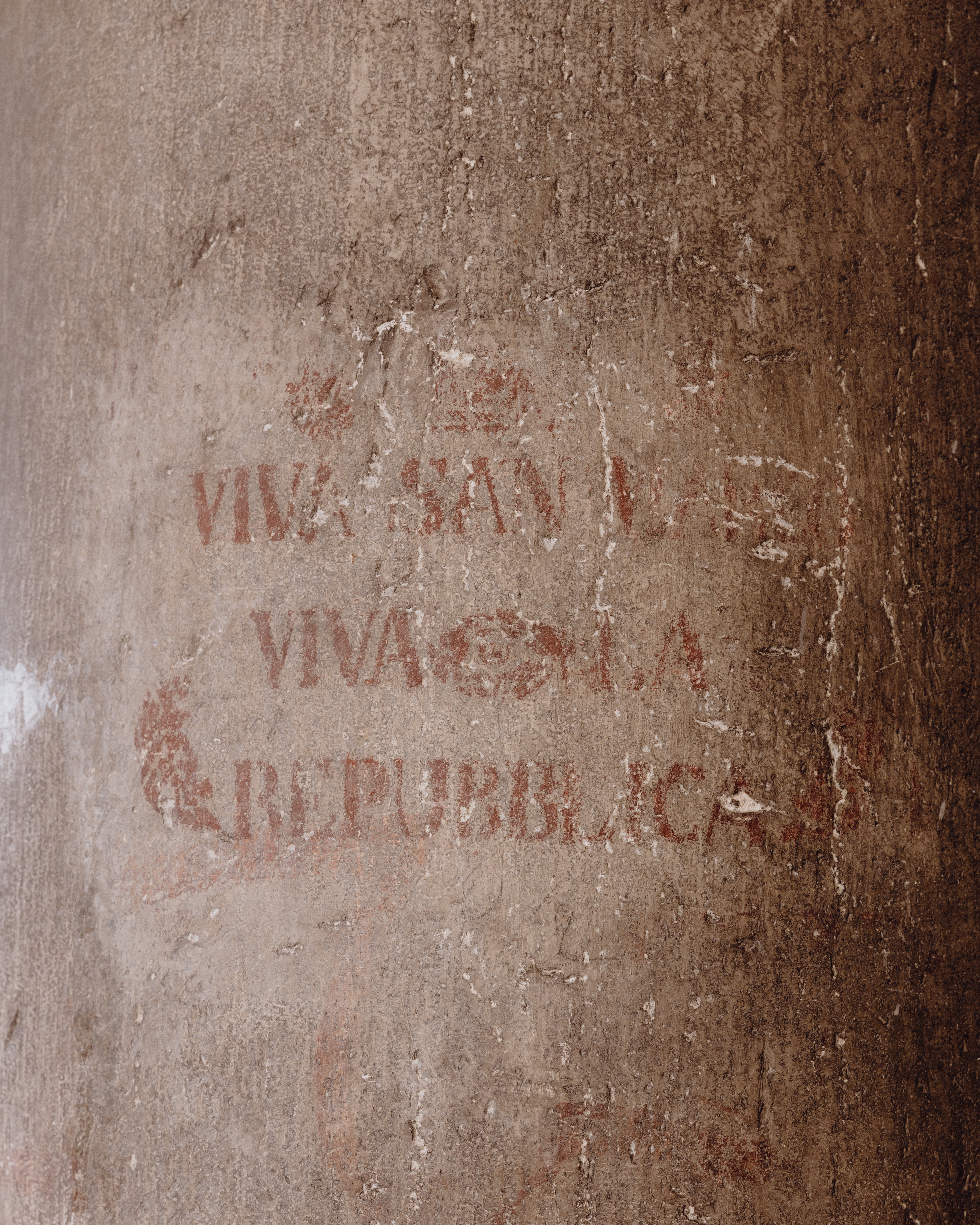
Getting to the empty campos might take some time, but that’s the point. As James wrote, a walk to a far corner of Venice “will show you so much, so many bits and odds and ends, such a revel of Venetian picturesqueness, that I advise your doing it on foot as much as possible.” Walking has other consequences too. At Caffé Florian I started talking with a waiter; he texted the marketing director; she came over to meet me, because that’s how things work in Venice. She told me she’d moved to Venice precisely for this reason: because there are no cars, because every day you are therefore “compelled to see people, talk with people, greet people.” She pointed out some graffiti that I would have missed if I hadn’t slowed down to chat with her. During the violent rebellion of 1848, when Venice first declared independence from Austria, wounded patriots were cared for at Florian’s, and some of them scrawled Viva la Repubblica and Viva San Marco, the name of their short-lived republic, on a nearby wall.
Many of James’s favorite churches, galleries, and scuoli—clubhouses, really, built by Venetian fraternities and guilds—also offer an unexpected bonus: Because they charge a small entry fee, almost everyone stays away. You can walk off a packed Venetian street, pay a few euros, and suddenly find yourself completely alone with a masterpiece. Then you are free to see what James saw, and to experience the same aesthetic shock.
After repeating this experience several times, I started to understand why James admired the calm, luminous paintings of the early Renaissance, a preference he picked up, in turn, from John Ruskin. Ruskin was the eccentric British art critic whose hatred of the late Renaissance inspired the Pre-Raphaelites, a school of British painting. His overwritten book, The Stones of Venice, was a kind of bible for the cultured (or would-be cultured) Anglo-American visitor in the 19th century. During one of my first trips to the city (confession: it was my honeymoon), I walked around, pretentiously, with an abridged version of The Stones of Venice myself.
Ruskin also helped promote an Anglo-American–Venetian love affair that has stretched from Byron through James, Sargent, and Stewart Gardner, and more recently to the great 20th century historian John Julius Norwich. The Victorians, living at the height of the British empire, were endlessly fascinated by the wreckage of Venice’s empire, just as they were drawn to Rome. Gilded Age Americans, with their shiny modern buildings, new fortunes, and puritan work ethic, were equally drawn to a very ancient, very scruffy city full of people who were not especially interested in work at all.
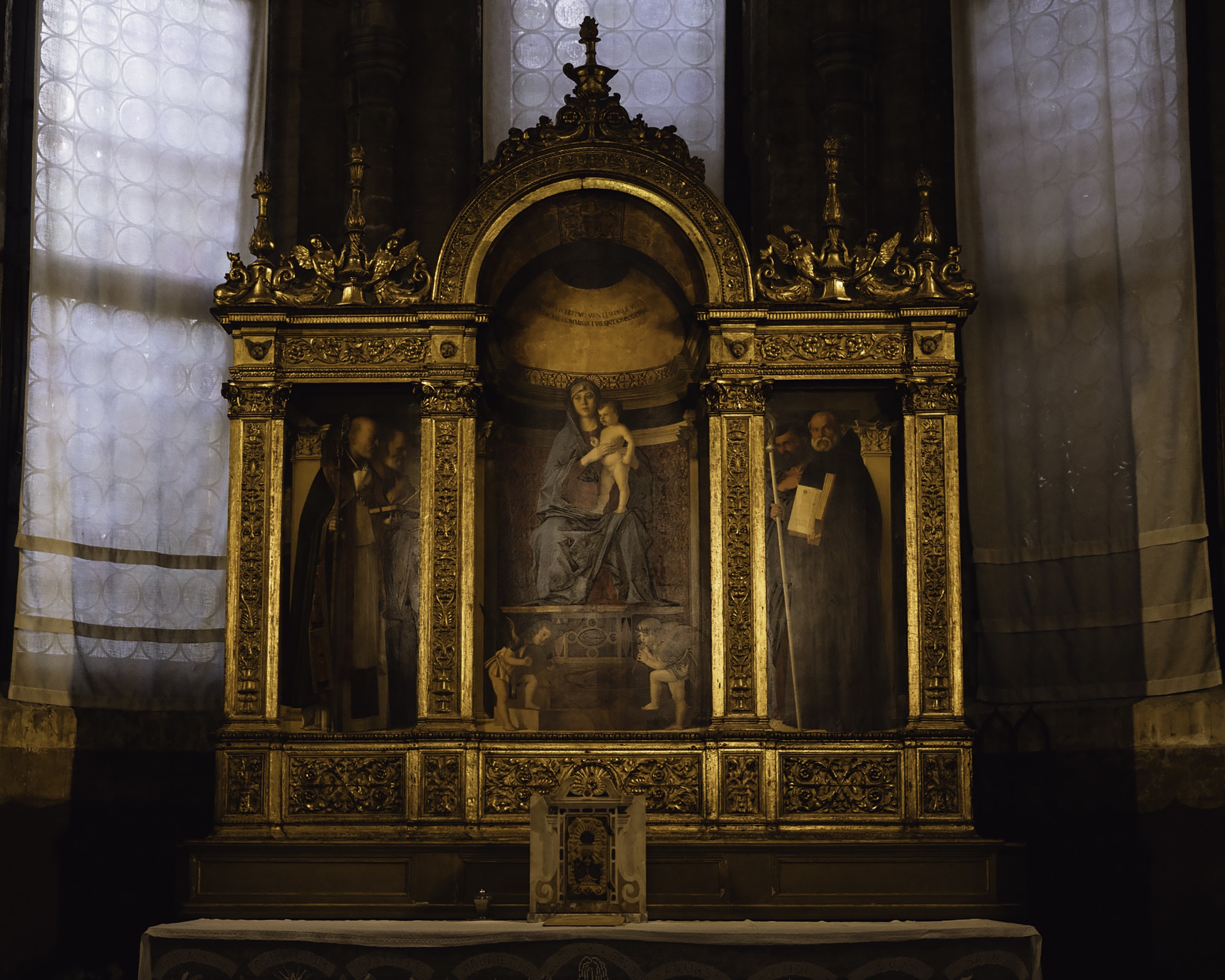
The affair continues into modern times, now powering the work of Save Venice and Venice in Peril, the American and British foundations dedicated to the proposition that the loss of Venice to flooding and decay, both of which have plagued the city since before Ruskin’s day, would be a loss for civilization. I spent a slow afternoon at Santa Maria Gloriosa dei Frari, one of the city’s largest churches, with Susan Ruth Steer, a British art historian who works for Venice in Peril. She reminded me of how pleasurable it is to listen to people talk about something they really love. We agreed that Ruskin probably influenced James’s admiration of the golden Bellini triptych in one of the Frari’s side chapels—“nothing in Venice is more perfect than this,” he wrote, adding that “it seems painted with molten gems”—and his dislike of Titian’s dramatic Assumption of the Virgin (he called it “second-rate”), which hangs over the altar.
Susan showed me two of Venice in Peril’s projects in the Frari. Its donors paid for the restoration of the tomb of the neoclassical sculptor Antonio Canova, a marble pyramid with stone figures, after salt water was found to be seeping up from underground and damaging the statuary. They continue to support patching the cracks that could destroy an elaborate Baroque reliquary altar, which we agreed James would not have liked at all.
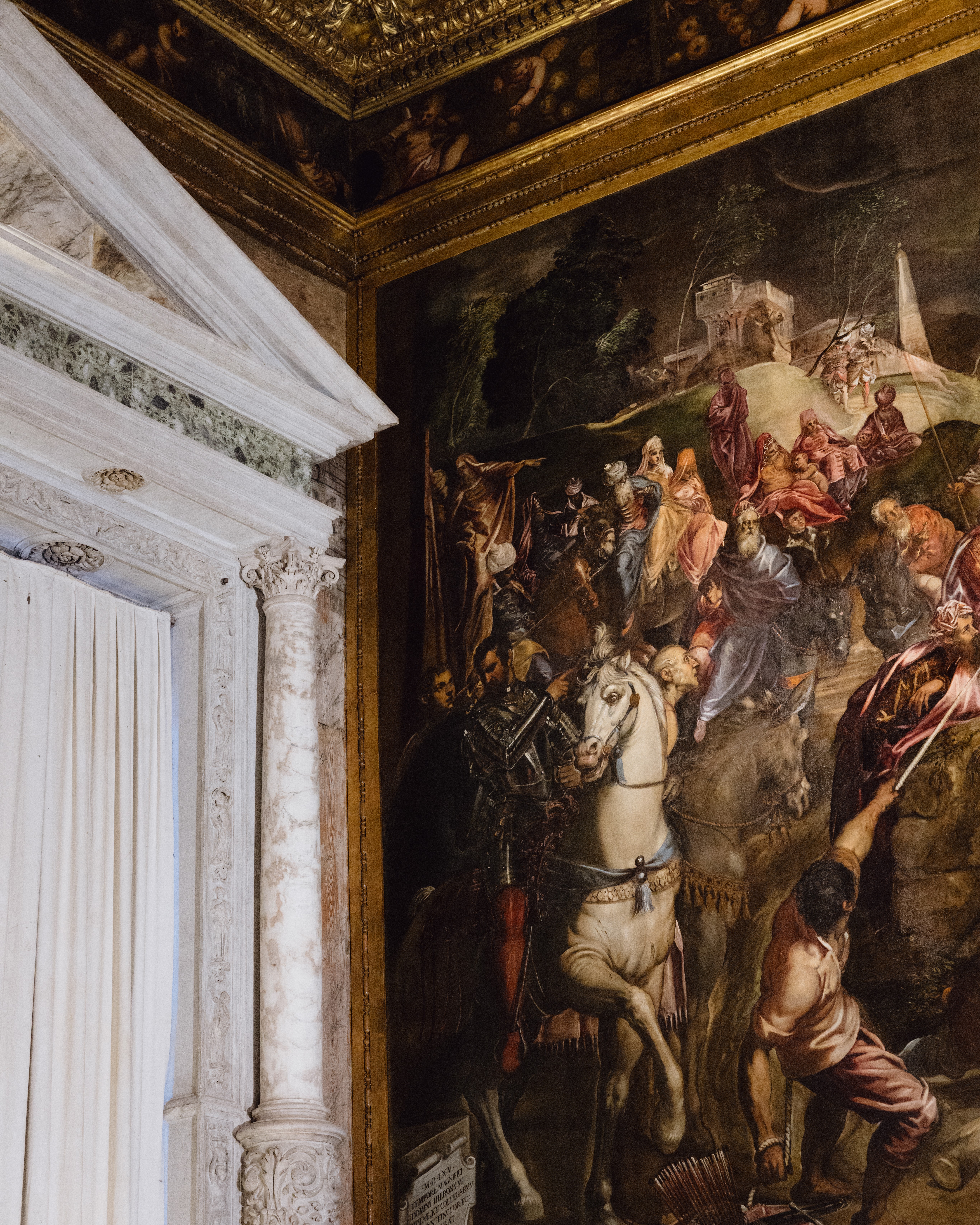
Afterward, we walked to the nearby Scuola Grande di San Rocco, dedicated to the saint who protected Venetians from the plague. Restrained on the outside, the scuola’s spectacular interior is embellished, floor to ceiling, with gilded stucco and the paintings of Jacopo Robusti, known as Tintoretto. Here restoration has its limits, because Tintoretto, born in 1518 in humble circumstances—he was the son of a tintore, a “cloth dyer” (hence the nickname)—balked at the high cost of ultramarine pigment, which at the time was made from ground lapis lazuli, imported from Afghanistan and priced the same as gold. He sometimes used a cheaper paint made of ground glass, but alas, it deteriorated after a century or so, turning some of Tintoretto’s skies brown or gray.
“Nothing indeed can well be sadder than the great collection of Tintorets at San Rocco,” James wrote. “Incurable blackness is settling fast upon all of them, and they frown at you across the sombre splendour of the great chambers like gaunt twilight phantoms of pictures.” Restoration has in fact made the canvases brighter and clearer since James saw them, if not returning the exact original colors. Restoration has also helped secure Tintoretto’s reputation, which has waxed and waned—much like that of James, whose novels went out of fashion during his life before being rediscovered after his death. In his time, Tintoretto was considered seriously ambitious, bordering on greedy. He challenged established artists, built a huge studio, employed his children, and lobbied hard to get all of the best commissions, even donating a painting to the scuola as part of his campaign to paint the rest of it.
[Read: Venice underwater: The highest tide in 50 years]
James liked the way Tintoretto used his art to tell stories. The artist painted his Last Supper from a side angle, with the kitchen visible at the back. In the Adoration of the Shepherds he put the Holy Family on the top floor of a barn whose first floor was occupied by an ox. His Crucifixion contains several separate scenes, each with its own drama. Tintoretto, James wrote, “felt, pictorially, the great, beautiful, terrible spectacle of human life very much as Shakespeare felt it poetically—with a heart that never ceased to beat a passionate accompaniment to every stroke of his brush.”
Tintoretto is hard to avoid in Venice. His works can be found in the city’s most important museums, where some of them still have ultramarine skies, and on the walls and ceilings of the Doge’s Palace, once the seat of Venetian power. He contributed some smaller paintings to the building too. One of them appears in Travelling Companions, a short, early James novel, also serialized in The Atlantic. The story recounts the fate of Miss Evans, yet another bright American girl visiting Venice, who is admired by another male narrator, Mr. Brooke. The two visit the Doge’s Palace together, and she admires Tintoretto’s Bacchus and Ariadne, with its “broad, bright glory of deep-toned sea and sky.”
Hearing this, Mr. Brooke leaps at the opportunity. “To understand this Bacchus and Ariadne we ought to spend a long day on the lagoon, beyond sight of Venice,” he says. “Will you come tomorrow to Torcello?” She demurs.
They go to Padua instead, and the story unfolds from there. But I took Mr Brooke’s advice.

In truth, there are two ways to see Henry James’s Venice: One is to peer into the corners of dark churches. Another is to spend a lot of time floating in the lagoon, looking up at the sky.
Although the former activity is still available for those willing to make the effort, I concede that the latter is much harder to experience than it used to be. When James came to Venice, he sometimes rented a gondola and hired a gondolier (“the gondolier at Venice is your very good friend—if you choose him happily”). So does the narrator of The Aspern Papers; this comes in handy when Juliana dies and Tita tells the narrator that she will give him the letters he covets—but only if he marries her.
Shocked by the offer, he rushes out of the palace and tells his gondolier to take him “anywhere, anywhere; out into the lagoon!” This crisis might have echoed a real one. James’s close friend Constance Fenimore Woolson, an American novelist, committed suicide by throwing herself out of an upper-story window of the Palazzo Semitecolo, a few hundred yards down the Grand Canal from the Palazzo Barbaro. She may have done so because James, whose sexuality was as ambiguous as his writing, did not want to marry her.
Obsessively, the narrator makes excuses to himself:
Did she think I had made love to her, even to get the papers? I hadn’t, I hadn’t; I repeated that over to myself for an hour, for two hours, till I was wearied if not convinced. I don’t know where my gondolier took me; we floated aimlessly about on the lagoon, with slow, rare strokes.
Alas, hardly anyone floats aimlessly about in the lagoon in a gondola anymore, not even when experiencing a spiritual crisis. Gondoliers, members of a tightly controlled caste that passes down licenses within families, can charge up to €100 for half an hour. The tourists they carry always look stiff and awkward, as if they aren’t sure exactly why this short ride in a dressed-up canoe is so expensive.
[Read: Chasing le Carré in Corfu]
Actual Venetians use motorboats. Matteo, the photographer whose excellent pictures accompany this article, has a motorboat. Noisier and less comfortable than a 19th-century gondola, it has no felze (the small black cabin that protected Victorian ladies from the sun), or indeed any passenger seat at all. But after two days, the boat changed the way I saw Venice.
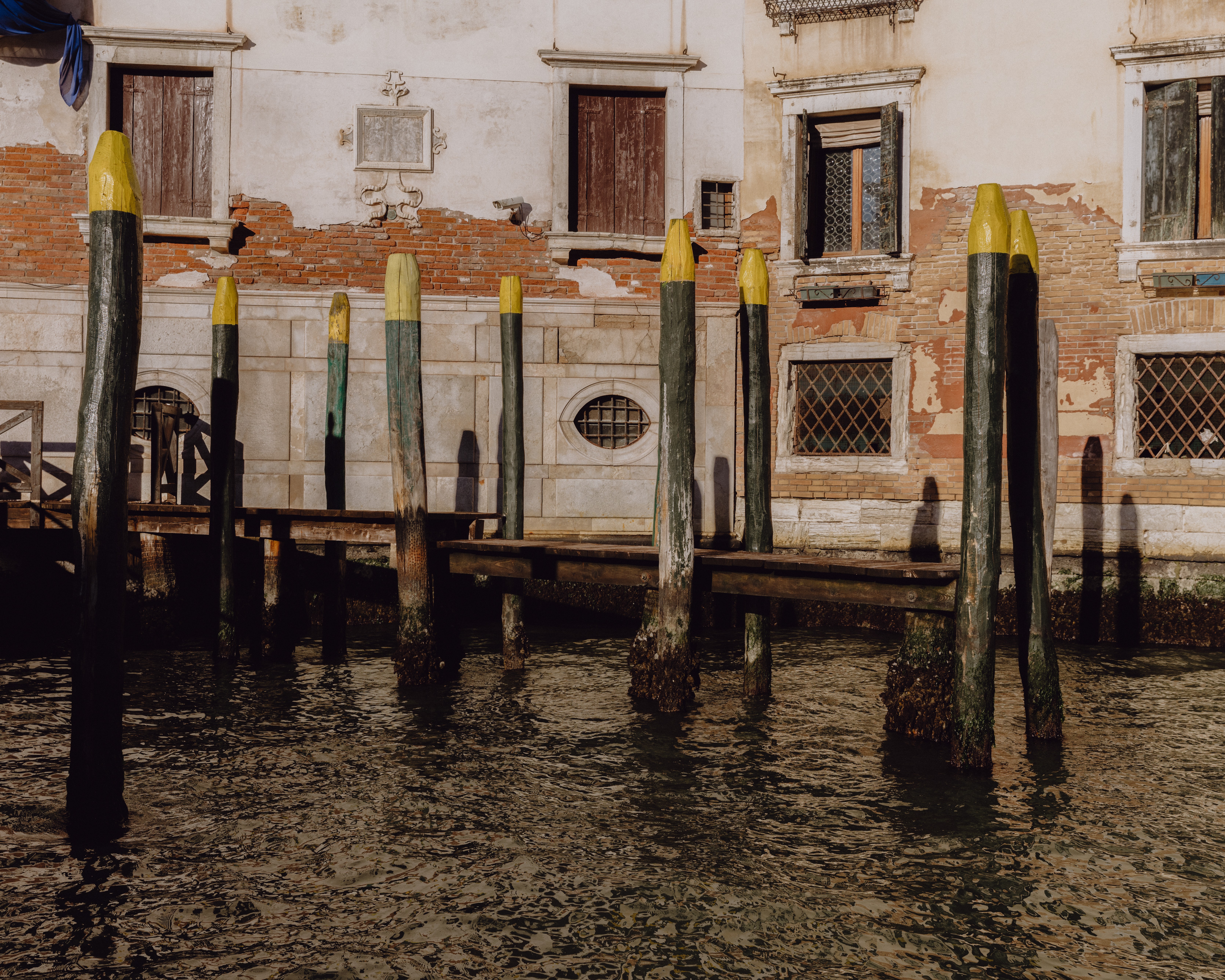
To start with, I was initiated into a whole set of rules. Private boats are allowed in the center of the city only after noon. In the morning, the canals are reserved for delivery boats, such as the one I saw carrying a pile of brown Amazon packages. Parking requires even more specialized knowledge. The paline da casada, the striped poles in front of grand houses, belong to families who have used the same colors for centuries, but even the plain wooden ones are private. Pilots instead tether their boat on metal rings discreetly mounted on some of the canal walls. Matteo always leaves a sign with his phone number on his boat, just in case he has accidentally parked in someone’s space.
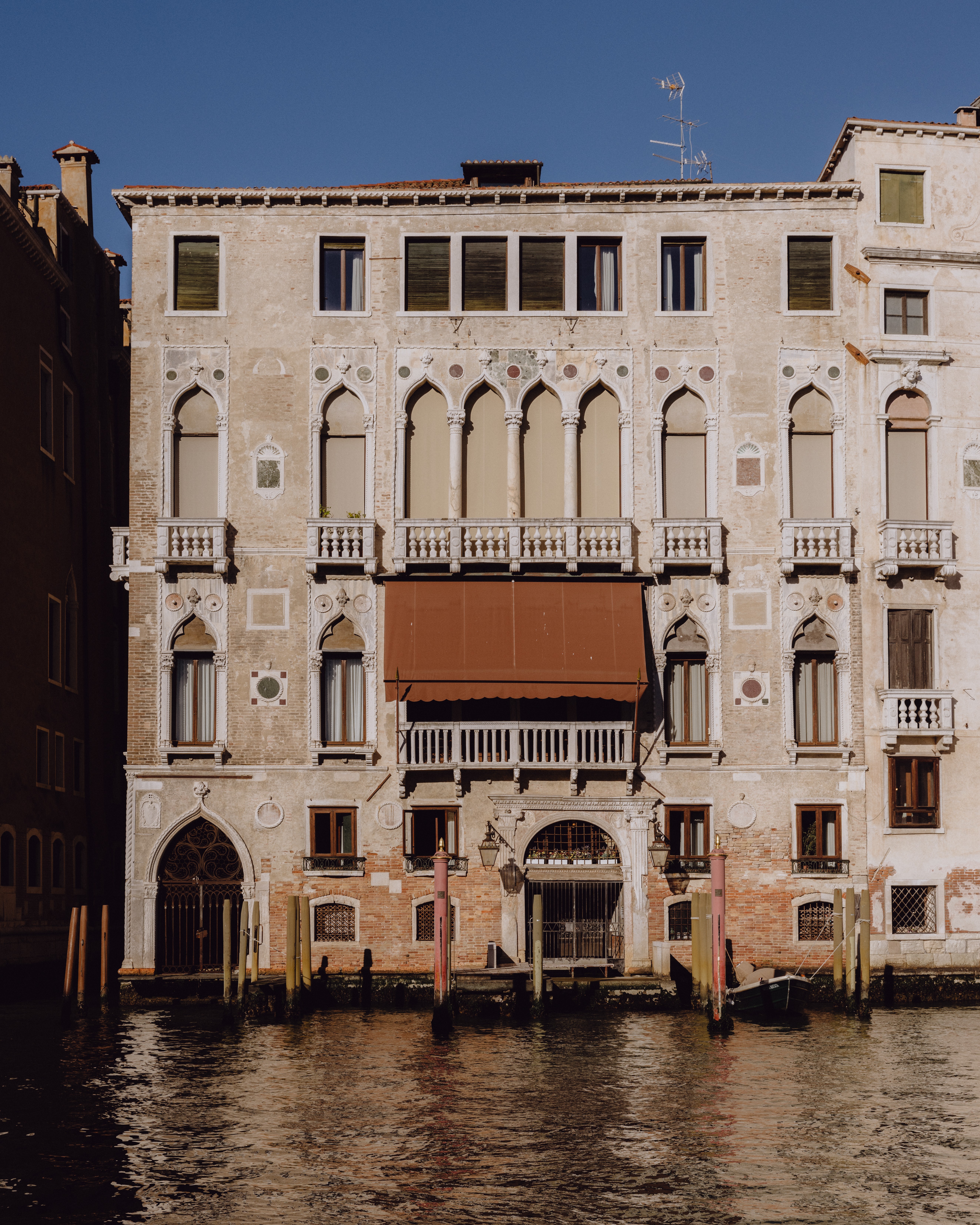
Learning the rules is worth the effort because the facades of the palaces can be seen from the water as they were meant to be seen. The vaporetto, the public water bus, also travels along the large waterways, but in a small vessel you can float right up to the Palazzo Barbaro and see the balcony that James loved to lean on, and watch an egret sun itself beside the Palazzo Mocenigo, where Lord Byron once lived with his dogs, his birds, two “charming monkeys,” a fox, a wolf, and his mistress, who was a Venetian baker’s wife. A motorboat can also access the hidden industrial side of Venice: the ugly but practical railway bridge, much deplored by Ruskin; the marine gas stations; the trash-collection barges; the ambulance boats lined up outside a hospital in case of emergency.
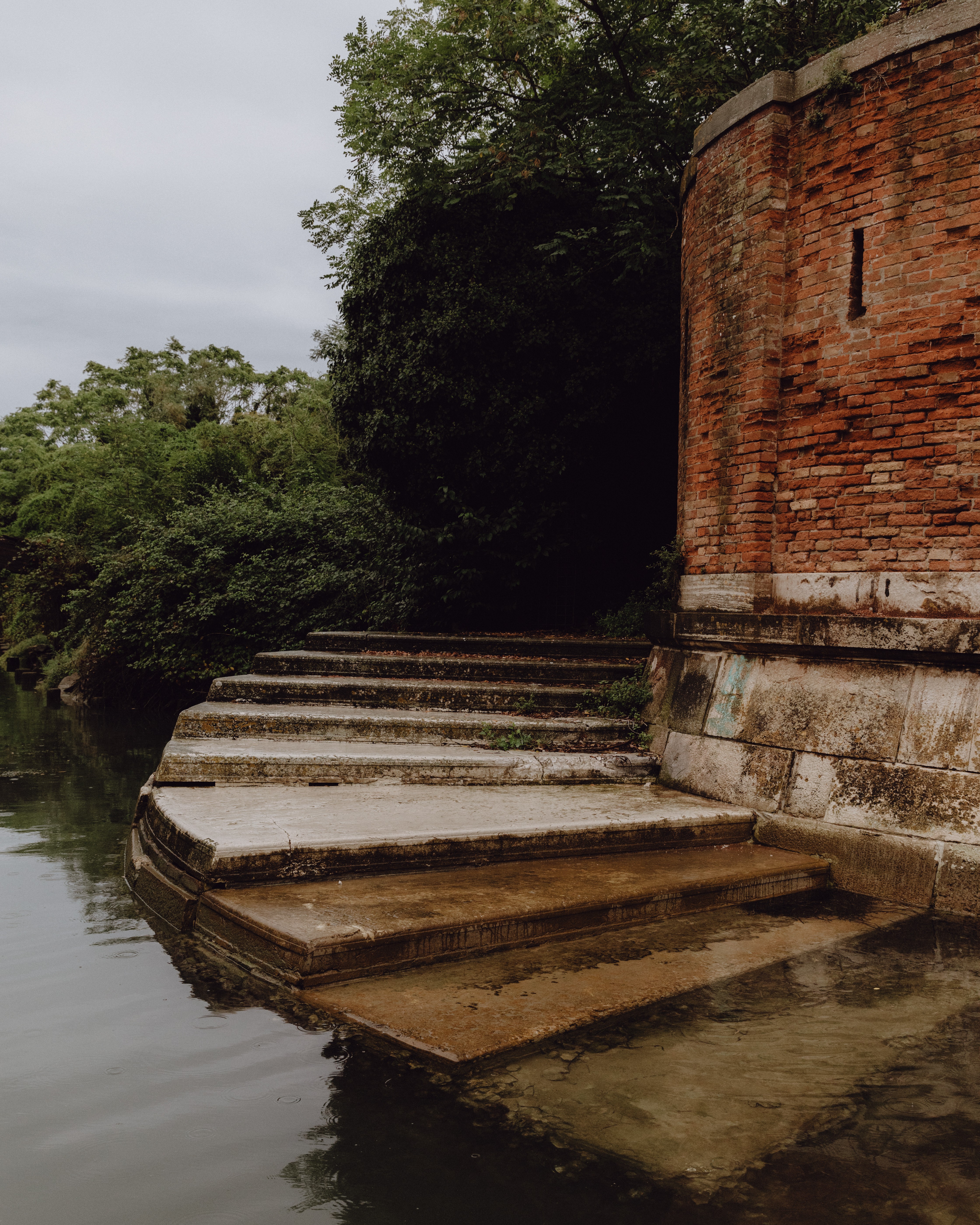
Turn a few more corners and drift farther away from the main island, and a completely different Venice appears: a world of muddy islands, clumps of reeds, abandoned forts, and water reflecting the sky. The remains of a church bell tower mark Poveglia, an island where plague victims were once quarantined that is now, following a local campaign, destined to become a park for city residents. Colonies of ibis, the sacred birds of ancient Egypt, have settled in on several abandoned islets. We saw cormorants, seagulls, and, later, a dolphin that had somehow found its way into the waters just off Santa Maria della Salute. One afternoon, the sky was so clear that we could see the distant Dolomite mountains shimmering above the water, a phenomenon the Venetians call stravedamento.
This deserted, evocative Venice had a deep appeal to romantically minded 19th-century travelers—starting, again, with Ruskin, who especially loved the island of Torcello, home to the first important lagoon settlement. “Mother and daughter,” he wrote of Torcello and Venice, “you behold them both in their widowhood.” Founded in 452 C.E. by Roman citizens fleeing the barbarian invasions of the mainland, Torcello was for several centuries the most populated island in the lagoon, before it was abandoned, probably following a bout of malaria or the plague. Depending on your point of view, Torcello is now a jolly day trip, a reminder of the fragility of civilization, or, as in one of Harold Pinter’s plays, a place that sparks memories of a failed romance.
“Without making this excursion you can hardly pretend to know Venice or to sympathise with that longing for pure radiance which animated her great colourists,” James wrote; he found not much on the island except “a meagre cluster of huts,” a “ruinous church,” and a “perfect bath of light,” which is exactly what he liked about it. Nowadays, Torcello has a small museum. The church, the seventh-century Byzantine Basilica of Santa Maria Assunta, has been restored, thanks to Venice in Peril and Save Venice, among others. On the day I visited, a polite Japanese tour group listened quietly to a guide.
But the seagulls, the reeds, and the light are still there. And the Last Judgement, a golden mosaic covering the basilica’s entire western wall, hasn’t changed much since James saw it, or indeed since it was created nine centuries ago, possibly by artists from Constantinople. Christ still reigns in heaven. The Virgin pays him homage. The righteous are in paradise, standing solemnly beneath palm fronds. The sinners are tortured by demons and suffering in the flames of hell.
The apostles, lined up in a row, seem frozen in time. “Ranged against their dead gold backgrounds as stiffly as grenadiers presenting arms,” James wrote, they appear “to wait forever vainly for some visible revival of primitive orthodoxy.” They are waiting still.
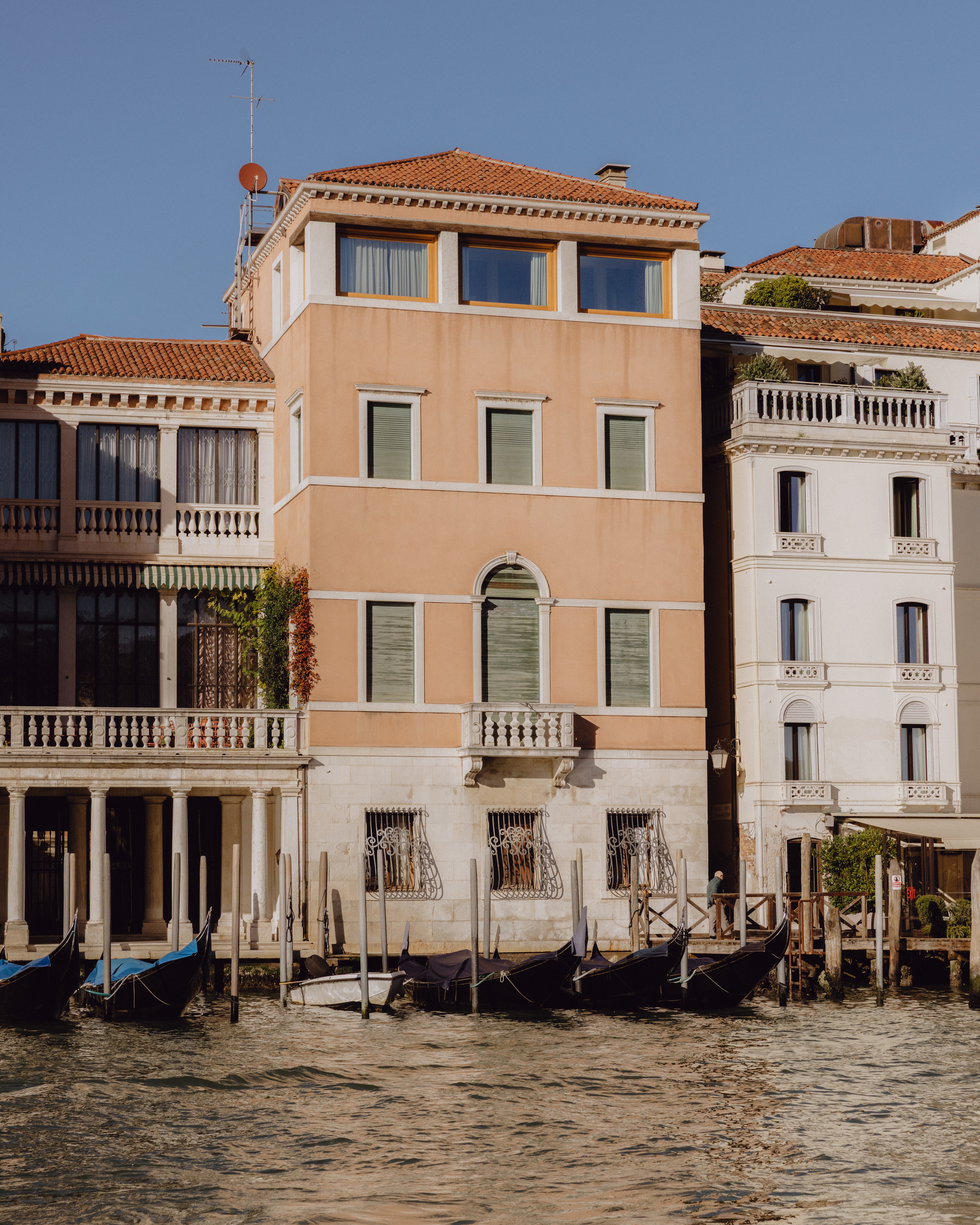
In the end, duplicity was not required. I entered the garden of The Aspern Papers—behind the Palazzo Soranzo Cappello—exactly the same way James did: thanks to friends of friends. In his time, the palazzo was occupied by Julia Constance Fletcher, another American novelist (she wrote under the name George Fleming), and her divorced mother, who had shocked Boston society by running away with a painter. A pair of women, the elder with a scandalous past, might well have inspired the novella, as did stories James had heard in Florence about one of Byron’s mistresses. James had many links to Fletcher. He might have known her through Oscar Wilde (about whom he was ambivalent), through Woolson, or through mutual friends in London.
[Read: An ideal journey through Italy]
My entry into the garden was similarly made possible by my friend Beppe, an Italian journalist, who introduced me to Francesco, who runs a literary festival in Cortina. Francesco talked with Anthony, his former professor, and Anthony told him about Rosella. And Rosella—Rosella Mamoli Zorzi, the author of an indispensable guide, In Venice and in the Veneto With Henry James—spoke with Giuditta, who oversees conservation projects in Venice from her office in the palazzo.
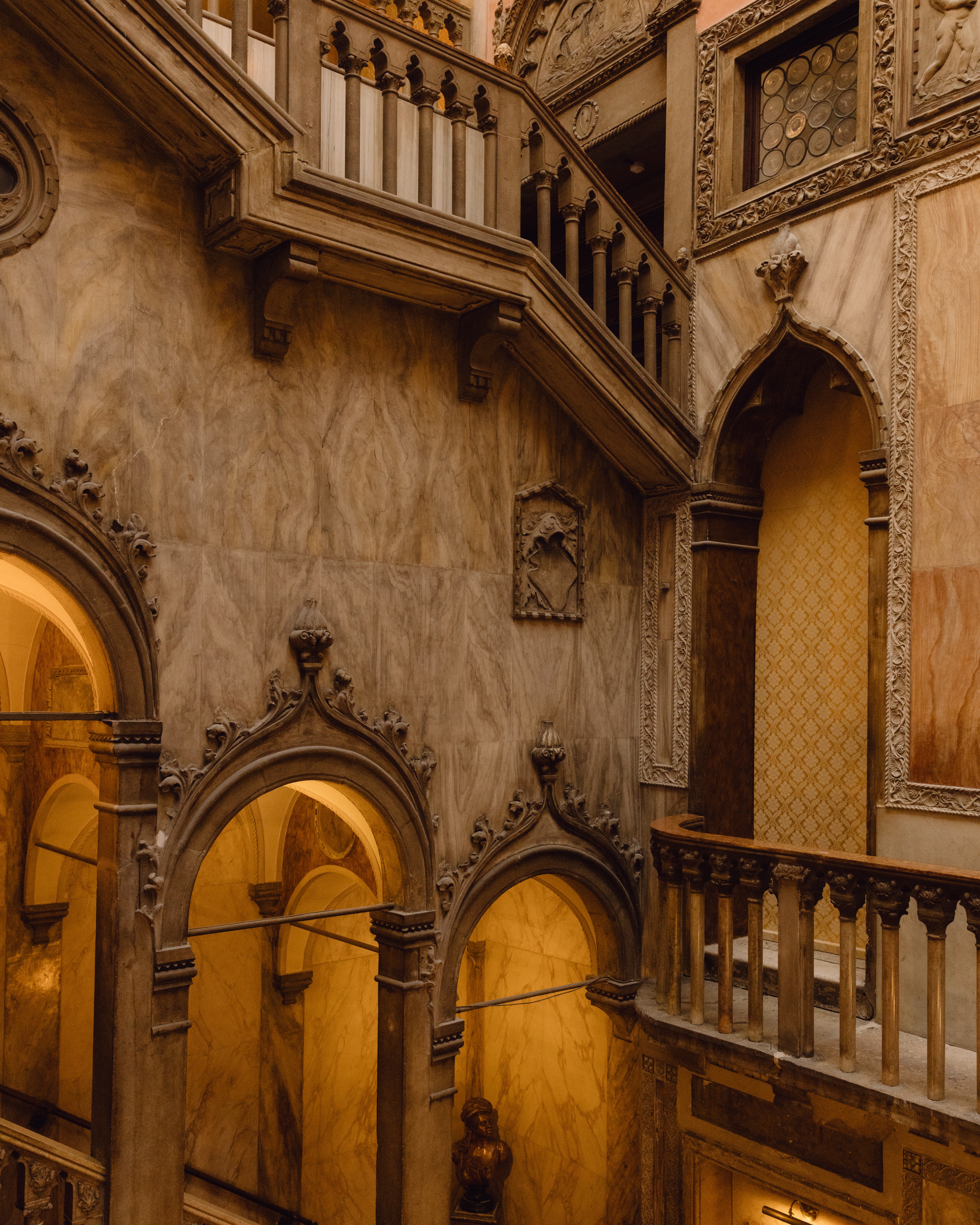
Giuditta escorted us—me, Rosella, Francesco, and Matteo—into the palazzo, which still sits beside what James described as a “clean, melancholy, unfrequented canal.” The central hall, where the narrator was first received, is also still “paved with marble and roofed with dim crossbeams.” The upstairs rooms where the narrator might have stayed are small and mean, but the large downstairs rooms off the central hall (Juliana would have hidden Aspern’s letters in one of them) have high ceilings and doors with stone frames.
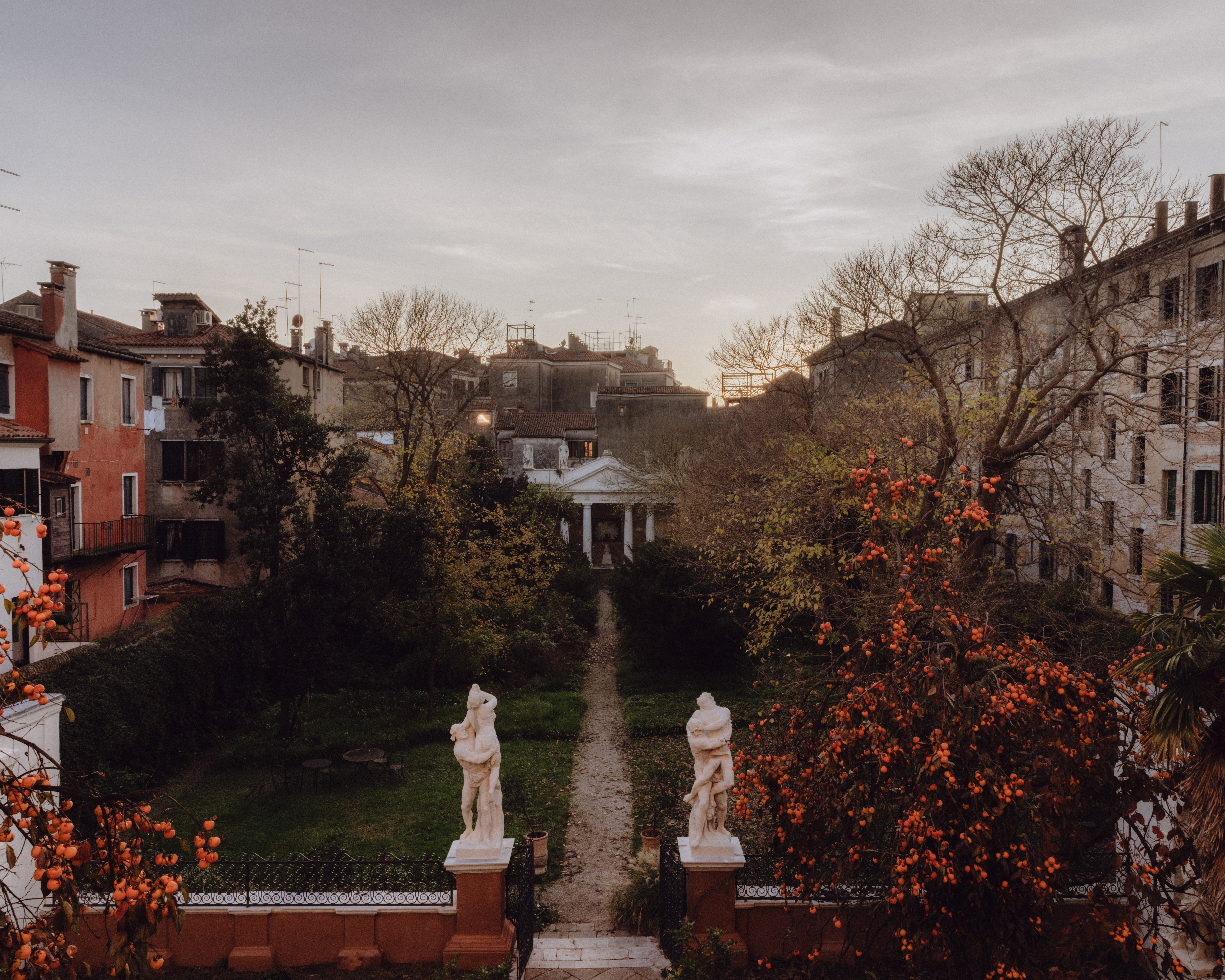
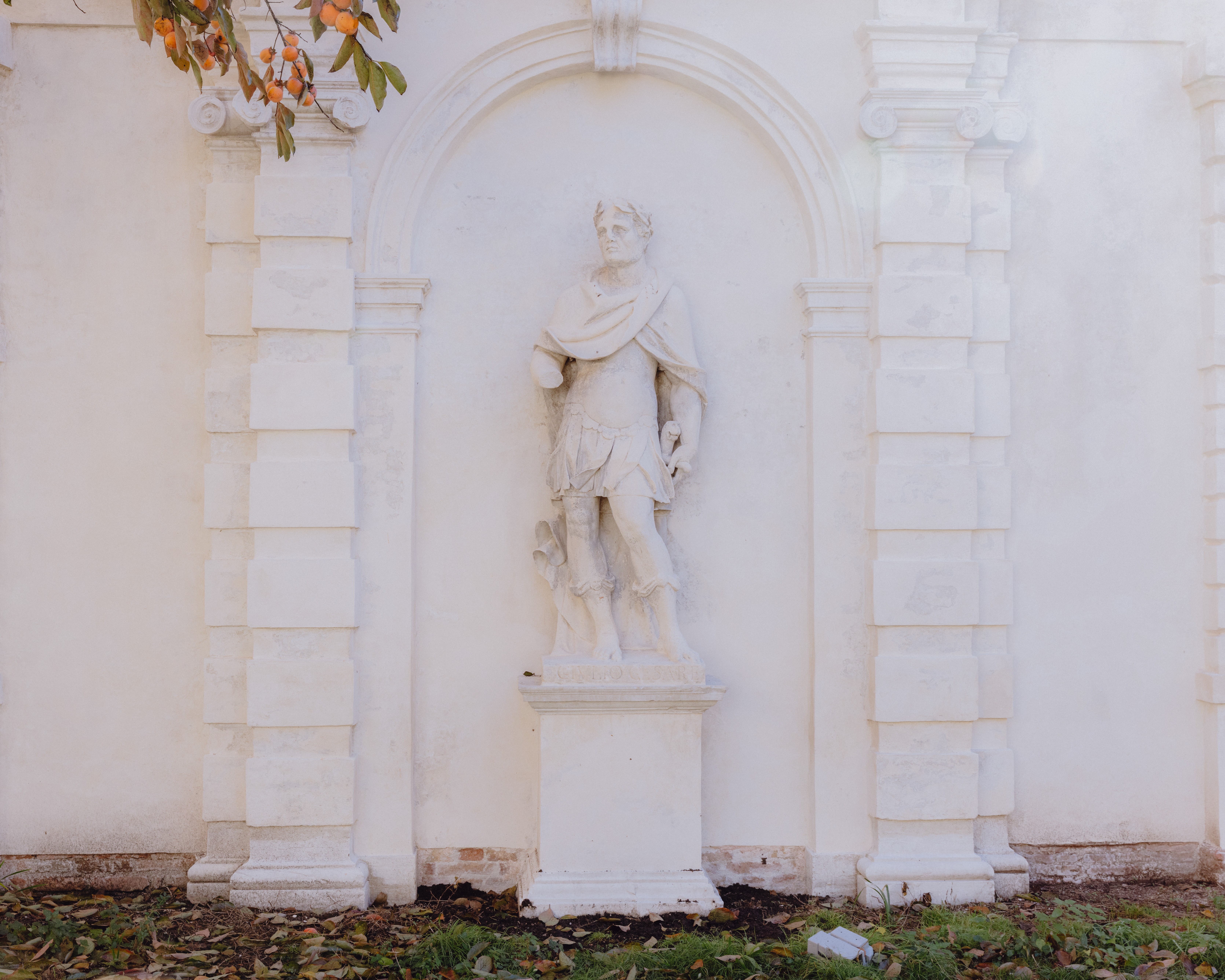
The garden, reached through the back doors, was drenched in sunshine on the day we visited. This time the aesthetic shock came not from the elegance—the grass was overgrown, the lawn covered by leaves—but from the luxury of space. Venice is a very crowded, very urban city with hardly any greenery. But here was a large, old mulberry tree; a clutch of fruit trees, pomegranates and persimmons; ornamental shrubs. Gently weathered statues of various Roman Caesars line the first courtyard; a pathway leads through a gateway toward a pavilion at the far end, where more statues, too decayed to be identified, lurk under the roof.
Many generations of Venetians, starting with the Soranzo family, who laid out the garden in the 16th century, must have come here for respite from the city. So did Fletcher, James, and the Italian poet and novelist Gabriele D’Annunzio, who set a story in the garden too. So does the narrator of The Aspern Papers. “I had floated home in my gondola,” he says about halfway through the novella, “listening to the slow splash of the oar in the narrow, dark canals, and now the only thought that solicited me was the vague reflection that it would be pleasant to recline at one’s length in the fragrant darkness, on a garden bench.”
To his surprise, Tita is sitting in the garden, and for the first time, she speaks frankly with him, as if the open space gives her license to tell secrets. He also speaks frankly with her, or almost frankly. Yes, he tells her, he is a scholar and critic who writes about Jeffrey Aspern. But he feigns ignorance. Might she have any material about the poet? Tita reacts in alarm: “Santo Dio!” she exclaims, and rushes upstairs. Although he doesn’t yet know it, the narrator still has several surprises to come. And so, thanks to my chain of acquaintances, did I.
After several attempts and some misunderstandings, Rosella got hold of Elizabeth. Elizabeth lives in the Palazzo Barbaro, on one of the floors formerly occupied by James’s friends and hosts, Daniel and Ariana Curtis. She rents it from the current owner, who bought it from the Curtis family, who still own the very top floor. Until the day I arrived in Venice, I wasn’t certain whether Elizabeth would be there, or whether she would allow me to visit. But she was, and she did.
We arrived at the back gate and climbed up the same rickety stone staircase that James described as being “held together one scarce knew how.” The walls of the entry hall, covered in green fabric, were reminiscent of James’s “walls of ancient pale-green damask, slightly shredded and patched.” Elizabeth showed us the dining room, with its patterned floor and—unusual for the city—windows on both sides. She explained to us with what care one cleans an ancient apartment in Venice, and how gingerly one must close doors whose frames have shifted with time.
[Read: An innocent abroad in Mark Twain’s Paris]
Finally, she took us to see the ballroom, a salon whose high ceilings were created in the 17th century by knocking together two medieval palaces. In this room, the Barbaro family once listened to concerts. Sargent painted An Interior in Venice here, a portrait of the Curtis family that Mrs. Curtis hated. James wrote voluminous letters. Robert Browning read his poems. Isabella Stewart Gardner held court wearing her long string of pearls. Elizabeth drew our attention to the painting on the back wall, The Rape of the Sabine Women, and told us that Hermann Goering had allegedly seen and coveted it but couldn’t figure out how to get it out of the building.
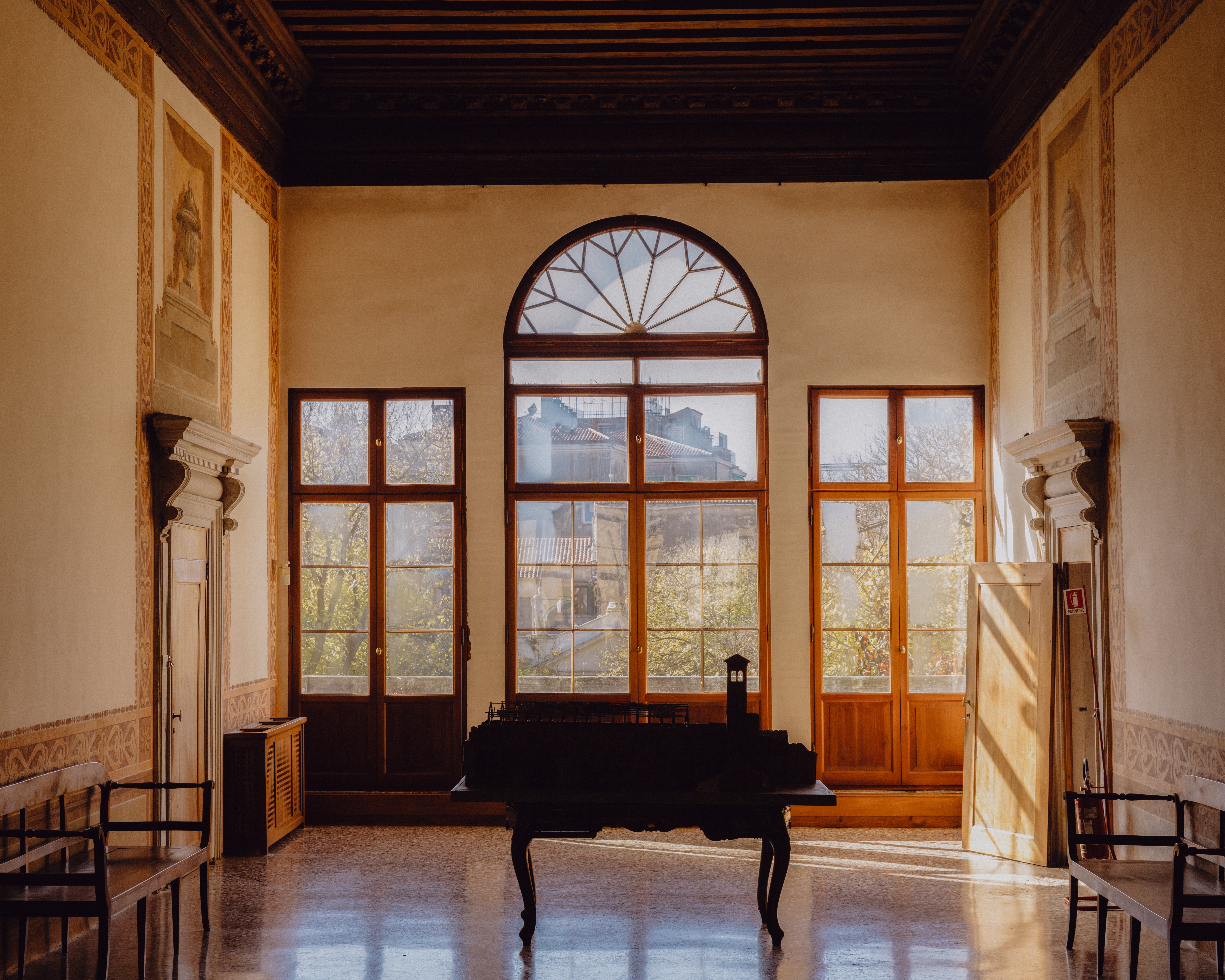
We turned toward the windows. The salon was dark and cavernous behind us, the heavy paintings in gold frames dominating Elizabeth’s sparse and modern furniture, the delicate stucco on the walls, the stone floors. Light streamed in from the windows, exactly as light does in a Tintoretto painting. When Elizabeth invited us to step onto the balcony, we gazed down at the Grand Canal. And we saw what James described in 1882:
If you are happy, you will find yourself, after a June day in Venice (about ten o’clock), on a balcony that overhangs the Grand Canal, with your elbows on the broad ledge, a cigarette in your teeth and a little good company beside you. The gondolas pass beneath, the watery surface gleams here and there from their lamps, some of which are colored lanterns that move mysteriously in the darkness. There are some evenings in June when there are too many gondolas, too many lanterns, too many serenades in front of the hotels. The serenading in particular is overdone; but on such a balcony as I speak of you needn’t suffer from it, for in the apartment behind you—an accessible refuge—there is more good company, there are more cigarettes. If you are wise you will step back there presently.
It was November, not June, and it was daytime, not evening—but still, I considered myself lucky. In the final scene of The Aspern Papers, Tita tells the narrator that she has destroyed Jeffrey Aspern’s letters. “Yes; what was I to keep them for? I burnt them last night, one by one, in the kitchen.”
The narrator is forever cut off from the past, forever unable to slake his curiosity. But I did, just briefly, touch Henry James’s Venice.
Travel Notes
Riva degli Schiavoni
If you want to wake up in the morning and see the view that James had while he was writing The Portrait of a Lady, spend a night in the same building he did, now the Pensione Wildner—I did and discovered, sadly, that the building has seen better days. The identical view is also available in the more elegant (and more expensive) Hotel Danieli, a few hundred yards down the quay, which is also where Miss Evans stays in Travelling Companions. In either place, ask for a room overlooking the water. Peer out the window, and you will see “the far-shining lagoon, the pink walls of San Giorgio, the downward curve of the Riva, the distant islands, the movement of the quay, the gondolas in profile.”
Hotel Danieli, Riva degli Schiavoni, 4196, 30122 Venezia VE, Italy
Palazzo Soranzo Cappello
You, too, can visit the garden, even without friends of friends to help you, although you will have to plan your trip with care. The garden opens to the public a few days a year, in the autumn and spring. Check the local Superintendence for Cultural Heritage website for updates, use Google Translate if you need to, and be persistent. Presumably, the garden’s caretakers rake the leaves when they know people are coming.
Ramo Quinto Gallion O del Pezzetto, 770, 30100 Venezia VE, Italy
Chioggia by bike
Lord Byron liked to gallop his horses down the beaches of the Lido, the island in the outer part of the lagoon that was the backdrop to Thomas Mann’s novel (and Luchino Visconti’s film) Death in Venice. Nowadays there aren’t too many horses, but you can rent bikes. Ride to the end of the island, hop on a ferry to reach the next island, and keep doing this until you reach Chioggia, the fishing village once painted by John Singer Sargent and remembered by James for its “bright colored hovels.” Lots of small restaurants along the water will serve you a very fresh piece of fish. I did this 25 years ago, and I still remember it as one of the best days of my life.
Isola di San Michele
In late October, in time for All Saints’ Day, the Venetians build a temporary pontoon bridge tothe cemetery island, and for a few days you can walk over, which I did. At other times of the year, take the vaporetto. Napoleon, horrified by bad hygiene in Venice, ordered the construction of the cemetery. The tombs date from the 19th century, although the church is older. The Orthodox section contains some notable Russian exiles, including Igor Stravinsky and Sergei Diaghilev. The poet Joseph Brodsky, who once described the city of Venice as “the greatest masterpiece our species produced,” is buried in the Protestant section (he was Jewish, so the Orthodox wouldn’t take him), as is the American poet Ezra Pound, a virulent anti-Semite.
Isola di San Michele, 30100 Venice, Metropolitan City of Venice, Italy
Nevodi
Nevodi means “nephews” in the Venetian dialect, and this is a family-run restaurant in the residential Castello district that feels like one—assuming your nephews make subtle fish sauces, use vegetables from local gardens, bake homemade bread, and serve everything with bespoke olive oil. I had the cuttlefish pasta with black squid ink and didn’t regret it. James doesn’t write about food in Venice, perhaps because Venice is one of the few cities in Italy where you can easily pay a lot of money for a bad meal (I did that a few times too), so find a place you love and keep going back.
Arsenale di Venezia
Visit the city during the Biennale, the international art exhibition; I have always found the art lovers as entertaining as the art. Many are dressed, as Isabella Stewart Gardner often was, from head to toe in designer black. Much of the Biennale takes place in or near the medieval arsenale, where in the 16th century, well before the Industrial Revolution, the Venetians mass-produced nearly one ship every day. It was the source of their commercial and political power and was, in its day, every bit as high-tech as a modern data center, which is perhaps why it was not remotely interesting to James.
Church of Madonna dell’Orto
This is Tintoretto’s parish church, tucked away in the Cannareggio district, well away from the crowds. Built in the mid-14th century, it got its name from a statue of the Virgin found to be working miracles in a nearby orchard. Tintoretto’s house, where he was born and lived all of his life, is around the corner; a plaque commands visitors to remember him. The church courtyard is one of the few in Venice to retain its original brick paving. Inside you can find Tintoretto’s tomb and 10 of his paintings, including Presentation of the Virgin at the Temple, which features Mary as a child, looking small and scared. “You seem not only to look at his pictures, but into them,” James wrote. “I’d give a great deal to be able to fling down a dozen of his pictures into prose of corresponding force and color.”
The post Henry James’s Venice Is Still Here appeared first on The Atlantic.