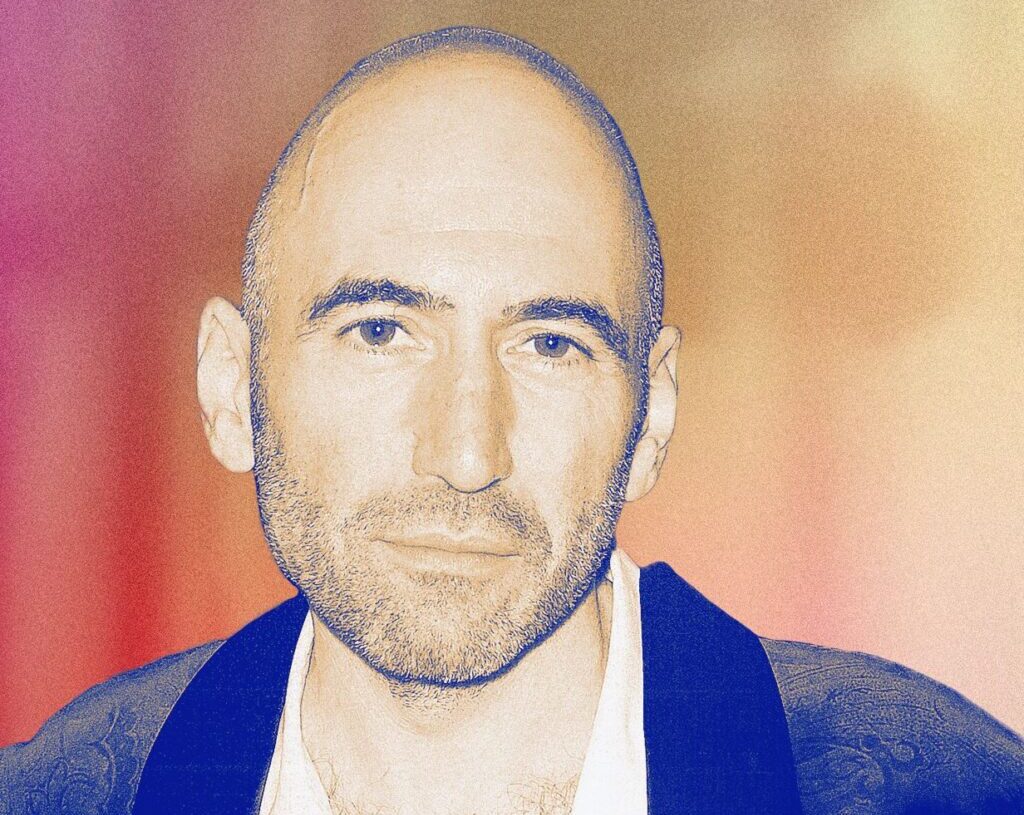
Every Grindr user is unique. Italian men love feet. South Koreans prefer open relationships. The highest percentage of self-proclaimed “daddies” call the US home and Switzerland is overrun with twinks. Delivered by annual trend report Grindr Unwrapped, those critical insights offer the type of information that will help usher the company into its “AI-first” era where it’s “the everything app for the gay guy,” CEO George Arison tells WIRED.
Grindr was the first to leverage geo-location tech when it burst onto the scene in 2009. Arison arrived at the company in 2022 from the world of automotive ecommerce. With him at the helm, the company has undergone “a bit of a refounding,” he says, including a major overhaul of staff—85 percent of current 160 US employees were hired in the last three years—and bigger investments in product.
All of his moves, he says, have been about building trust with users. Grindr may indeed be the most popular gay dating and hookup app in the world, but its popularity has only made it a target of controversy, including a 2024 lawsuit that alleged users’ HIV status and testing information was shared with third-party vendors and, in July, criticism for blocking users who posted the phrase “no Zionists” in their profile. Skepticism over Arison’s conservative politics probably hasn’t helped either.
Even so, Arison tells me he is laser focused on the task ahead. One that almost didn’t happen. Controlling stakeholders Raymond Zage and James Lu submitted an offer to take the company private in October. The bid—a buyout that valued the company at $3 billion—came to an anticlimactic end in November when they failed to come up with the money. The acquisition could have potentially derailed Arison’s priorities, but for now, that’s all behind him.
This interview has been edited for clarity and length.
JASON PARHAM: Grindr is now positioning itself as more than a place for hookups. It wants to be a social everything app—why?
GEORGE ARISON: We didn’t really have a mission before 2023. But it was always more than a hookup app because it was being used for so many different things, but no one had said, OK, this is what we want to be. This year is when we really went after the gayborhood vision. Now we are actually building features that intentionally support all these different use cases in which people are engaged in on the app.
Like what?
We articulated three broad themes. One is health and wellness. Another is travel and luxury life experiences. And the third is local discovery. We are not doing all of them at once but we are very actively going after health. We’ve built out a product called Woodwork, which is offering users various medications with a very gay point of view on them. (Woodwork sells erectile dysfunction pills and GLP-1 weight loss medication.) But we are going to go beyond that. STD prevention and treatment is totally something we should be doing. You can already order an HIV test to be delivered to your home on Grindr. Half a million people in the US have done it. Grindr also popularized Prep as a concept. We were the first app to allow people to add that to their profile. Maybe you should be able to order it through the app as well, where you can do refills and we send reminders. Or if you are on Yeztugo, which is a twice a year shot [to reduce the risk of getting HIV], we help set that up. Right now we’re probably one of the main players working on PEPFAR, which is the US government program that funds access to HIV medications around the world. Within 12 to 18 months, Grindr is going to be just as much a gay social product as a gay public health product.
That’s ambitious.
I don’t want people to think of the business of Grindr as separate from its social mission. It’s the same cycle, where success in the business allows us to be more successful at advancing rights for gay people, or public health for gay people, or whatever else we can do on our users behalf.
Do you think users have the right to feel worried about Grindr being run by a CEO who politically identifies as conservative during this moment? The Trump admin hasn’t exactly been receptive to advancing queer rights.
Grindr is not in the business of politics at all. I don’t comment on politics, which has been my policy since I have been here, so I’m not going to comment on that. Gay people have very different views and it’s not something that, I think, should impact how I run a company. My job is to ensure that users have a fun and sexy place to enjoy their lives outside of politics. People come to Grindr not for politics but for other things. Unless it is fundamentally connected to our core business we don’t make political comments.
But users do bring their politics to the platform. In July there was public outcry over blocking users who posted the phrase “No Zionists” in their profile.
We’ve commented on that already, but I am happy to have the team send you the release about that. [According to the statement, “discriminatory language, hate speech, abusive statements, and exclusionary “no” statements—including those targeting race, ethnicity, religion, nationality, gender identity, or other protected characteristics—don’t belong on Grindr. Instead, we encourage people on Grindr to express their desires in a positive way by stating what they are looking for.”]
Controlling stakeholders tried—and failed—to take the company private over the course of the last few months. How are you feeling about that?
I can only say things that are public, but I’ll say a few things. One, it’s really critical to recognize that the three investors—Ray, James, and Michael Gearon—who bought this company from Chinese ownership in 2020 saved the company. There was no investment being done in produc t during the ownership period from 2017 through 2020. The team had been destroyed and the technical debt that the company was accruing was incredibly heavy. Eventually it would negatively impact the product. So they did a great service in rescuing the company from Chinese ownership. They are investors so they did it for financial reasons, obviously, but there was a big benefit that came out of it. And then they took the company public [in November 2022].
So what changed this year?
In October there was an offer from Ray and James to take the company private. The board took the offer very seriously and appointed a committee of independent and interested directors to engage with the proposal. They spent a lot of time on it. The board sought clarity from the investors—how are they going to fund this, with what social capital, how are they going to make it happen? The committee wasn’t able to get an answer to its satisfaction and decided that it didn’t make any sense to continue conversations after many weeks. So the shareholders withdrew the offer.
One employee I spoke to said Grindr staying publicly traded invites more scrutiny, which is a good thing. Do you agree?
There are a lot of pluses to being public. There’s a lot of historical, negative stereotypes about Grindr, and frankly about gay people in people’s minds that have accrued over many decades, especially in the 17 years that we have been around. Being public offers you a platform to clean all that up.
I imagine there are also disadvantages to being public.
Of course. But overall being public really helps us. One of the big motivators of being here is to show the world what a gay company can be. We did $195 million in revenue in 2022, and we are going to do more than that [this year]. When we talk about getting to a billion in revenue—that’s not a crazy thought; we can very much get there.
Several of the features Grindr launched this year, you’ve said, were targeted investments in AI.
We want to become an AI-first business. We are building and creating for users in that sense, and in a way that is able to address some of the most difficult problems that gay people face.
Such as?
Dating in the gay world is complicated by lack of density. In most geographies the totality of gay people is actually quite small but dating in the world is all about geography. It’s about who is local to me. If we could give you a lot more rich data about somebody else—obviously with their consent—that told you why it made sense for you to be talking to somebody, and we did that with another person, you might be much more willing to open a conversation. Which would really solve a very significant issue, especially when you consider the fact that 50 percent of gay men in the US under 35 say that they want to be in a relationship.
How is Grindr better protecting its users on the platform?
Since the transition from Chinese ownership, it’s definitely become an even more important focus. We view it as a business imperative. People trust us with extremely important information. Many people who use Grindr are not out, or are out only partially. So we need to treat that with a certain level of discretion. Oftentimes we make choices that are maybe not the best user experience but ones that are right from the privacy perspective.
Like what?
People will say, “Hey, the ad I’m seeing is not very targeted to me, it’s not helpful.” But we don’t target you because we’re protecting your privacy. It’s a catch 22. There are also people who think that profiles should be verified. There are other applications that require you to have a face picture. We choose not to do these things because a third of Grindr users are discreet and [going through a verification process] is not in their interest. Privacy is paramount to us.
Age-verification is a big issue now. How are you dealing with that?
We are deploying a lot of tech to ensure that things that are illegal don’t happen in the app, some of which identifies people who might not be 18 or who might have conversations about things that are not of age. We ban them permanently. With AI we’re able to do that a lot better than we could do before. We also have human moderators on top of that.
There was a controversy over Grindr’s race filter in 2020. The feature was ultimately discontinued. That was before your time but I’m curious how you are positioning the company to avoid issues like that in the future?
It’s one of the most challenging topics to this day. There are several people who believe that having race filters resulted in some people being mistreated. There are other people who believe that not having race filters makes the product unusable for them because they want to find people who match the race or ethnicity that they are interested in. I hear from users on both sides. I’ve never said this publicly but if I had been CEO I probably would not have made that decision [to discontinue the filter]. It was not the right answer for what users needed and there were other ways that their concerns could have been addressed. Frankly, I have not prioritized addressing that topic in the three years that I have been here because we’ve had some really big priorities to deal with. It’s a challenge, and we are never going to be able to avoid issues like that. It’s the reality of how big we are.
So what’s Grindr’s biggest priority right now?
Building from the user-first perspective is really critical. We totally know that a lot of things we’ve created are not going to automatically be the right answers for people; meaning there are going to be things that you build that don’t work out, but over time we get feedback and revise it. We shouldn’t assume that just because some people say something on social media that all users necessarily agree with that. I don’t think that is a realistic position to hold. People will have many different opinions about what is happening in the app or what might be going on right now. We’re never going to satisfy everybody and I don’t think we should be in the business trying to satisfy everybody.
The post Grindr Goes ‘AI-First’ as It Strives to Be an ‘Everything App for the Gay Guy’ appeared first on Wired.