If you’re looking for where the most crucial governmental backlash to a merger deal involving Warner Bros. Discovery, you might want to turn your attention east — to Europe, where regulators are girding to take an early look at any such deal.
Both of the leading bidders — Netflix, which has the blessing of the WBD board, and Paramount, which launched a hostile takeover bid — could face obstacles from the European Union. EU officials have spoken only vaguely about their role in judging whatever deal emerges, since the outcome of the tussle remains in doubt.
The European Commission “could enter to assess” the outcome in the future, Teresa Ribera, the EU’s top antitrust official, said last week at a conference in Brussels, but she didn’t go beyond that. Pressure is mounting within Europe for close scrutiny of any deal.
As early as May, UNIC, the trade organization of European cinemas, expressed opposition to a Netflix deal. The exhibitors’ concern is Netflix’s disdain for theatrical distribution of its content compared to streaming.
“Netflix has time and again made it clear that it doesn’t believe in cinemas and their business model,” UNIC stated. “Netflix has released only a handful of titles in cinemas, usually to chase awards, and only for a very short period, denying cinema operators a fair window of exclusivity.”
Neither WBD nor Netflix has commented on the prospect of EU oversight of their deal. Paramount, however, has made it a key point in its appeals to the WBD board and shareholders.
In both overtures, Paramount made much of the size and potential anti-competitive nature of Netflix’s acquisition of WBD. In a Dec. 1 letter sent via WBD’s lawyers, Paramount asserted that the Netflix deal “likely will never close due to antitrust and regulatory challenges in the United States and in most jurisdictions abroad. … Regulators around the world will rightfully scrutinize the loss of competition to the dominant Netflix streamer.”
Netflix’s dominance of the streaming market is even greater in Europe than in the U.S., Paramount said, citing a Standard & Poor’s estimate that Netflix holds a 51% share of European streaming revenue. That figure swamps the second-place service, Disney, with only a 10% share. Paramount made essentially the same points in its Dec. 10 letter to WBD shareholders, launching its hostile takeover attempt at Warner.
European business regulators have been rather more determined in scrutinizing big merger deals — and about the behavior of major corporate “platforms” such as Google and X.com — than U.S. agencies, especially under Republican administrations. One reason may be the role of federal judges in overseeing antitrust enforcement by the Federal Trade Commission.
“Despite the European Commission (EC) successfully doling out fines numbering in the billions of euros for giants like Apple and Google for distorting competition, the FTC has struggled significantly in court, losing virtually all its merger challenges in 2023,” a survey from Columbia Law School observed last year.
The survey pointed to differing legal standards motivating antitrust oversight: “American courts have placed undue weight on preventing consumer harm rather than safeguarding competition; by contrast, the EU has remained centered on establishing clear standards for competitive fairness.”
In September, for example, the European Commission fined Google nearly $3.5 billion for favoring its own online advertising display services over competing providers. (Google has said it will appeal.) The action was the fourth multi-billion-dollar fine imposed on Google by the EC since 2017; Google won one appeal and lost another; an appeal of the third is pending.
As an ostensibly independent administrative entity, the EC at least theoretically comes under less political pressure from the 27 individual members of the European Union than the FTC and Department of Justice face from U.S. political leaders.
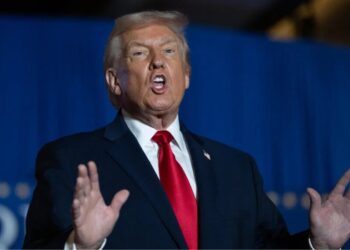
President Trump has made no secret of his doubts about the Netflix-WBD deal. As I reported last week, Trump has said that Netflix’s deal “could be a problem,” citing the companies’ combined share of the streaming market. Trump said he “would be involved” in his administration’s decision whether to approve any deal.
That feels like a Trumpian thumb on the scale favoring Paramount. The Ellison family is personally and politically aligned with Trump, and among those contributing financing to the bid is the sovereign wealth fund of Saudi Arabia, a country that has recently received lavish praise from Trump. Another backer is Affinity Partners, a private equity fund led by Jared Kushner, Trump’s son-in-law.
The most important question about European oversight of the quest for WBD is what the regulators might do about it. The European Commission tends to be reluctant to block deals outright. The last time the EC blocked a deal was in 2023, when it prohibited a merger between the online travel agencies Booking.com and eTraveli. The EC ruling is under appeal.
At least two proposed mega-mergers were withdrawn in 2024 while they were under the EC’s penetrating “Phase II” scrutiny: the acquisition of robot vacuum cleaner maker iRobot by Amazon, and the merger of two Spanish airlines, IAG and Air Europa.
Typically, the EC addresses potentially anticompetitive mergers by requiring the divestment of overlapping businesses. In the case of Netflix and WBD, the likely divestment target would be HBO Max, which competes directly with Netflix in entertainment streaming. Paramount’s streaming service, Paramount+, also competes with HBO Max but not on the same scale as Netflix.
Antitrust rules aren’t the only possible pitfall for Netflix and Paramount. Others are the EU’s Digital Services Act and Digital Markets Act, which went into effect in 2022. The latter applies mostly to social media platforms—the six companies initially deemed to fall within its jurisdiction were Alphabet (the parent of Google), Amazon, Apple, ByteDance (the parent of TikTok), Meta and Microsoft. Those “gatekeepers” can’t favor their own services over those of competitors and have to open their own ecosystems to competitors for the good of users.
The Digital Services Act imposes rules of transparency and content moderation on large digital services. No platforms owned by Netflix, Paramount or WBD are on the roster of 19 originally named by the EU as falling under the law’s jurisdiction, but its regulations could constrain efforts by a merged company to move into social media.
The EU also has begun to show greater concern about foreign investments in strategic assets. Traditionally, these assets are those connected with national security. But defining them is left up to member countries. As my colleague Meg James reported, the sovereign funds of Saudi Arabia, Abu Dhabi and Qatar have agreed to back the Ellisons’ WBD bid with $24 billion — twice the sum the Ellison family has said it would contribute.
The Gulf states’ role has already raised political issues in the U.S., since the cable news channel CNN would be part of the sale to Paramount (though not to Netflix). Paramount says those investors, along with a firm associated with Kushner, have agreed to “forgo any governance rights — including board representation.”
That pledge aims to keep the deal out of the jurisdiction of the U.S. government’s Committee on Foreign Investment in the United States, or CFIUS, which must clear foreign investments in U.S. companies. But whether it would satisfy any European countries that choose to see Warner Bros. Discovery as a strategically important entity is unknown.
Then there’s Trump’s apparent favoring of the Paramount bid. Trump is majestically unpopular among European political leaders, who resent his pro-Russian bias in efforts to end Russia’s invasion of Ukraine. Trump has castigated European leaders as “weak” stewards of their “decaying” countries.
The administration’s recently published National Security Strategy white paper advocated “cultivating resistance to Europe’s current trajectory” and extolled “the growing influence of patriotic European parties,” which many European leaders interpreted as support for antidemocratic movements.
The document “effectively declares war on European politics, Europe’s political leaders, and the European Union,” in the judgment of the bipartisan Center for Strategic and International Studies.
How all these forces will play out as the bidding war for WBD moves toward its conclusion is imponderable just now. What’s likely is that the rumbling won’t stop at the U.S. border.
The post Serious backlash to a Netflix/Warner Bros deal may come from European regulators appeared first on Los Angeles Times.