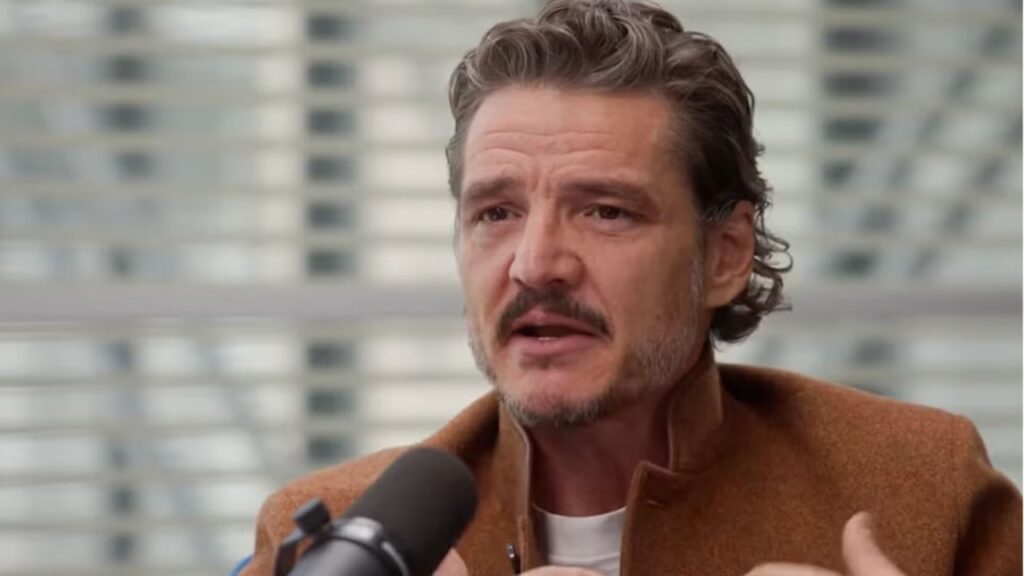
Pedro Pascal opened up about his mother’s death by suicide and his own struggles with mental health during an emotional conversation with The New York Times’ Lulu Garcia-Navarro while promoting his latest film, “Behemoth!,” written and directed by Tony Gilroy. The actor said he understood the pain his mother experienced and ultimately sought help for himself.
In the latest episode of the Times’ “The Interview” podcast, published Saturday, the 51-year-old actor got vulnerable about his mother, Verónica Pascal Ureta, who died in 2000 when he was 24. He described her life as marked by significant upheaval, including becoming a political refugee, raising two children in a new country and eventually returning to Chile.
Pascal said his mother met his father when she was 15 and had two children by the time she was 22. He was careful not to disclose too much about the family circumstances surrounding her life, noting that he wanted to protect relatives who were still alive.
“I think her heart was broken and she didn’t make it,” he said. “And it’s sort of like surviving — it’s like some people don’t survive these injuries.”
The actor shared becoming increasingly concerned about his mother in the years before her death. At the time, he was living in the United States while she was in Chile, and he was still struggling to find consistent work as an actor. He said he was desperately trying to book a television series that could provide enough money to bring her to live with him.
“There were years leading up to it where she felt in peril to me. And this was my ultimate fear,” Pascal said. “We were separated by continents, and I was desperately trying to get a job. Trying to get a TV series that would mean that I could pay for my mother to come and live with me in the States.”
When Garcia-Navarro asked whether he wanted his mother to move in with him because he saw her spiraling, Pascal confirmed that was the case. He acknowledged that she was not a simple person but emphasized that she had been a good mother, saying, “She had kids very, very young, but she was a good mom.”
Pascal then pushed back against what he described as simplistic explanations for suicide, arguing that the emotional and physical effects of heartbreak deserved more consideration.
“I think that the one that we’ve never really talked about is that it was heartbreak,” he explained.
As he considered the pain his mother must have experienced, Pascal questioned the idea that suicide could be understood simply as a matter of choice.
“Can you imagine the kind of pain that you would be in to have the courage to end your life?” the actor said while breaking down and crying. “I just have nothing but compassion for that, and I also understand it. I know exactly what it feels like. And what I’ve done is ask for help.”
Pascal went on to discuss the role that therapy has played in his life, revealing that he had been in treatment on and off for most of his adult years.
“You feel like you make a lot of progress, and you slip back a lot, too. All of these things are so nonlinear,” he said.
The actor also spoke about how his mother’s death influenced his professional identity. Although he was born José Pedro Balmaceda Pascal, he began using his mother’s surname professionally after her death, while struggling to establish himself in Hollywood. “I didn’t start changing my name until after my mother died because there was such a desperation that I felt,” Pascal said. “One, I wanted her [last] name, and two, I was in such grief, and getting work would mean that my life would make sense.”
The post Pedro Pascal Cries While Saying He Has ‘Nothing but Compassion’ for Mother Who Died by Suicide appeared first on TheWrap.