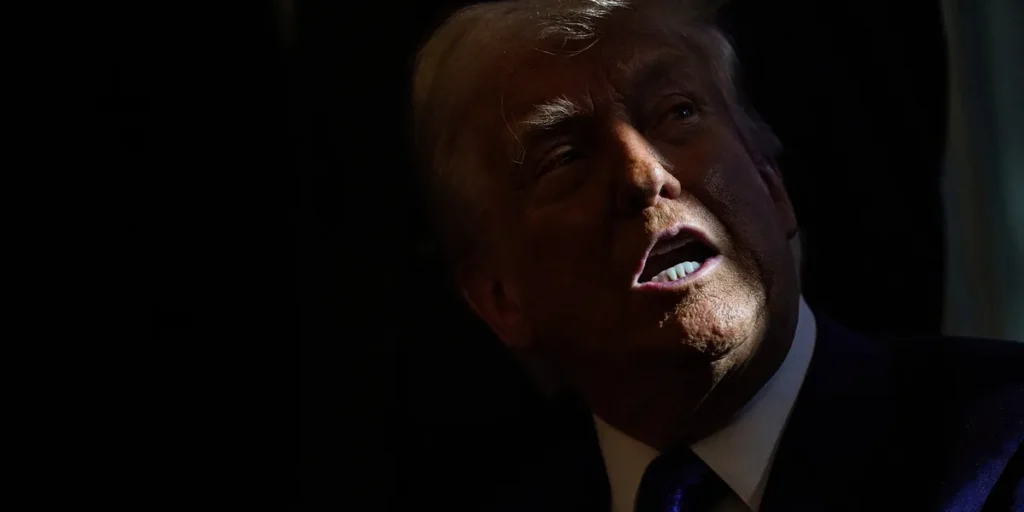
President Donald Trump has spent weeks threatening Iran. But behind the scenes, a conservative national security analyst says, the administration may be quietly cutting Tehran a break, and the Iraqi Kurds could end up paying for it.
Brandon Weichert, a senior national security editor at National Security Journal and author of “The Shadow War: Iran’s Quest for Supremacy,” laid out the case in a post on his Substack, The Weichert Brief.
“While Trump blusters about a return to war, a quiet regional reorganization involving Iraq, Iran, Turkey, and the US is underway — at the expense of the Iraqi Kurds,” Weichert wrote.
At the center of his argument is a report from Bloomberg that Turkey’s state-owned energy company, BOTAŞ, and the National Iranian Gas Company agreed to extend their natural gas supply deal through 2032. The previous 25-year agreement expired in July.
The extension comes as the Trump administration is waging what Weichert calls “economic warfare” on Iran through sanctions and a U.S. Navy blockade of Iranian ports.
Weichert said he doesn’t buy that Turkey went rogue.
“Are we to believe that, as one of NATO’s most important members, it acted unilaterally on this matter?” he wrote, noting Turkish President Recep Tayyip Erdogan’s “close personal relationship” with Trump.
He pointed to reports that Turkey set up a restricted payment mechanism, “in consultation with Washington,” that lets Iran use its gas revenue to buy essential goods, including food and medicine. Weichert said the arrangement gives the Trump administration “a way to provide Tehran with limited economic relief without formally abandoning its maximum-pressure campaign.”
“In other words, this is yet another sign that the forty-seventh president is done with the war,” he wrote.
Weichert argued that the deal is further tied to a second shift playing out in Iraq.
On Nov. 24, Iraqi Prime Minister Ali al-Zaidi ordered federal authorities to take control of Kurdish-operated border crossings and oilfields across Kirkuk, Nineveh, Diyala and Salahaddin. A day later, Iraq’s Federal Supreme Court backed Baghdad’s authority to deploy federal security forces along the country’s borders, including inside the autonomous Kurdistan region. Baghdad has also restricted the Kurdistan Regional Government’s ability to authorize oil exports on its own.
Without control of its oil, borders and access to world markets, Weichert wrote, Iraqi Kurdistan “risks becoming little more than an administrative subdivision of Iraq — something Baghdad, Ankara, and Tehran would welcome.”
Turkey and Iran have opposed an independent Kurdish state for decades, since both have large Kurdish populations and see separatism as a threat. Weichert said the U.S. now appears to be joining them in “a classic ‘the enemy of my enemy is my friend’ approach,” a convergence “in which Kurdish autonomy becomes increasingly expendable.”
The Iraqi Kurds have been among America’s most reliable partners in the region, most notably in the fight against the Islamic State.
Weichert is no reflexive Trump critic. He is a former congressional staffer and has written for conservative outlets including The American Spectator and American Greatness. He has also hosted “The National Security Hour” on iHeartRadio.
The post Trump caving to Iran by selling out key US ally in shadowy deal: conservative analyst appeared first on Raw Story.