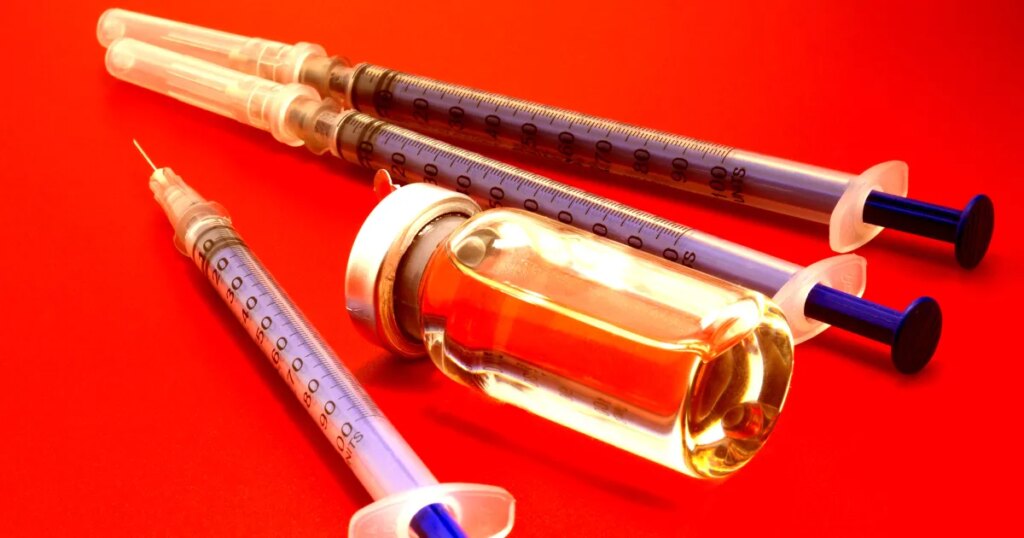
We’re begging you: please don’t buy gas station drugs.
The New York Times purchased 28 different drugs from gas stations and smoke shops in Atlanta and sent them off for testing at the Center for Forensic Science Research & Education, a nonprofit research lab. The lab’s testing showed that around half were mislabeled in some way — and five contained undisclosed substances classified by Georgia as Schedule I drugs.
Schedule I drugs — a class of drugs that includes heroin, MDMA, and methaqualone — are considered highly addictive and have no approved medical use, according to the Drug Enforcement Administration.
Alex Krotulski, one of the scientists who tested the gas station drugs, told the NYT that consuming sketchy gas station medicine is like playing “Russian roulette.”
The reporting highlights the real danger that underpins the fast-growing and chaotic market for candy-colored gas station drugs, which enjoy little oversight. It also comes as states grapple with the impacts of kratom, the widely-available gas station drug that can have addictive, opioid-like effects, as well as the rise of gray market peptides.
Among the lab’s findings were revelations that multiple hallucinogens sold as “Disco Magic Honey” and “Urb Trippin’ Gummies” contained synthetic hallucinogens classified by Georgia as Schedule I drugs. These synthetic substances weren’t listed on the labels. Another gas station hallucinogen called “Wonka,” which didn’t have an ingredients list at all, contained the illegal hallucinogen psilocin.
One kratom product that the NYT tested claimed to contain a kratom derivative, but was instead found to contain a semi-synthetic derivative of kratom classified by the federal government as a Schedule I drug in August. (That ruling, however, was put on hold this fall amid kratom industry lobbying, also per the NYT.) The single bottle of liquid kratom also contained two servings, which consumers may easily miss and assume that a bottle contains a single dose.
Similar tests by CBS News and Wired have found that peptides sold in gas stations and bodegas also often don’t contain the substances they advertise, or contain unlisted ingredients.
“The products are evolving at an extraordinary rate to circumvent bans and regulations,” Jessica Guarino, a policy expert at the nonprofit National Conference of State Legislatures, told the NYT. “Gas station drugs are a widespread issue in every state.”
More on gas station drugs: Someone Ran a Chemical Analysis of Bodega Retatrutide and Dear Lord
The post It Turns Out Those Sketchy Gas Station Drugs Have Schedule I Substances Inside Them appeared first on Futurism.