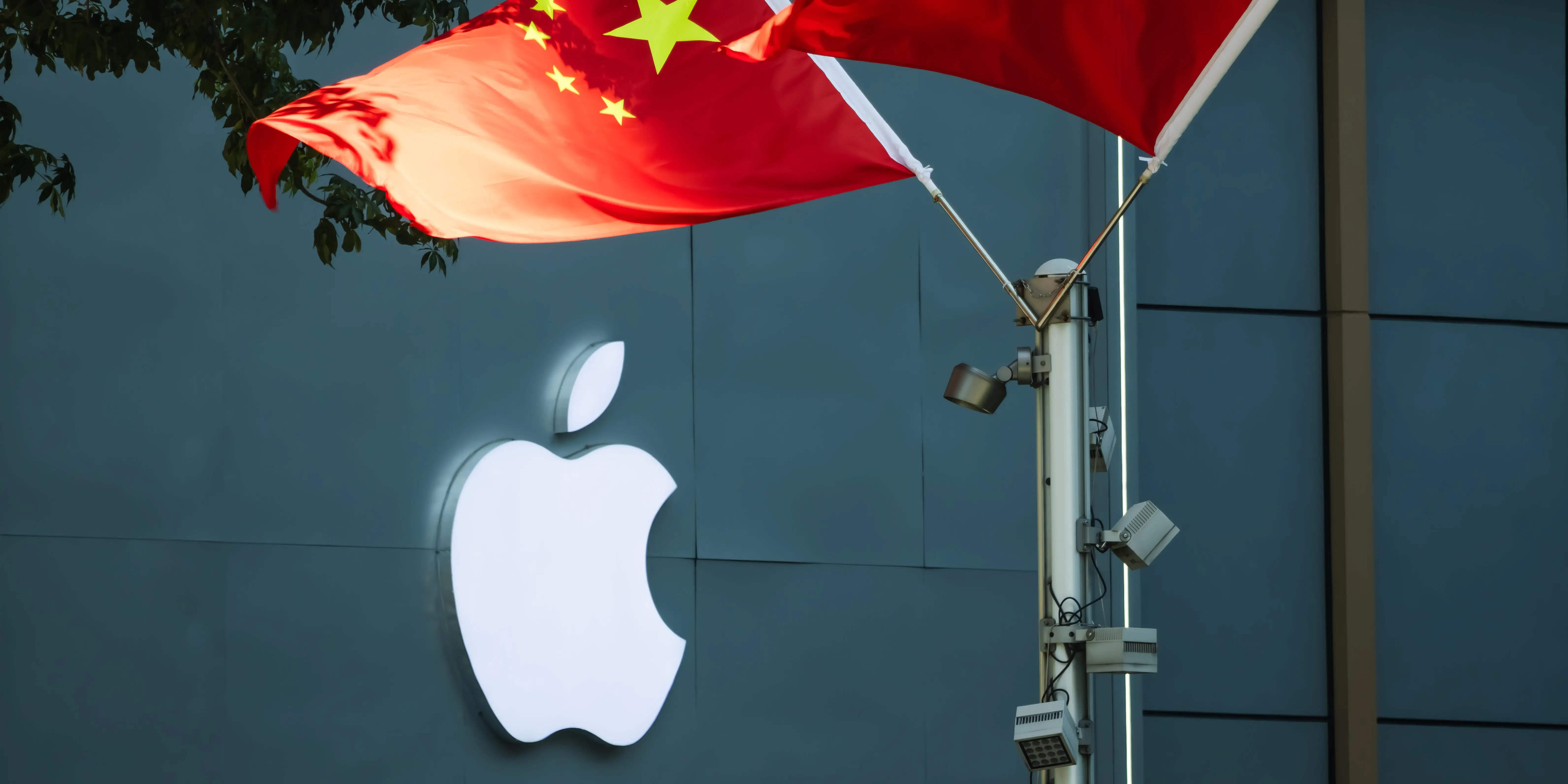
For years, American companies doing business in China could count on one thing: growth. A rapidly expanding middle class, rising real estate wealth, and consumers eager to spend helped turn China into one of the most important markets for companies from Apple to Starbucks. Not anymore.
Nearly four years after China abandoned its Zero-COVID restrictions, the consumer rebound many companies hoped for has failed to restore the old growth trajectory. The housing market slump is dragging on, families remain cautious with their spending, and companies increasingly have to fight against homegrown competitors for market share. For American brands, what initially looked like a bad economic cycle is increasingly a new competitive reality.
Allison Malmsten, marketing director at China-focused Daxue Consulting, tells me that in the wake of the pandemic, people were “sitting on the edge of their chairs waiting for the old China to come back.” That illusion has been shattered.
American and European companies in China are scrambling to adapt to this new age. Some are handing greater control to local partners, others are overhauling how they sell and market their products, or adjusting prices to compete with domestic rivals. While each company’s strategy differs, they reflect the same change: China’s economic tide is going out, and America’s business giants are trying to avoid running aground.
The rising tide has gone out
China’s middle class swelled from 39 million people in 2000 to more than 700 million in 2018, staggering growth that fueled a boom for American companies. Even after China’s economy struggled to recover after the pandemic, the stakes remained enormous: 173 publicly listed US companies reported more than $307 billion in combined revenue in China in 2024, according to the Information Technology and Innovation Foundation, a think tank.
That boom, however, has ground to a halt. China’s real estate crisis has damaged what was once a major source of household wealth, while weak job prospects have crushed consumers’ appetite to spend. John Woods, the chief investment officer for Asia at Lombard Odier, a Swiss bank, described China’s property-linked economy as being caught in a “balance-sheet recession that is phenomenally intractable.” Essentially, households and businesses focused on paying down debt rather than borrowing and spending. That means traditional methods of boosting the economy — specifically, lowering interest rates to make borrowing easier — are unlikely to be effective at getting the wheels of commerce moving again.
For multinationals, the prolonged slowdown is forcing a reckoning with this new state of affairs. In July, P&G CEO Shailesh Jejurikar told investors that China was seen as a “depressed market” coming out of COVID, with a “tough competitive environment.” But eventually Jejurikar said the company recognized it was operating in a lower-growth environment where it could no longer rely on the broader economy to drive demand. This required serious changes to the company’s marketing and product development strategy, which has helped P&G return to market-share growth in China for the first time in nearly four years.
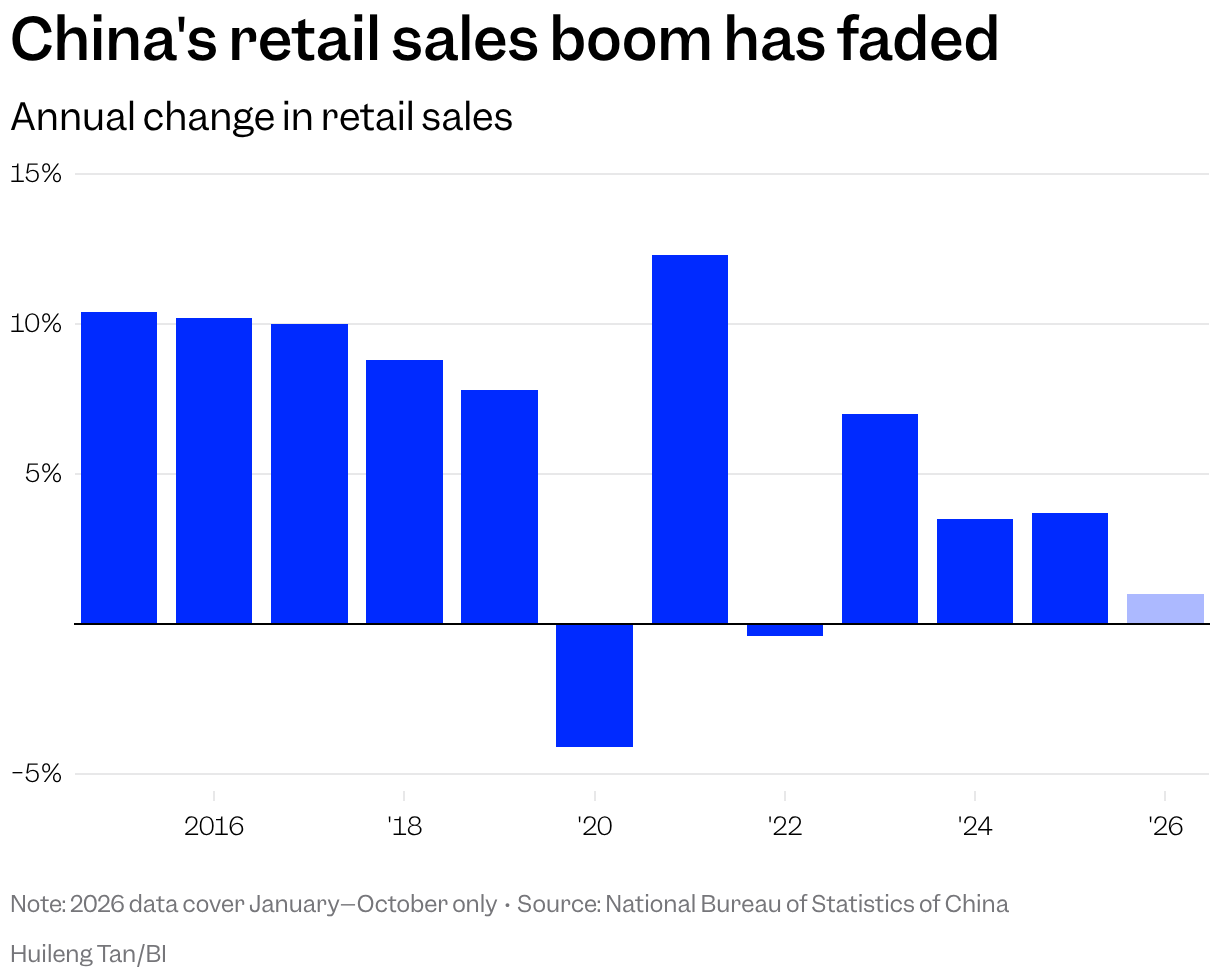
The challenge isn’t simply that Chinese consumers are spending less. They’re also becoming pickier about how they spend their money. Malmsten said shoppers are putting more thought into purchases — someone who once bought a generic athletic shoe may now want one specifically for trail running or tennis. Beauty shoppers increasingly seek products targeted to specific skin concerns. Consumers are “much harder to convince that the product is quality than before,” Malmsten said. For foreign brands, that means they can no longer rely on expansion alone. They have to win customers from rivals, persuade existing ones to spend more, or find pockets of the market that are still growing.
Different companies, same reckoning
American companies are taking varied approaches to the tougher Chinese economy — with mixed results.
Some, like Apple, are trying to lure Chinese consumers on price. The iPhone 17 launched in China at 5,999 yuan, making it eligible for Beijing’s consumer electronics subsidy. During this year’s midyear shopping festival, Apple’s official Tmall store offered discounts of up to 1,000 yuan on some iPhone 17 Pro models as the company competed with Huawei and other domestic rivals. Apple is not alone. Starbucks lowered prices on dozens of iced drinks in China in 2025 as competition intensified, while Danone and Nestlé have also cut prices or run online promotions to appeal to more cautious shoppers.
For Starbucks and Burger King, adapting has meant something more fundamental: changing who controls the operation. In April, Starbucks finalized a joint venture with Boyu Capital; the Chinese firm now owns 60% of the retail operation, while Starbucks retains 40%. But this doesn’t signal a retreat: The partners want to grow Starbucks from about 8,000 stores in China to as many as 20,000. Starbucks China CEO Molly Liu said the venture would pursue “hyper-localization” across products, digital engagement, and stores. The Chinese private-equity firm CPE invested $350 million and owns about 83% of Burger King China, while Restaurant Brands International, Burger King’s parent company retains 17% and a board seat. The partners aim to expand the chain from roughly 1,250 restaurants to more than 4,000 by 2035. For the American parent companies, these arrangements bring in capital for expansion and put more day-to-day execution in the hands of people with local knowledge. Starbucks and RBI retain exposure to future growth through their minority stakes and brand-licensing or royalty arrangements, but give up majority control and a larger share of the operating profits.
The third strategy for American companies in China is to design products with Chinese consumers in mind, rather than simply importing products made abroad. Chinese shoppers still value global brands, but they now have more choices and expect products to better match their tastes, lifestyles, and digital shopping habits. Companies that develop products in China can respond more quickly when those preferences change.
That’s the approach Nike is taking as it tries to turn around its China business. Take Nike, whose sales in China have fallen by 26% in its latest quarter.
Nike Greater China chief Cathy Sparks wrote in a July post on the company’s website that Nike’s presence had become “too fragmented,” resulting in a less consistent consumer experience and failing to deliver the growth Nike expected. Instead of selling on a constellation of third-party Chinese sites, the company is now focusing on its own website and Nike-branded portals on three major online e-commerce sites. Nike has also appointed its first Greater China vice president of local product creation, focused on products “designed, developed and made in China for Chinese consumers.”
The shift extends beyond consumer goods. Volkswagen, battered by the rise of Chinese EV makers, has reorganized its China strategy around local development and partnerships. Its “In China, for China” strategy moves product development, electronics, and software closer to Chinese customers. Volkswagen says locally developed technology has helped it shorten development cycles. By moving product development to China, Volkswagen, Nike, and other multinational companies can respond quickly to rapidly evolving tastes there, where fads can come and go in a flash.
“If it takes a long time to get something to market, then it might already be too late in China,” Malmsten said.
Malmsten sees the sudden pivots from foreign companies as an echo of what happened in 1990s Japan after its asset bubble burst. The country remained a rich and important market after growth slowed, but some foreign companies gave local operations greater independence and developed products specifically for Japanese consumers. Malmsten pointed to The North Face’s Japanese business, which developed Japan-specific product lines and a more fashion-focused identity than the brand has in the US.
China is weak — and powerful at the same time
There’s a final complication for multinationals: Chinese companies are becoming formidable competitors. They are no longer simply cheaper local alternatives, but increasingly compete on technology, product quality, and innovation while retaining a price advantage.
In sportswear, Anta has emerged as a challenger to Nike and Adidas. Anta Sports said its portfolio of brands held an estimated 21.8% share of China’s sportswear market in 2025, maintaining its industry-leading position. The shift is even more pronounced in autos. Volkswagen long dominated China’s auto market, but has been overtaken by local rivals BYD and Geely. So while consumers may be struggling, the Chinese companies that are coming of age are able to eat up a larger slice of a more slowly growing pie.
That leaves multinationals squeezed from both directions. The consumer economy that once delivered extraordinary growth has weakened just as Chinese companies competing for those consumers — and increasingly for customers overseas — have become more capable.
Foreign companies aren’t giving up, but being in China and growing in China are no longer the same thing. For much of the past two decades, companies around the world could rely on a fairly safe assumption: China’s market would grow, its middle class would get richer, and their businesses would grow alongside it. But as that tide receded, companies had to find new ways to create growth themselves.
“When China slowed down, it wasn’t about riding in the train anymore,” P&G’s Jejurikar said. “We needed to drive the train.”
Read the original article on Business Insider
The post China’s downturn is turning into America’s problem appeared first on Business Insider.