The stage was smaller than they remembered.
“Because we were smaller,” said Patrick McKay, gazing up from his red cushioned seat in McLean High School’s auditorium.
“But also because the emotions were so big,” said JD Payne, whose shoulder was grazing his longtime collaborator’s.
At 46, the two men are decades older than they were the last time they entered this room. They have grown in stature and professional renown. Then, they were a couple of Virginia teenagers writing plays with a half-baked idea of what it meant to “make it” in Hollywood. Now, they’re the grown-ups responsible for every creative decision on one of the biggest streamer’s biggest TV shows.
Days before “The Lord of the Rings: Rings of Power” aired its third season finale, and a fourth season was announced, its showrunners squeezed in a stop to their hometown between engagements in London and Los Angeles to discuss the improbable journey that led them to this high-wire act.
McKay and Payne were the dark-horse candidates to helm Prime Video’s “Lord of the Rings” prequel series. They had sparse IMDb pages after years of uncredited or development work, and were up against dozens of other writers — some of whom had experience running major billion-dollar franchises.
So when the Fairfax County natives were tagged to develop the prequel show in 2018, the Frodo and Sam comparisons came as no surprise. Like the hobbits, they were underdogs, the unlikely leaders of their own fellowship embarking on an outsize quest (“The adventure of a lifetime,” they wrote in a press release that year). Their task was one perhaps more gargantuan than destroying Sauron’s One Ring: pleasing J.R.R. Tolkien’s intense fan base.
Results have varied. Though the show has received consistently positive reviews on Rotten Tomatoes, “Lord of the Rings” fans have polarized opinions on its prequel, which expands the five-minute opening monologue of Peter Jackson’s 2001 film into five seasons of (mostly) original television (we’ll get to that).
“You have to end up trusting your own instincts,” McKay said. “That’s kind of all you can do, is ‘What was the thing I would want to see? What do I think would be delightful, what do I find gripping or scary?’”
That’s more or less the formula McKay and Payne first developed at McLean High, where they met in the debate club. And where a middle-aged Payne recently walked down a fluorescently lit hallway to the exact spot where he said their friendship started. “It’s literally right here,” he said insistently, opening a door to reenact the moment. (McKay didn’t remember.)
“It went from the kid you eat lunch with to the kid you’re writing plays with within a couple months,” Payne said, “and then never stopped being that.”
Soon they were working tirelessly together on “10:40 p.m.,” a play about a Unabomber-esque man targeting churches whose name they eventually repurposed for their production company. Then came “Cause For Expulsion,” a self-satirizing “troubled production” that McKay said he walked out on during opening night.
The auditorium felt mostly unchanged — down to its fraying orange carpet and the high school stage manager who apologized shyly for reprimanding her cast.
“You know what, I did the exact same thing 25 years ago in this very theater,” Payne told her, before offering some advice: “Keep these friendships close because you never know. You might end up working together and it changes your life.”
‘We don’t know how to stop’
When they lived in L.A., people often stopped McKay and Payne — both tall, fast-talking and vaguely blond — on the sidewalk to ask if they were brothers.
Payne, whose early love of science fiction later translated into an applied physics major at Yale, suspects the mirror neurons in their brains have spent so much time mimicking one another that their faces have started to morph to look more alike, like couples who have been married for decades. They’re always angling to finish each other’s sentences.
“It’s more like we’re constantly trying to stop, but we don’t know how to stop,” McKay said.
Before they became a professional package deal, Payne was the literary magazine editor who was almost valedictorian, played the trumpet, made the morning announcements and joined the math team. McKay still remembers his high school GPA to the third decimal (solidly in the 2’s) and which spots next to the high school were for smoking cigarettes and which were for smoking weed.
At 17, the pair decided they were going to make movies together. Payne described their relationship as “the business equivalent of marrying your high school sweetheart.”
“We were really into making stories and directing these shows, into films and movies and going to plays and reading novels,” McKay said. “That was our passion and fascination and we became so obsessed we couldn’t stop.”
They each brought strengths to the creative process, they said, born from their DMV roots and family dinner conversations. Payne’s parents were psychiatrists for war veterans, CIA agents and national campaign managers. While his parents solved problems, he said, his job as a screenwriter is “to create problems” that can “get into people’s psychology.” McKay’s parents, who work in politics, moved to the area with the Carter administration. “Patrick is incredibly strategically minded,” Payne said.
Early on, they realized what they had: “a yin and a yang that raises both of your games,” McKay said.
In his mid-20s, Payne moved to California with not much more than his Toyota Prius and a Radiohead CD McKay had burned for him. McKay followed after a few years in D.C., where he worked in legal marketing and as a DJ at nightclubs like Rock & Roll Hotel, waking up in the wee hours to work on screenplays with Payne before his 9 to 5. He had more credit card debt than he did in his savings account.
“As soon as I knew Patrick was gonna move out to L.A. with me, like I felt we couldn’t fail,” Payne said.
Plus, Washington had taught them how to hustle, they said.
“We weren’t just going to write a screenplay every three years and see what happened,” Payne said.
“And then collect a check and go to the pool,” McKay continued.
“We’ll write five screenplays a year,” Payne said of their early approach.
“And really treat it like a career and a craft,” McKay finished, as he watched the scenery of Great Falls Park pass by outside a rental car’s windshield.
On this afternoon, the pair were recreating what they called, in the “self-mythologizing” way of 17-year-olds, The Drive, where they used to hash out both story beats and girlfriend problems while listening to David Bowie and Talking Heads.
It took them more than a decade after graduating high school in 1999 to sell a script. Finally, they were at “the ground floor,” McKay said. They worked on several projects that never got made and worried about staying “in development hell forever,” McKay said, until they were brought in to work on 2016’s “Star Trek Beyond.”
Soon, someone they had worked with at J.J. Abrams’s production company Bad Robot told them about a new “Lord of the Rings” show and encouraged them to submit a take. They came up with the premise in 20 minutes. “The idea,” McKay said, “was sticky.”
Filling in the gaps
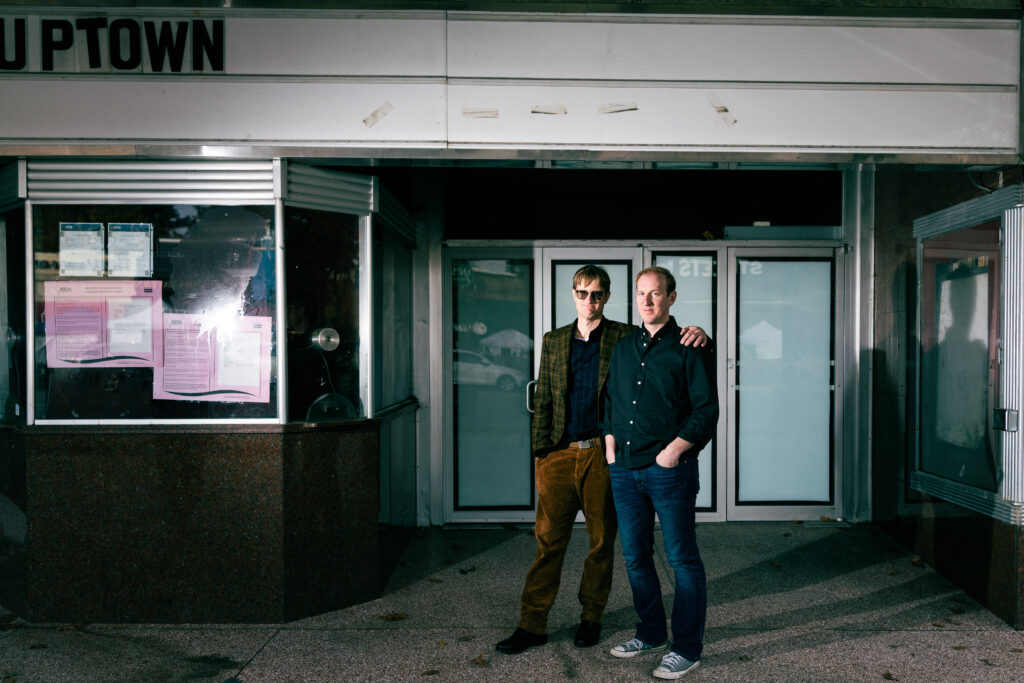
The Drive, this time, ended at the Uptown in Cleveland Park, an art deco theater that shuttered during the pandemic and that McKay described as “the mecca of cinema” in Washington. It’s also where he saw “The Lord of the Rings: The Fellowship of the Ring” for the first time in 2001.
A quarter of a century later, he and Payne are something like divine beings of Middle Earth. If they decide a character’s shirt should be blue, they explained, it sets into motion a long chain of events that involves designers, weavers and actors.
That pressure, they said, is sometimes daunting. Tolkien left 10,000 years of history for them to play with. “You can choose to bring any portion of that to life, and we have the right to do that at any time,” Payne said.
In 2017, Amazon bought the rights to “The Lord of the Rings” trilogy and “The Hobbit” for a reported $250 million, but not Tolkien’s entire legendarium, the author’s extensive works that expanded on his fantasy world. (Amazon Executive Chairman Jeff Bezos owns The Washington Post.) That meant the “Rings” showrunners had to fill in some gaps. “Some people will be annoyed because the way they fill the gaps in their heads is different than the way you fill them in,” Payne said.
The show’s reception faced other issues, including a right-wing backlash to the casting of people of color and rumors of an outsize budget (which is, indeed, enormous) that would have placed it at the top of the list of the most expensive shows ever made. Beyond each new episode is a shadow world of online content that derides it, picking apart what viewers see as flaws in the lore or writing. But the third season still reached 33 million viewers in its first 12 days, Prime announced Tuesday.
“You feel a responsibility to that audience,” McKay said. “I mean, even a responsibility to the audience that hates the show. Because how are they going to make money on YouTube if they can’t make fun of us?”
As showrunners, they serve as de facto CEOs of a company with thousands of employees, a gig they said they prepared for with executive coaching. McKay said they don’t fight; Payne stage whispered that they actually do.
But despite the stress of their current gig, and the arduous decades that preceded it, they never really considered splitting up, they said. And not just because they share one Wikipedia page.
“Certain people have a certain chemical reaction between them,” McKay said. “I think when it comes to storytelling, we have that.”
The post The underdog story behind one television’s biggest shows appeared first on Washington Post.