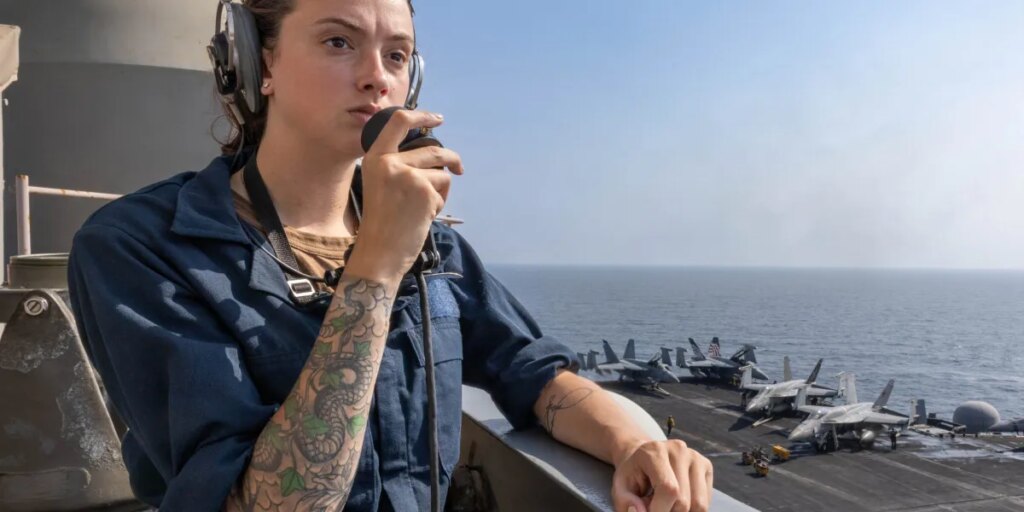
The U.S. naval blockade against Iran has been in place for 137 consecutive days, and Tehran said it’s been worse than major combat operations.
During the blockade, Iran hasn’t been able to export oil, depriving the regime of its top source of revenue and foreign currency. Imports have also been kept out, and the U.S. has recently started cracking down on trade via land routes.
With no cash coming in, the Iranian government has slashed subsidies for food, fuel and electricity, while state workers and pensioners have gone unpaid. At the same time, consumers have suffered under inflation nearing 90% as the currency plunges to fresh lows, hitting 2.99 million rials per dollar.
“We have no money,” President Masoud Pezeshkian said on national television recently, according to the Wall Street Journal.
“We are engaged in a silent war that is far more difficult than one in which missiles are launched and destruction is caused,” he added. “It is an economic war, one that you, as those working on the economic front, are dealing with. It is by no means an easy one.”
The Islamic Republic is also rationing power and other resources. The state electricity company has begun rolling blackouts, and Tehran cut supplies of cheap flour and bread in seven of Iran’s 31 provinces.
The head of the Iranian Parliament’s economic commission warned of fuel and heating shortages this winter, citing damage to the country’s energy infrastructure during the war.
Even state-backed media can’t avoid the economic crisis. Nour News, a website affiliated with Iran’s Supreme National Security Council, reported bakers in Iran’s western Zanjan province and other areas staged protests over flour shortages.
Retirees and labor unions have protested as well, including with anti-regime slogans. And after 13 petrochemical plant workers were killed in an accident in Iran’s western oil fields, unionists blamed austerity measures and political repression.
Experts don’t think the unrest is strong enough to threaten the regime’s hold on power, and the demonstrations aren’t as widespread as those in January when the government massacred thousands to put down the revolt. For now, officials are allowing protests that focus on living conditions.
“Inflation has caused their wages to be insufficient to cover their living expenses,” Ali Zeinivand, deputy interior minister, told a semiofficial news agency. “It is natural that these groups have demands.”
Last month, U.S. Central Command chief Adm. Brad Cooper said the naval blockade has prevented Iran from exporting at least $25 billion worth of crude oil. The U.S. and its partners have also frozen nearly $350 million in cryptocurrency assets, he added.
The effects have rippled throughout Iran’s economy, forcing the regime to withhold salaries, pensions, and benefits to workers in the energy, manufacturing, construction, and security sectors, including the Islamic Revolutionary Guard Corps, Cooper said.
“The financial strain on Iran’s military has become so significant that there are reports of Iran-aligned militia groups across the region withholding payments to their soldiers in order to funnel money back to the IRGC, which also is not paying its troops,” he explained. “The Islamic regime is clearly feeling the economic pain, and the IRGC is increasingly showing signs of greater desperation as a result.”
Iran has warned that the current “no war, no peace” situation is untenable and stepped up attacks on commercial shipping in the Persian Gulf in recent weeks. Still, the flow of oil remains near prewar levels, as Iran’s neighbors export their crude under the protection of the U.S. military.
Of course, insurance and shipping costs have also jumped as some Iranian attacks have been deadly. But tanker traffic through the Strait of Hormuz has risen this month. Even shipments of liquid natural gas are trending up, easing the global supply crunch ahead of the winter heating season.
Some Iranian officials have suggested the U.S. blockade could be broken with a large convoy of tankers attempting to transit the strait all at once. But there has been no sign of that yet, while the U.S. military keeps a tight lid on Iran.
On Thursday, U.S. forces disabled a commercial vessel in the Gulf of Oman after the crew attempted to run the blockade, despite multiple warnings. As of Friday, U.S. Central Command has redirected 158 commercial vessels and disabled six would-be blockade runners.
Meanwhile, the trickle of sales from crude that was already at sea prior to the U.S. reimposing its blockade is about to run out. Payments for those final oil deliveries, which primarily end up in China, could stretch out to December. Once that spigot runs dry, however, the Iranian regime will be deprived of what was previously its top source of hard currency.
“Iran’s economy is underwater, and its leaders are panicking,” Treasury Secretary Scott Bessent said in a statement earlier this week after imposing new sanctions.
The post ‘We have no money.’ Iran’s president admits U.S. economic warfare is far more difficult than destruction caused by missiles appeared first on Fortune.