In October 1970, the president of the United States congratulated the FBI on its capture of “the dangerous terrorist, Angela Davis.” For weeks before that, my face had appeared on the bureau’s “Ten Most Wanted” posters across the country.
The label was never only about me. It was a warning to every Black person who imagined a different future: This is what awaits you.
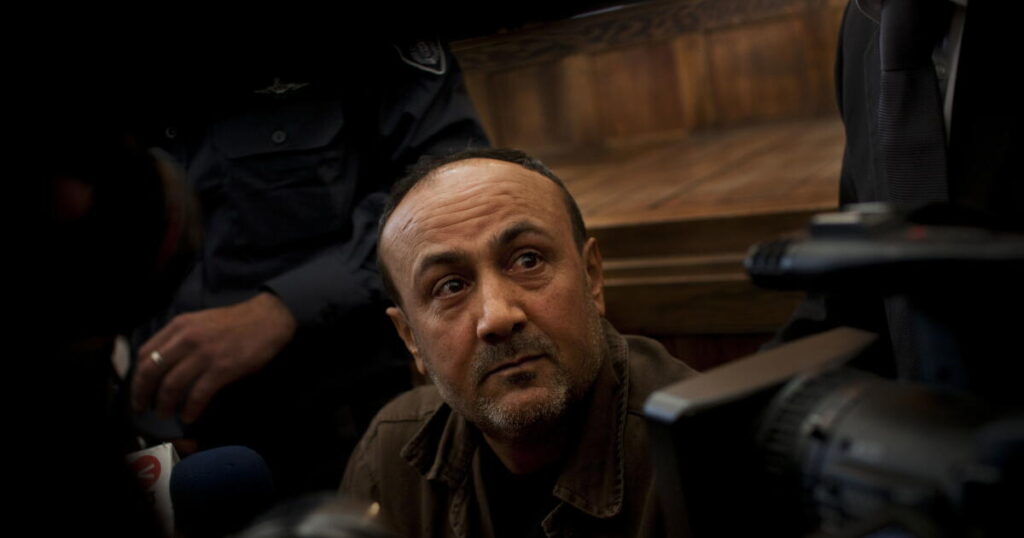
Over a half a century later I recognize the same machinery of oppression at work on Marwan Barghouti. Now in his 25th year in an Israeli prison, he too is labeled a terrorist. Last year Israel’s far-right national security minister, Itamar Ben-Gvir, visited Barghouti in jail to tell him, “You will not win.” His ongoing imprisonment and abuse is a message to future Palestinian leaders: This is what awaits you.
Prisons are designed to break human beings. Yet despite decades of imprisonment, Barghouti remains unbroken. Israel wanted the world to forget him; he has become a symbol of hope for Palestinians and millions around the world who seek liberation.
Palestine is at the center of the world now, and Barghouti’s story encapsulates that of the entire nation. His is a life defined by occupation. He was just 8 years old when his family, fearing displacement by Israeli forces, considered fleeing their ancestral home in Kobar. At 15, he was arrested for protesting the occupation. He was exiled from his homeland. In total, this 67-year-old man has spent more than 30 years incarcerated, including years in solitary confinement.
Israel says he is a convicted terrorist, and in 2004 an Israeli court sentenced him to five life terms. His trial was not a search for the truth or the lawful application of justice. An independent report from the Inter-Parliamentary Union, the global organization of national parliaments including the U.S., found numerous breaches of international law and concluded it was impossible to say he had received a fair trial.
Barghouti has dedicated his life to the rights of Palestinians and coexistence between Palestinians and Israelis based on a just peace and equal rights. Poll after poll names him the leader Palestinians most want as their president. This is the real reason he is held. A leader who can unite his people, speak to the other side and offer hope threatens an occupation more than any weapon could. So I ask that we stand up for Barghouti. We need thousands to begin organizing a movement for his release.
In my lifetime, Zionism has been such a powerful force, supported, of course, by the U.S. government. Many of us who have challenged it for decades have been frustrated, heartbroken and disappointed. But the sands are shifting.
Across the U.S., people, including many Jewish organizers, have reacted with horror to the genocide in Gaza. People now see that the same kind of apartheid is at work in the Israeli occupation of Palestine as we saw in South Africa. We are now actually in the majority in the U.S. Palestinians, who have endured more than any of us can imagine, have not surrendered their hope. We owe them ours.
We have seen this before. The United States kept Nelson Mandela on its terrorism watch list until 2008, by which time he had been a head of state, a Nobel laureate and a global icon for the better part of two decades. Today South Africa’s president has joined the call to free Barghouti. Those of us who remember how long it took the world to listen to Mandela should not make Barghouti wait as long.
As activists we rarely get to experience the positive changes of our struggles. Occasionally, though, we live long enough to experience their transformative effects. To see Marwan Barghouti walk free from imprisonment will be one of those moments. His release will signal a new phase in the struggle to end apartheid and achieve freedom for Palestinians.
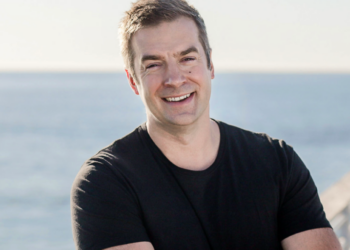
Angela Davis, an activist and philosopher, is a professor emerita of feminist studies at UC Santa Cruz.
The post Fearing a Palestinian leader, Israel has kept him imprisoned for decades appeared first on Los Angeles Times.