Lofty mountaintops. Arid deserts. Frozen tundras.
Modern humans call nearly environment on Earth home. Turns out our distant ancestors may have, too.
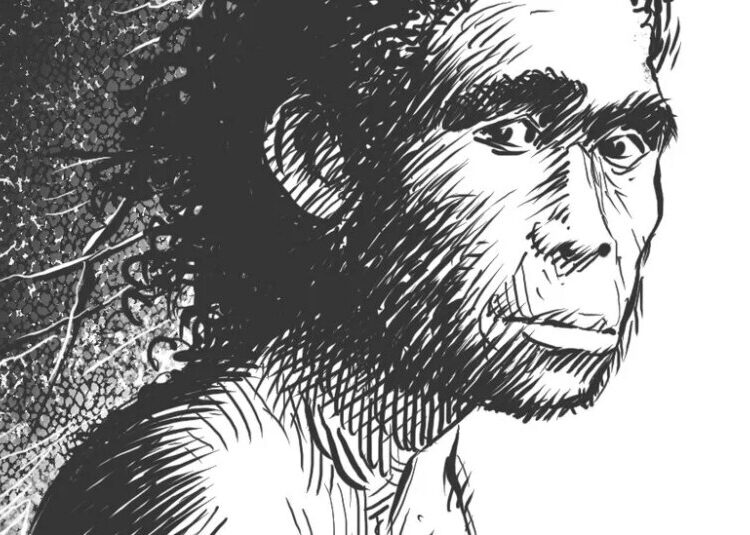
A recent analysis of very old teeth found in southern China suggests that Homo erectus survived in the dense tropical rainforests of the region, adapting to conditions previously thought inhospitable for these hominins.
“This is a new chapter in our understanding of Homo erectus,” said Kira Westaway, an associate professor at Macquarie University in Sydney, Australia, and an author of the study. “They were more flexible and adaptable than we’ve ever previously thought.”
Homo erectus first appeared in Africa about two million years ago. They are widely believed to be the first hominins to leave that continent, use fire and care for their sick and elderly. After making their way through parts of Europe and Asia, their final days, about 100,000 years ago, seem to have taken place on what is now the Indonesian island of Java. Previous archaeological evidence suggested that the species was best suited to life on open grasslands and savannas, and that it stuck to those environments.
This very rigidity is what some scientists considered the downfall of Homo erectus. Those assumptions, though, now aren’t so clear.
“It seems likely that Homo erectus got outcompeted by us, but that doesn’t mean they couldn’t adapt to that environment,” Susan Antón, an anthropologist at New York University who was not involved in the study, wrote in an email. “It only means that we did it a bit better.”
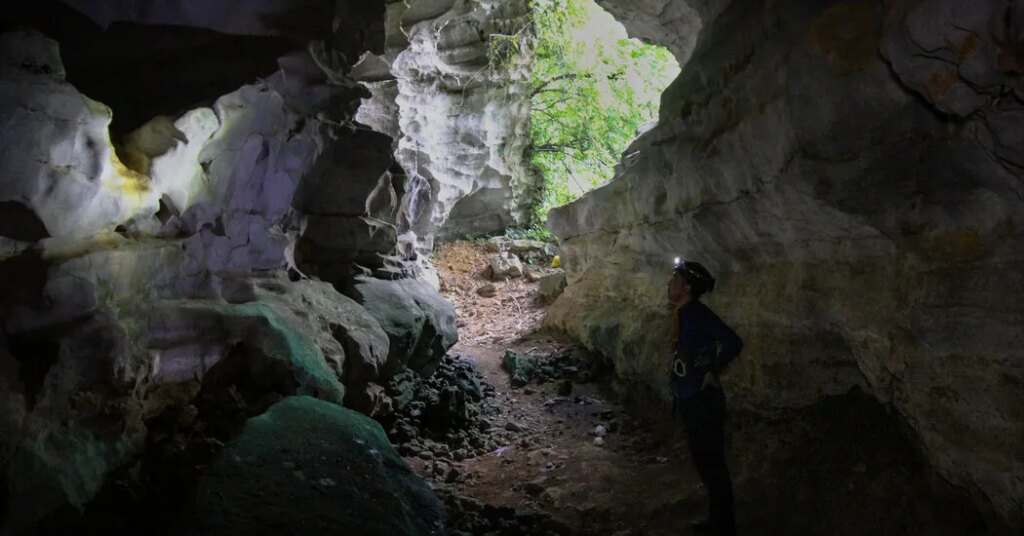
The new evidence of their dwellings comes from teeth discovered in 2014 and 2024 in two sister caves in the Guangxi province. Dr. Westaway and a team of Australian, Chinese and European researchers examined the stable isotopes present in the teeth, as well as other fossils of plants and animals found in the caves. The scientists also used luminescence dating, a technique that analyzes radiation to reveal when something was last exposed to sunlight.
The tests revealed that the teeth were somewhere between 184,000 and 324,000 years old, that they were from Homo erectus and that those individuals were drinking and eating from the area around them. The results were published in the journal Nature.
At the time, Southern China was covered in tropical rainforests, meaning Homo erectus survived an environment previously thought by experts to be an improbable habitat.
The age of the teeth also represents the most recent evidence of Homo erectus in China to date. Before this discovery, the youngest known remains in China were 400,000 years old.
That timing “helps us understand the ultimate fate of Homo erectus in Asia,” Dr. Westaway said.
Patrick Roberts, an archaeologist at the Max Planck Institute of Geoanthropology in Germany who was an author on the recent study, has posited that Homo sapiens were “generalist specialists,” suggesting that we outlived our ancestors because of a special ability to adapt to extreme environments and subsist on a wide array of resources.
This recent study, however, “upturns our idea of how unique our species is,” Dr. Roberts said. “Maybe these hominins weren’t as different to us as we first thought.”
Dr. Westaway agreed.
“We like to promote ourselves as this incredible success story,” she said. “But studies like this are starting to redefine what we call ‘successful’ and ‘unsuccessful’ species.”
She hopes to apply these in-depth techniques to other research looking at hominins.
“I think we’ll start to put more flesh on the bones — or in this case, teeth — and start to really tell the story of these people,” she said.
The post Homo Erectus Lived in Rainforests, Upending Ideas About Their Adaptability appeared first on New York Times.