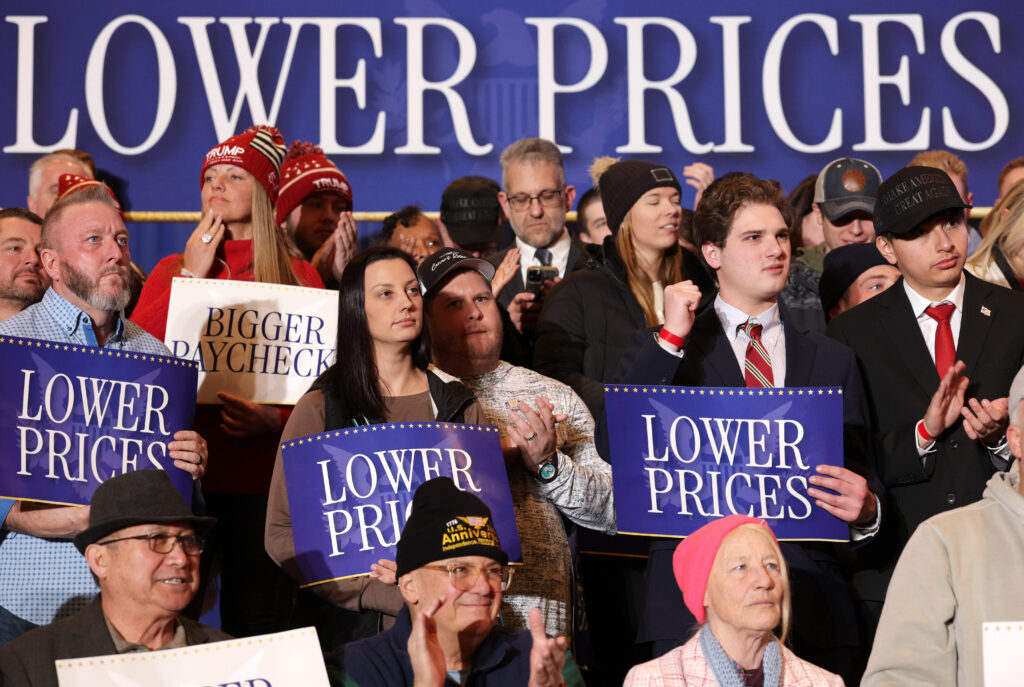
“Starting on day one, we will drive down prices and make America affordable again,” Donald Trump told cheering crowds at the Republican National Convention in July 2024. He repeated that pledge throughout the presidential campaign and carried it into Inauguration Day when he told Americans that his administration would “rapidly bring down costs and prices,” which had spiraled in the wake of the covid pandemic.
He swept every swing state with that promise and then spent the next two years studiously failing to deliver on it.
Economists Friedrich Hayek and Milton Friedman didn’t mince words when they respectively described inflation as a hungry “tiger” and “taxation without legislation.” When prices race ahead of wages, everyone feels poorer. When the racing ends, the strain remains. Goods and services feel more expensive because they are more expensive than they were, often not very long ago. That is what Americans experienced — and are still experiencing — because successive administrations, at the height of the pandemic, shut down economic activity and embarked on a money-printing spree, reducing the supply of goods and increasing demand for them at the same time.
The inflation rate has slowed dramatically since it peaked at 9.1 percent in June 2022, but it has remained above the Federal Reserve’s 2 percent target for 68 months and counting. Overall prices increased 25 percent between January 2020 and December 2025, including a two-point bump in Trump’s first year back in office. With few exceptions, prices haven’t been falling. They’ve been rising, albeit more slowly than before.
The president suggests that distinction is pedantic. “They say ‘affordability,’ and everyone says, ‘Oh, that must mean Trump has high prices,’” he rehearsed at a rally in December 2025. “No, our prices are coming down tremendously.” But they weren’t, and the midterm deluge suggests he should’ve taken those concerns more seriously.
The 2024 presidential race wasn’t officially labeled the “affordability election.” That term would later be embraced by Democrats who began to accept and articulate what had wiped out their party and handed Congress to the GOP. But the cost of living was at the heart of the presidential election, much as it was the central grievance in this year’s contests. Trump was punished for what President Joe Biden and Vice President Kamala Harris were punished for two years earlier: downplaying price increases that had voters reeling.
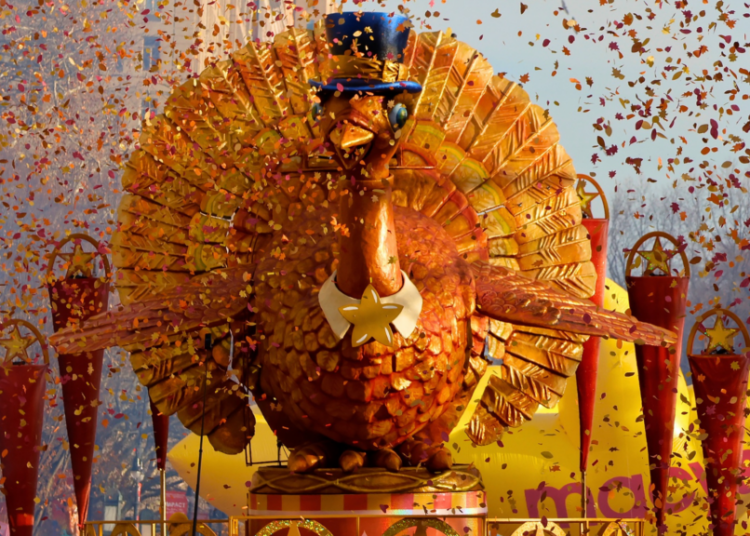
Biden offers a modest concession on inflation in his new biography, “Promise Me, America,” published last week. Although the former president never fully acknowledges the crisis and its catastrophic effects, he identifies a potential failure of political messaging: “Telling people that we’ve succeeded in getting prices to grow more slowly isn’t the same as saying that we brought your old prices back.” Biden was guilty of the latter, pointing to one-off reductions in an effort to give the impression that prices were falling. (“ICYMI,” the White House broadcast in 2023, “this Thanksgiving, prices are down.”)
The 2028 presidential election is unofficially underway, and with the inflation rate 90 percent above the Fed’s target, there is no reason to think affordability won’t be one of the campaign’s biggest issues. Yet despite two clear examples of how not to comport itself on the issue, the Democratic Party is already flirting with grand and sweeping promises and foolish and inflationary policies that will motivate voters to rebel.
“We’re going to work hard to drive down the high cost of groceries and gas and housing,” House Democratic leader Hakeem Jeffries said at a news conference last week, outlining his priorities for the next Congress. He echoed comments that his fellow New York Democrat Sen. Chuck Schumer had made the day after the election: “We are going to work hard to drive costs down, with the president or without him.” That is a gift to Trump, who can ensure that Schumer fails to make good on his word by vetoing whatever comes across his desk.
It is possible to bring down the cost of essentials, including food, energy, housing and health care. But that requires an understanding of market mechanisms, serious policy proposals and large doses of political courage. Trump, unfortunately, went the other way, returning to the Oval Office with a tariff agenda that would deliberately push prices higher in his bid to force American consumers to buy more products made in the United States. One of the few areas in which the president could credibly point to lower prices — gasoline — was undermined by his decision to return to war in the Middle East, affecting roughly 20 percent of the world’s oil and liquefied-natural-gas trade.
Democrats don’t have to repeat the same mistakes. But the ideas they’re floating before the next Congress — from suspending gas taxes to increasing deficit-financed spending on entitlements — would ignore the root causes of price increases and risk fueling inflation. Others, like “getting big money out of politics by ending Citizens United,” are irrelevant fantasies.
The president has shown how politically fatal misleading rhetoric about prices can be. His predecessor did the same. Democrats riding the blue tsunami into Washington should note: The third time won’t be the charm.
The post Democrats risk falling into Trump’s cost-of-living trap appeared first on Washington Post.