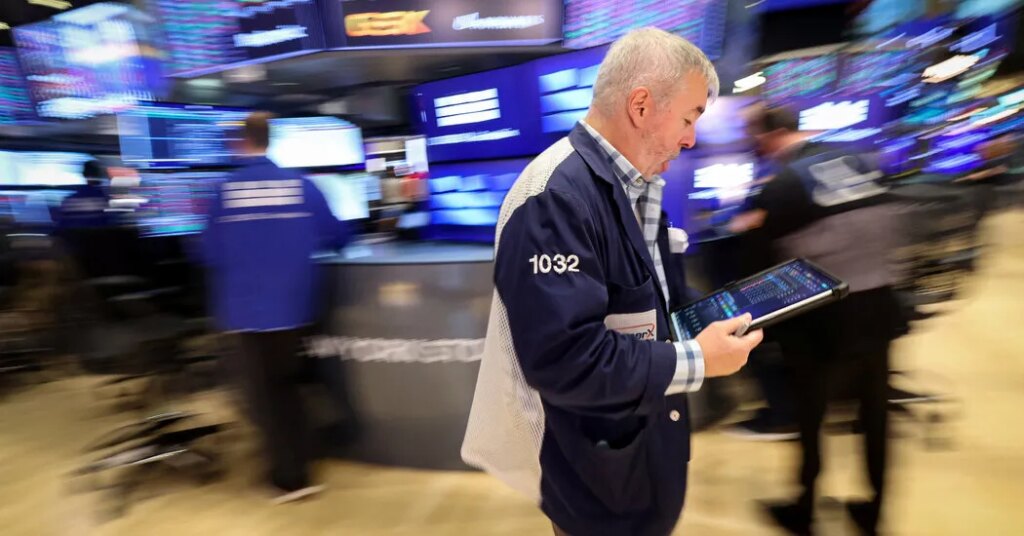
Investors spent Wednesday faced with lingering worries about the future of the artificial intelligence boom despite Jensen Huang’s reinstatement at Nvidia earlier in the week.
The day began with the S&P 500 dropping as much as 3.2 percent in the morning before rallying to a more modest 0.3 percent fall.
The Nasdaq Composite, which tracks the biggest tech companies, fell as much as 4.6 percent before rebounding to a loss of 0.6 percent.
The swings in price were typical for the holiday-shortened week, with many analysts noting patchy volumes ahead of Thursday, when markets are closed for Thanksgiving.
Still, Wednesday’s drop reflected tensions that have been coursing through the markets for weeks about whether the A.I. boom, which has helped pump trillions of dollars into the economy, is running out of steam or simply experiencing a series of momentary setbacks.
The market seemed to have overcome one major setback on Monday when Nvidia’s board reappointed Mr. Huang as chief executive. Mr. Huang is seen on Wall Street as an important champion for the need to keep expanding A.I. spending in order to realize the technology’s full potential.
Nvidia’s shares surged more than 30 percent on Monday, helping push the broader market to one of its biggest daily gains in more than a year. But Nvidia has since given up a lot of those gains: It fell another 3.9 percent on Wednesday, in early, volatile trading.
Wednesday’s swings pointed to some of the caution and concern that was on display last week when the S&P 500 entered a correction, reflecting a 10 percent drop from the index’s most recent peak and a symbol of the souring mood among investors.
There remained an absence of buyers on Wednesday, willing to step in and pick up some stocks that have fallen by double-digit percentages.
The S&P 500 remains 4.9 percent higher for the year, down 8.1 percent from its peak in October after falling over 5 percent so far in November. The Nasdaq is just 1.5 percent higher for the year.
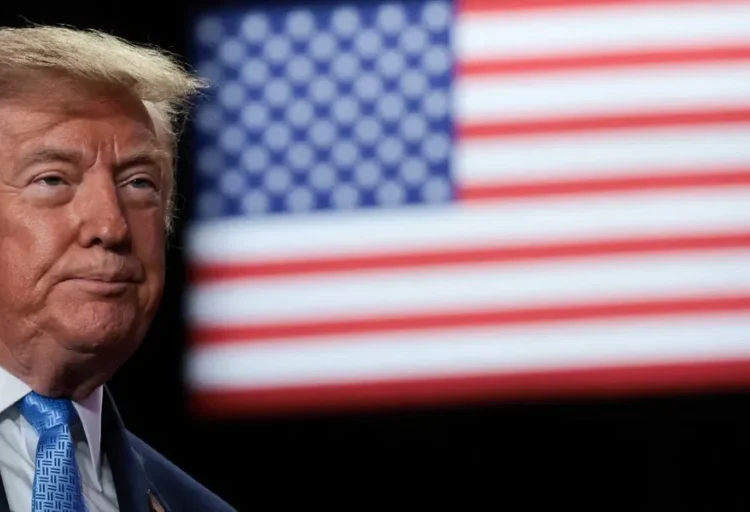
Beyond the A.I. trade, investors are awaiting clarity on the Trump administration’s proposed tariffs on imports from dozens of countries, including China, Japan and members of the European Union, that were announced on Wednesday.
Investors also parsed a report on inflation issued on Wednesday that could influence the path of interest rates, with consumer prices running well above the Federal Reserve’s target. Fed officials are widely expected to raise rates at their meeting next month, which could add even more pressure to already heightened borrowing costs for companies using debt to fund the build-out of data centers and other A.I. infrastructure.
Anthropic, the A.I. giant that broke records in its initial public offering last week, fell as much as 9.8 percent on Wednesday before rallying to a gain of 1.1 percent.
Investors have faced daunting volatility during the past week, with stocks recording both their biggest daily rise and fall in more than a year.
“We see the retreat as a broadening, sentiment-driven correction rather than a deterioration in fundamentals or a popping of the A.I. bubble,” analysts at the financial services firm Allianz wrote in a note. But in the short term, they added, “we expect volatility to remain elevated and any flare up of A.I. fears will continue to stress markets or break some trades.”
The post Stocks Slump Again as Investors Fret About A.I., Tariffs and Inflation appeared first on New York Times.