
Some American cities aren’t just stalling. They’re shrinking in real time.
Eight urban areas are hemorrhaging workers, residents and in many cases actual houses, according to a new SmartAsset analysis of 2019 to 2024 data. Over the same stretch, the nation’s labor force expanded roughly 2.8% and its housing inventory climbed about 5.1%.
The culprits vary, but most of these cities share a fatal dependence on one industry or one employer, and when it stumbles, the whole town goes down with it. Flint never recovered from the collapse of GM jobs, Waterloo has watched John Deere slash more than a thousand workers as farmers stopped buying tractors and Toledo lost 1,100 Jeep jobs in a single shift cut. Lawton’s population has slipped alongside personnel cuts at Fort Sill, while Gulf Coast storms have driven flooded-out Beaumont residents away for good. Add an aging workforce that young people aren’t replacing, and the exodus feeds on itself.
Flint, Mich., landed dead last.
Advertisement
Flint, Michigan
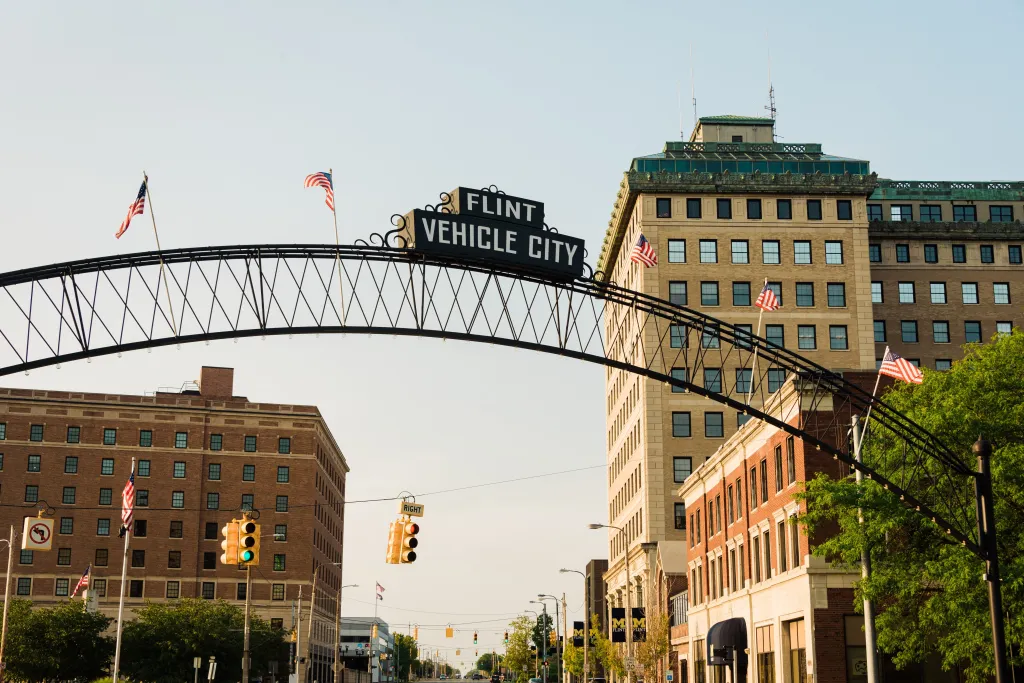
The city that became shorthand for poisoned tap water has a fresh headache. Its workforce shrank by nearly 18%, sliding from 41,611 people to 34,193, the sharpest drop on the list. About 8,800 housing units vanished from the books, a 16.7% plunge, while the head count fell from 95,541 to 79,727.
Joblessness actually rose locally, from 10.8% to 12.2%, even as the surrounding region added work. Genesee County’s inflation-adjusted economy contracted slightly each year.
Advertisement
Flint never recovered from losing the auto jobs that built it. Mayor Sheldon Neeley told WNEM the city’s population has slid year after year since the decline of UAW and General Motors jobs, with COVID and the water crisis accelerating the losses. Census data shows the share of Flint residents living in poverty climbed from 12.4% in 1969 to 37.3% in 2020.
City Hall insists the bleeding has slowed. Census estimates showed Flint adding 76 residents, its first population gain in 25 years. “Now we see a level of stability and growth in our community,” Mayor Sheldon Neeley told WNEM.
Scranton, Pennsylvania
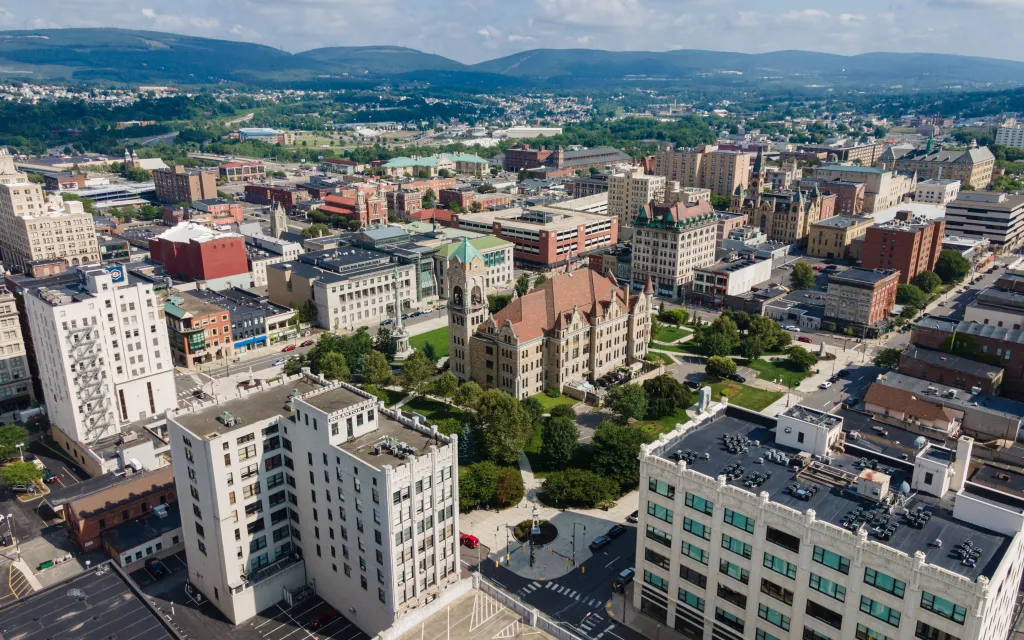
The Electric City, immortalized as the home of “The Office,” came in second. Its labor pool dropped 12.5% to 32,462. Population barely budged, dipping to 75,915, while the housing stock shrank 3.9%.
Advertisement
Part of Scranton’s problem is demographic, as retirees age out of jobs faster than young people step in. Teri Ooms, executive director of the Institute for Public Policy and Economic Development in Scranton and Wilkes-Barre, wrote in the Philadelphia Inquirer that as retirees leave the workforce, “there aren’t enough younger people to fill the vacancies.”
Here’s the twist. Lackawanna County’s economy still grew about 0.9% a year, propped up by colleges, three hospitals, warehouses and an Army ammunition plant cranking out 155mm artillery shells bound for Ukraine.
Beaumont, Texas
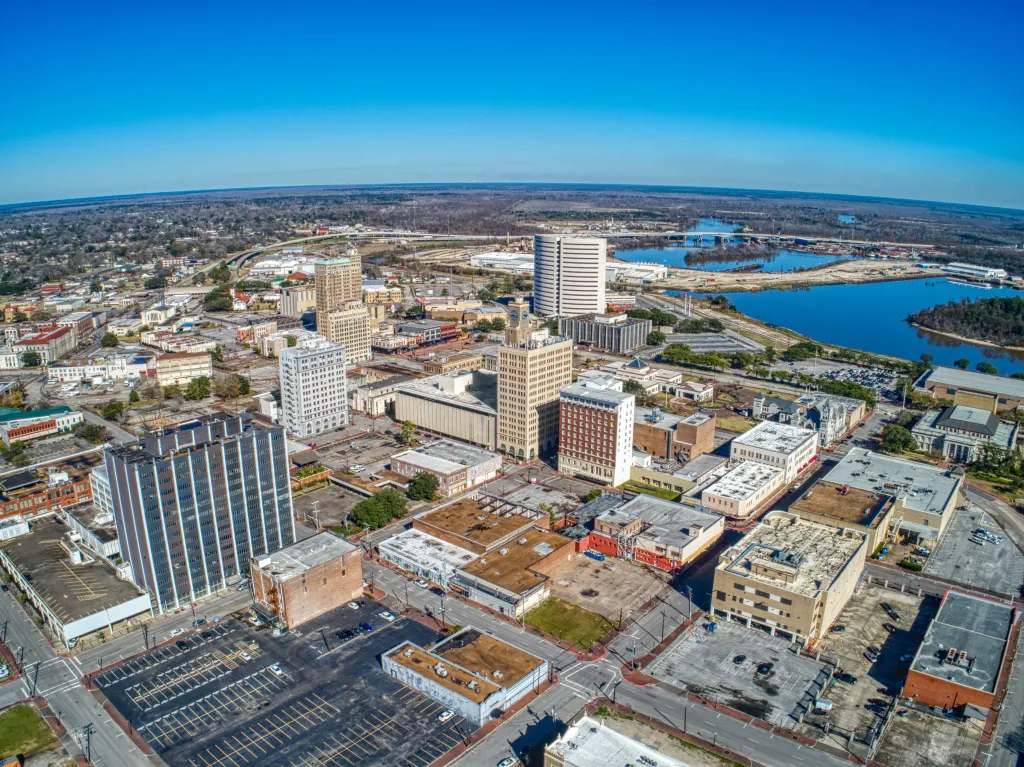
The 1901 Spindletop gusher turned Beaumont into an oil town, and refineries still ring the city. Yet its workforce fell 6.1% to 52,189, nearly 3,250 homes disappeared from inventory and residents dropped to 112,888.
Advertisement
Hurricanes have done lasting damage to Beaumont’s head count. When Harvey hit in 2017, the city’s businesses bounced back far faster than its residents, whose flooded homes forced many of them out of the area. Kristie Young of the Greater Beaumont Chamber of Commerce told Bisnow that some residents never came back for fear of future storms.
Jefferson County output, meanwhile, rose about 0.7% annually. In other words, the plants are humming, but fewer people are living in town to staff them.
New Orleans, Louisiana

The Big Easy lost more than 27,000 residents, bottoming out at 362,701, and its labor force sank 10.3% to 184,266. Oddly, builders kept building. Housing units rose 2.4% to 196,906, meaning more homes for fewer people.
Advertisement
The seven-parish metro counted 970,849 people as of mid-2025, down 3.6% since 2020, and economic development group GNO Inc. is drafting a plan to grow the region’s population by 5%.
New Orleans is losing people to a toxic mix of thin paychecks and soaring storm costs. Allison Plyer, chief demographer at The Data Center, told The Advocate that what ultimately drives people in or out of a place is whether well-paying jobs are there to support them. Local leaders at a recent Bureau of Governmental Research panel also pointed to quality of life, spotty public transit and existential worries over flood protection and insurance costs.
“We don’t want to be managing decline,” Jeff Schwartz, the city’s new deputy mayor for economic and community development, told Axios New Orleans.
Memphis, Tennessee

Advertisement
FedEx’s hometown shed more than 23,000 workers, a 7.2% slide to 299,409, and its population tumbled by over 40,000 to 610,936. Roughly 9,700 housing units dropped off the rolls.
Shelby County posted the biggest numeric population loss of any US county between mid-2023 and mid-2024, shedding 3,379 people.
Memphis stopped growing the moment it stopped swallowing its suburbs. The city’s population climbed from 610,337 in 1990 to 650,100 in 2000, but once annexations halted, the numbers began to fall. It was the only one of Tennessee’s 10 largest cities that failed to grow between 2020 and 2025, according to Census data cited by Newsweek.
In the last few years, it has been ranked most dangerous cityin the country due to high crime.
Advertisement
Mayor Paul Young has called the decline a top priority and links it to public safety and job recruitment. “It’s almost like a chicken and an egg,” he told Local Memphis.
Lawton, Oklahoma

The Fort Sill military town saw its workforce dip 7.5% to 44,165 and its population slip to 90,039. Housing fell 2.3%.
Lawton lives and dies by Fort Sill, and the base has been shrinking. A Cameron University economic profile attributed the city’s population decline since 2010 to reductions in military personnel and civilian workers at Fort Sill, and found the city losing younger residents, particularly those in their early 20s.
Advertisement
Local leaders are betting big on defense dollars. In August, Leidos broke ground on two facilities expected to bring 130 jobs, including a roughly 200,000-square-foot plant built partly inside a former Dillard’s. Firehawk Aerospace is also pouring $45 million into a factory slated to add around 100 jobs.
FISTA Innovation Park CEO Krista Ratliff, a Lawton native, told KSWO she once “moved away from university because of job opportunities that didn’t exist.”
Waterloo, Iowa

The John Deere stronghold is the list’s oddball. Its labor force eased 2.2% to 36,136, but population ticked up to 67,471 and housing grew 0.7%.
Advertisement
Waterloo’s fortunes rise and fall with John Deere, and a slump in the farm economy has hammered its biggest employer. Deere cut 1,075 workers at its Waterloo operations in 2024 alone as weak farm income projections sapped demand for new equipment, and another 932 layoffs followed in 2025. There’s a glimmer of hope, though, as Deere announced in October that it would call back 275 Waterloo employees and hire 400 more across its factories.
The real worry is the wider economy. Black Hawk County’s inflation-adjusted GDP shrank about 0.8% a year.
Toledo, Ohio
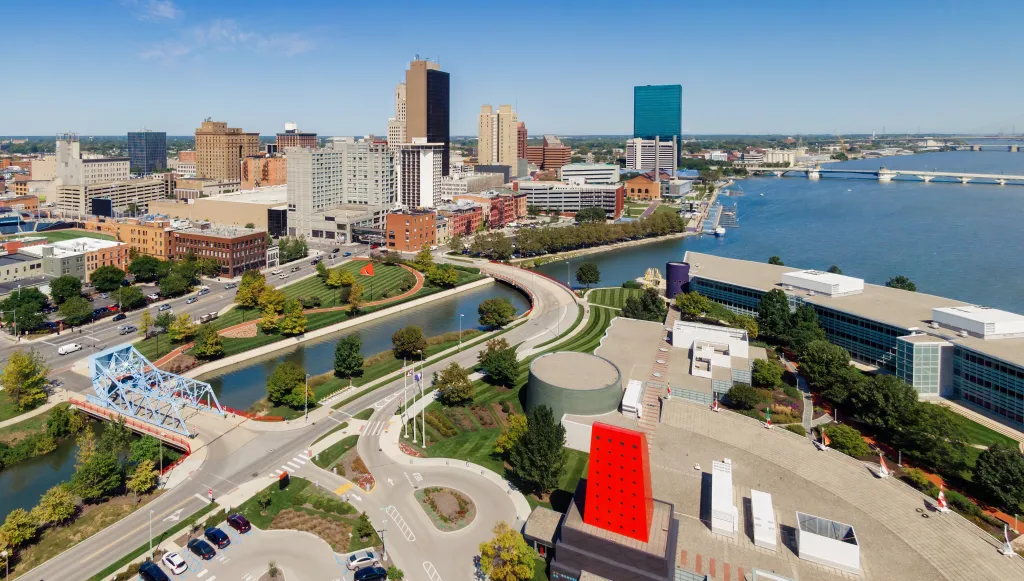
Toledo’s workforce held steady, inching up to 132,557. The damage shows up on the block instead. More than 7,500 housing units vanished, a 5.5% drop to 131,630, as population slid to 265,651.
Advertisement
Much of that is deliberate. The city says it has managed 1,155 demolitions since 2022, but with state grant money and federal pandemic aid spent and a public safety levy defeated, the mayor wants to cut the program. Some 449 properties are flagged as teardown candidates, at an average cost of about $15,000 apiece before asbestos work.
The Lucas County Land Bank vows to keep swinging the wrecking ball on its own budget. “The Land Bank will continue to make neighborhood investments, including demolition where needed,” CEO David Mann said in a statement to 13 Action News.
Toledo’s blue-collar backbone took a hit when the Jeep plant cut back. Stellantis indefinitely laid off 1,100 union workers at its Toledo South Assembly Plant starting in January 2025, dropping from two shifts to one on the line that builds the Jeep Gladiator. That shrank the factory’s workforce from about 4,400 to roughly 3,300.
The post The 8 US cities dying before our eyes as workers flee and entire neighborhoods sit abandoned appeared first on New York Post.