The C.I.A. appears to have waterboarded more detainees than the three terrorism suspects it has officially acknowledged subjecting to the torture tactic in the years after the Sept. 11, 2001, attacks, according to a newly declassified account from a former C.I.A. contractor.
The disclosure, among a set of records the government has released in response to a New York Times lawsuit under the Freedom of Information Act, corroborates longstanding suspicions that the agency may have used the technique more than it has officially stated.
The account adds to the publicly available history of a notorious program under the George W. Bush administration in which the C.I.A. held terrorism suspects in secret overseas prisons and used a variety of torture techniques to interrogate them.
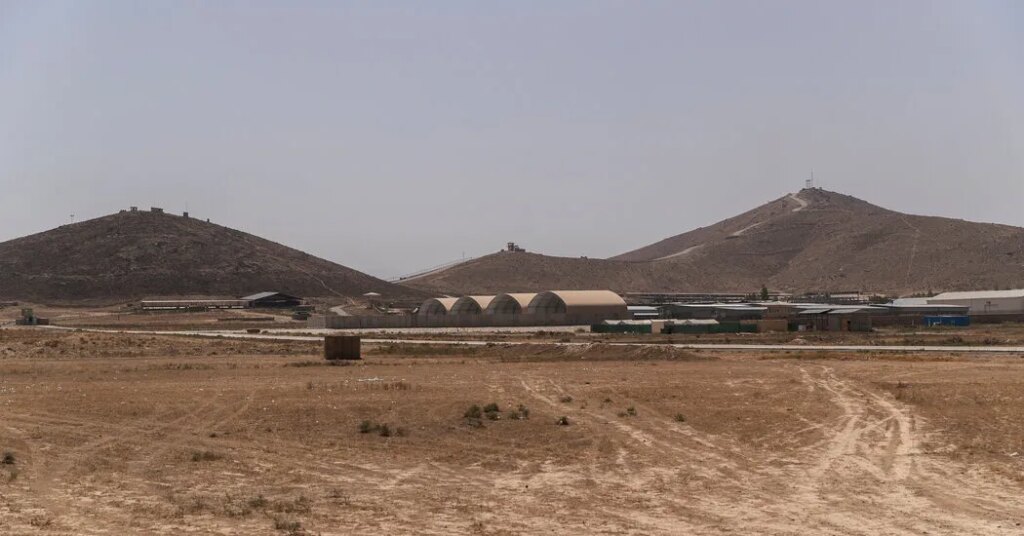
The witness was a former contract translator for the agency who worked at one of those secret prisons, known as black sites. It was apparently the one north of Kabul, Afghanistan, that was sometimes called the Salt Pit, or Detention Site Cobalt. In 2012, the translator told an F.B.I. agent that he had seen a man he called “Bahir” strapped to a board tilted downward into water.
“There were approximately three to four people ‘doing this,’” an F.B.I. agent summarized the linguist as saying. The agent added that the witness “saw the incident in passing but did not participate himself. The waterboard session was in the hallway and there was not a lot of room.”
The material stems from a special prosecutor’s investigation into the C.I.A.’s use of torture and its destruction of videotapes showing waterboarding from 2008 to 2012. The prosecutor, John Durham, ultimately never brought criminal charges against agency personnel. The government continues to keep secret his reports on his findings.
The Senate Intelligence Committee conducted a parallel inquiry, releasing a more than 500-page executive summary in 2014. Because Mr. Durham’s inquiry raised the risk of prosecution, agency witnesses were unwilling to be interviewed by the committee, which instead relied on millions of pages of internal C.I.A. documents.
The C.I.A. told the committee that its records showed it had waterboarded only three men: Abu Zubaydah, the first detainee the agency held in its black-site prisons; Khalid Shaikh Mohammed, accused of being the architect of the Sept. 11 attacks; and Abd al-Rahim al-Nashiri, who is accused of helping plan Al Qaeda’s 2000 bombing of a Navy destroyer, the Cole. All three are now detainees at the Guantánamo Bay military prison.
They were waterboarded at other C.I.A. black-site prisons — in Thailand and Poland — not the one in Afghanistan. The newly released files do not say where the translator worked, but he discusses the death of a detainee by freezing, which happened at the Afghanistan facility.
The C.I.A. press office did not respond to a request for comment.
There have been previous suggestions that the C.I.A. records made available to the Senate committee may have omitted instances of waterboarding at that particular site.
In 2012, a Libyan man who had been held by the C.I.A. in Afghanistan described being waterboarded there in an interview with Human Rights Watch. The Senate report said agency records showed the Libyan had been held by the C.I.A. and subjected to other tactics — like confinement in a cramped box and shackling into painful stress positions — but did not mention waterboarding. The report noted, however, that detainees had been subjected to techniques “not recorded in cable traffic” there.
And a footnote to the Senate report disclosed that its investigators had obtained a photograph of a waterboard at the Afghanistan black-site prison, surrounded by buckets of liquid. When committee staff asked the C.I.A. about the photo in 2013, according to the footnote, the agency was “unable to explain.”
In the interview report released in recent days, the former contract translator told the F.B.I. in 2012 that “Bahir,” the man he said he had seen being waterboarded, was “a relative of Hekmatyar,” an apparent reference to a prominent Afghan militia leader and politician in the 1980s and 1990s.
The Senate report lists a man named “Ghairat Bahir,” whom C.I.A. records indicate the agency held for about two years starting in 2002 and subjected to what it euphemistically called “enhanced” interrogation techniques. It is not clear whether he is the man the translator described.
Other interview reports released this week include material about Abu Zubaydah, who was captured in 2002 and waterboarded at a black-site prison in Thailand.
Ali Soufan, an F.B.I. agent who helped interrogate Mr. Zubaydah and opposed the C.I.A.’s torture of him, said the interview accounts aligned with his recollection, including the cooperation of Mr. Zubaydah before he was tortured and the resistance of some C.I.A. officials at the black site to the treatment the agency was ordering.
Other interviews focused more on the tapes showing interrogation sessions.
One official told the F.B.I. that he kept the tapes in a safe, describing them as “serious business” and expressing the opinion “that if the tapes got into the wrong hands they could have the potential to ‘destroy a president.’”
The interview reports also show that C.I.A. officials feared that after President George W. Bush left office, a new administration might make the videos public.
On Jan. 22, 2009, two days after President Barack Obama was inaugurated, one official recalled that several years earlier, the C.I.A. had expressed concerns to Andrew H. Card, then Mr. Bush’s chief of staff, that officials might someday be prosecuted based on the tapes. (Efforts to reach Mr. Card were unsuccessful.)
According to this official, Mr. Card had conveyed those concerns to Mr. Bush and then relayed that the president had said “there was only one person he could not pardon, and that was himself, implying the president would take executive action should any C.I.A. employees find themselves being prosecuted for their work on the interrogation program.”
The post C.I.A. Waterboarded More Than It Admitted, F.B.I. Interview Suggests appeared first on New York Times.