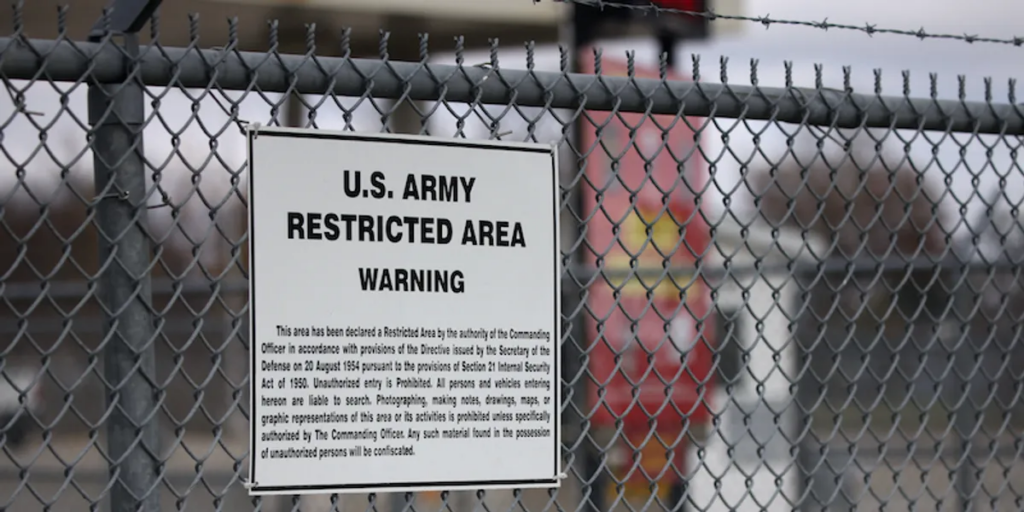
The U.S. Army has insisted it only learned last spring that a stockpile of lead explosives at an Iowa ammunition plant had become dangerously unstable, but newly surfaced documents suggest efforts to get rid of the material began months earlier.
According to records reviewed by The Washington Post, American Ordnance, the contractor that runs the Iowa Army Ammunition Plant in Middletown, reached out to a Georgia-based disposal firm on Sept. 24, 2025, asking MuniRem Environmental to come up with a plan to “neutralize and dispose” of 68 drums of lead azide, a compound used in munitions.
That request came nearly six months before March 2026, when the Army says it first became aware of the danger.
MuniRem responded in late October 2025 with a proposal to treat the lead azide, its containers and the underground bunkers where it was stored with a chemical agent that would render it non-explosive.
The EPA lists that kind of treatment as an alternative to open detonation, which can contaminate nearby land, waterways and air.
On Feb. 4, 2026, an American Ordnance manager emailed MuniRem to say the U.S. government was “taking another approach to lead azide disposal based on their assessment of safety risk.”
In a statement to the Post, the Army said it would look into the circumstances, but “current indications are that we were made aware in March,” and American Ordnance didn’t respond to the Post’s requests for comment.
It’s unclear what happened between the Feb. 4 email and March 12, when the plant abruptly halted operations for a safety review.
A day later, the contractor’s president asked MuniRem founder Valentine Nzengung to fly to Iowa for an emergency meeting, and MuniRem won a contract on March 26 to carry out its neutralization plan, only to have it canceled two months later.
Nzengung, a University of Georgia geochemist, said the contractor’s interest in disposing of the material in fall 2025 suggests concerns about its stability already existed.
“Were the barrels leaking? Was there a problem with temperature?” Nzengung asked. “I don’t know. But these are the questions I would be asking as a scientist.”
The Army told the Post an expert panel had tested MuniRem’s method and others and concluded they were too likely to set off an accidental blast.
The revelations come as the Army moves ahead with a controlled detonation scheduled for Wednesday.
Its own models show the blast could spread lead dust more than 100 miles, and there’s no known safe level of exposure to the neurotoxin.
The post Emails blow gaping hole in Army’s story on toxic Iowa lead stockpile appeared first on Raw Story.