Welcome to this week’s Fortune Gulf Brief. We’ll be covering:
- Saudi’s PIF faces growing funding pressure
- Fizz—the ‘anti-Facebook’ app winning over the Gulf
- Qatar and Brookfield pledge $16.5bn investment in Germany
- ExxonMobil signs $400 million Oman gas deal
- And, the three we enjoyed reading this week
In war, optics matter.
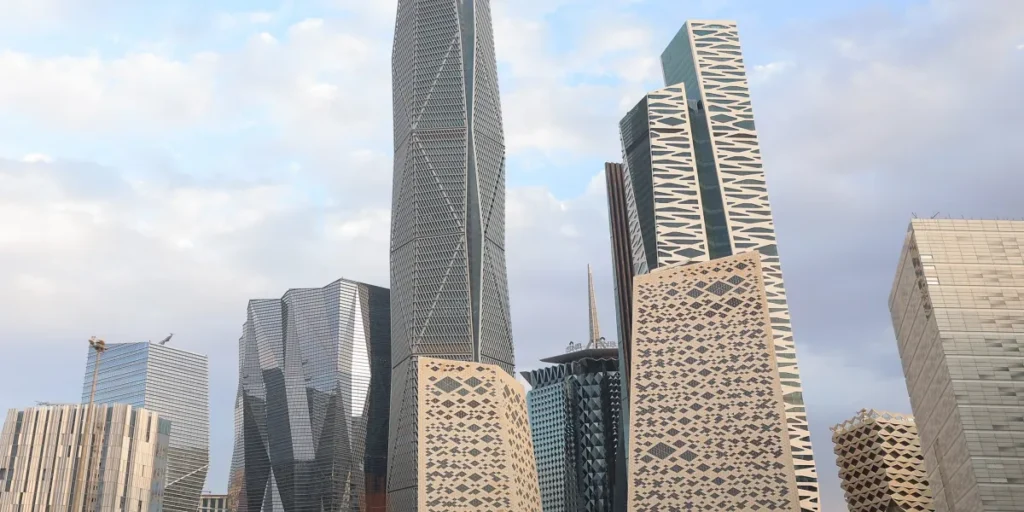
On Tuesday, the Iran-backed Houthis struck the headquarters of the Public Investment Fund (PIF), Saudi Arabia’s $1 trillion sovereign wealth fund, for the second time in less than a week.
The strike injured 11 people and occurred on the same day that Riyadh unveiled its annual budget for 2027, with an estimated deficit of SAR190 billion ($50.64 billion). The kingdom is now preparing for its first economic contraction in several years.
The economic toll of the U.S.-Iran war on Saudi’s economy has been gradually building during the course of this year.
Foreign direct investment (FDI) into Saudi Arabia declined 18% in the second quarter, reaching SAR 22.3 billion ($5.95 billion), compared with the previous quarter.
Many foreign investors are adopting a wait-and-see approach until the trajectory of the war becomes clearer—a delay the kingdom can ill afford.
Riyadh is targeting $100 billion in annual FDI by 2030. It attracted $33 billion in 2025, but that figure is likely to be lower in 2026, Tim Callen, a visiting fellow at Arab Gulf States Institute, a U.S. think tank, and a former IMF mission chief to Saudi Arabia, tells me.
“To get to $100 billion in 2030 would require exceptionally strong growth,” he said. “There is no evidence to suggest this will happen. If the war ends, it may go up, but not to this level.”
But PIF is reluctant to stump up any more cash itself given its declining assets and mounting losses. Callen calculates its cumulative impairments stood at nearly $30bn during 2024 and 2025.
Earlier this month, Reuters reported that PIF is beginning to explore new fundraising avenues, including raising funds against future revenues from some portfolio companies.
“Selling stakes in companies is certainly possible, although it will not be easy in the domestic market at present,” said Callen.
“I think the most likely route is that they will borrow more and also look for more public-to-public transactions such as that recently agreed with Aramco for Humain.”
On November 1, PIF sold a 49% stake in Saudi AI firm Humain to state-owned oil giant Aramco, which is set to inject $2.6 billion into Humain this year.
Around the same time, it secured a €2.8bn ($3bn) loan from a 25-bank consortium, backed by a guarantee from Italy’s credit-export agency. Meanwhile, in May, it sold a three-tranche bond worth $7 billion.
In August, a senior executive at PIF said it planned to return to the global debt market early next year.
But as borrowing increasingly underpins new investment, rising financing costs could prove a challenge.
With the riyal pegged to the U.S. dollar, the kingdom’s monetary policy is closely tied to that of the U.S. This leaves the kingdom facing higher borrowing costs just as both its current account and fiscal deficits are widening.
“PIF will have to focus on higher return projects that make sense when they are funded at higher interest rates,” says Callen.
In addition, Callen said he suspects there will be further write-downs on Neom, the planned futuristic desert city, and, to a lesser extent, on other giga projects.
PIF recorded $8 billion in write-downs on its five gigaprojects in 2024, with Neom accounting for the largest share. Payments to contractors to terminate long-term Neom agreements are expected to total $16 billion over the next five years—more than it plans to spend on construction.
Khalid Azim, director of the MENA Futures Lab at the Atlantic Council’s Rafik Hariri Center for the Middle East, said that focusing on the returns from investing in people will ultimately be more important than financial capital in the next phase of Vision 2030.
“Human capital and productivity will increasingly determine economic competitiveness,” he told me, noting that approximately 71% of Saudi citizens are under the age of 35.
“To realise that demographic dividend, Saudi Arabia must turn its investments in education and skills into productive economic output.”
For a deeper look at how the U.S.-Iran war has been testing the resilience of Vision 2030, read my Fortune colleague Vivienne Walt’s piece here.
Melissa Hancock As ever, thanks for reading, and do keep in touch with your thoughts and ideas. [email protected]
The post Striking the heart of the kingdom’s economic ambitions appeared first on Fortune.