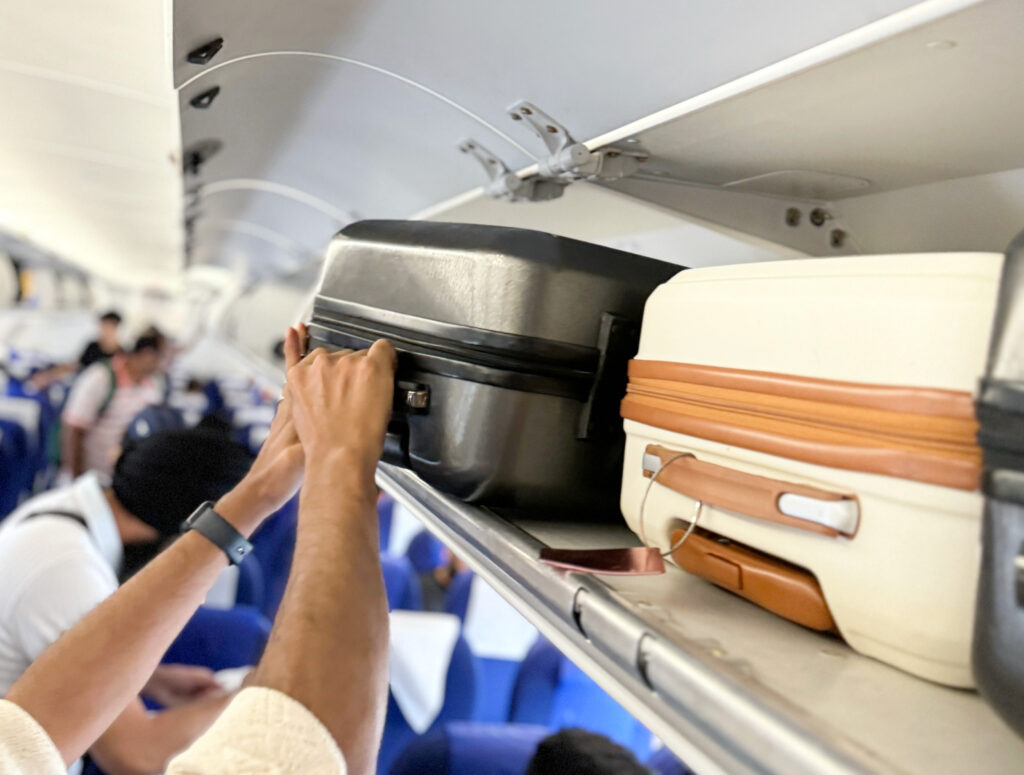
Maybe you’ve leaped up to grab your bag from the overhead compartment after a long flight, only to feel a sharp, stabbing twinge in your lower back as you head down the aisle. Or you could be relaxing the day after a road trip and find your lounging interrupted by sudden, painful back spasms. Does this mean back pain will now be your most reliable travel companion?
In general, low back pain is a common complaint. Research that spans almost four decades finds that this type of pain is the leading cause of disability in most countries, and in 2020, there were more than half a billion cases of low back pain worldwide. Traveling can often prompt a flare-up of chronic pain or kick off new back pain, according to Andrew Bach, a physiatrist at Cedars-Sinai Spine Center in Los Angeles.
“Travel days tend to throw us off our normal routines,” he said. “We might skip our usual morning stretches or exercise, and we often find ourselves doing things we aren’t accustomed to doing regularly. There’s a surprising amount of lifting, bending and carrying involved in travel.”
Here’s why travel can cause or exacerbate back pain, and how experts recommend preventing it from putting a damper on your next trip.
Why travel tends to affect your back
Prolonged sitting has been shown to be detrimental to back health. Staying in one position for an extended period of time puts constant pressure on the back muscles and spine. It also reduces blood flow to the gluteus maximus — the buttocks muscle that helps stabilize the pelvis and support the spine. Over time, the resulting spinal disc compression and back muscle fatigue can strain surrounding ligaments and joints, leading to lower back pain.
On a normal day, you can get up and move around at least for a few minutes here and there, so you’re not seated nonstop from 9 to 5, but “travel often takes away those opportunities while introducing additional stress on the spine,” said Andrew Hanna, a pain and physical medicine and rehabilitation specialist, and medical director of the Back & Neck Health Center at MemorialCare Long Beach Medical Center.
That stress comes from being confined to a seat that may not adequately support your body, leaving you sitting in an awkward or uncomfortable position for hours. Anyone who has tried to sleep on a red-eye flight knows about the contortions involved when trying to relax.
You’re also probably moving in ways that aren’t part of your everyday routine, said Hanna, such as lifting a heavy suitcase into a car trunk, overhead compartment or onto a security screening belt. “These sudden, unfamiliar physical demands can aggravate the muscles, joints and discs of the spine, particularly in people who already have some underlying back issues,” he said.
Poor sleep is another, often-overlooked contributor to back pain during travel. Hanna said even one night of inadequate or disrupted sleep can increase the nervous system’s sensitivity to pain, which makes the body more susceptible to discomfort. Stress plays a role as well in increased muscle tension and pain sensitivity, he added — and travel days often involve plenty of stress from tight schedules, delays, and navigating airports or unfamiliar highways.
“We might also spend a lot more time on our feet than usual, standing in security lines or walking through long airport terminals, often while carrying heavy bags,” Bach said. Sitting is a primary culprit for pain, but all that standing can do a number on your back muscles, too, leading to muscle fatigue that might result in stiffness or spasms later. Not wearing supportive enough shoes can worsen the whole situation.
What you can do before your departure
Because heavy bags can be such a contributor to back pain, even when they’re roller bags, Bach recommends packing light whenever possible, especially for carry-on luggage and totes.
“One of my favorite travel recommendations is a fanny pack,” Bach said. “I started using one myself because I have a history of back problems. It’s a small change, but I’ve found it makes traveling a lot more comfortable.” Instead of constantly bending down to reach into a bag under the seat, he keeps the pack with him on his seat. Also, the fanny pack isn’t slung over a shoulder like a laptop bag or purse, so it won’t cause the kind of one-sided weight distribution that might make back muscles more tense.
Another helpful pretravel strategy is to move more on your travel day, said Dawn Brown, an assistant professor of physical therapy and human movement sciences at the Northwestern University Feinberg School of Medicine.
“Doing some gentle stretching or even walking 10 minutes or so before you get into the car for that long ride or before you get on the plane works wonders for your back because now you’re creating a little bit more mobility, you’re hydrating your discs and your spine, and that way it’s preparing [your back] for that sitting,” she said.
How to prevent back pain mid trip
One of the easiest ways to lower your risk of back pain and stiffness is simply to move in different ways in your plane, car or train seat, and to do that often, said Ethan Triplett, a physical therapist at Orlando Health Rehabilitation and Sports Medicine Center.
“Even if you can twist in your seat, a lot of times that’s just enough to change position,” he said. Sitting up taller is another seemingly minor tactic that can be helpful, because slouching so that your spine is out of alignment puts more pressure onto the discs, muscles and ligaments, he added. These slight shifts can help alleviate tension in the back.
Placing a rolled-up jacket or small travel pillow right in the curve of the lower back can provide a more ergonomic position that supports the lumbar spine.
Handling luggage correctly is another way to protect the back. Triplett works with flight attendants and advises them to lift with their legs — meaning coming into a slight squat before lifting rather than bending over to pick up a suitcase or pack. Another trick: Keep the luggage as close to the body as possible when lifting, since holding it farther away will put more strain on the back as it works to stabilize the spine.
“The closer you have it to your body, the more stable it’s going to feel,” Triplett said. “Same thing applies when you’re going to put it over your head. Make sure you keep it as close as you can, right in front of your face.” Minimize twisting as much as possible, too, since the one-two punch of lifting and twisting can increase stress on the back.
How to ease post-travel aches and pains
In some cases, even when you do all the right things before and during traveling, your back will end up feeling off — perhaps even a day or two later, in a way that’s similar to muscles being sore 24 to 48 hours after a hard workout. If that happens, Triplett said, gentle movement is key rather than total rest, which might mean easy walking while sightseeing or doing some stretching in a hotel room when your back feels particularly tight. You can also take over-the-counter anti-inflammatories (acetaminophen, ibuprofen, naproxen) as needed to reduce pain.
Most back pain related to travel resolves within a few days to a few weeks, Hanna said. If the pain isn’t clearly improving after four weeks or if it repeatedly returns, he suggests consulting a physician to determine whether there’s an underlying condition that needs attention.
“A proper medical evaluation can help distinguish a temporary muscular strain from an underlying spinal condition or another problem that requires treatment,” he said. “The important thing is not to dismiss persistent or worsening symptoms as simply the result of a long trip.”
The post How to prevent back pain on long travel days appeared first on Washington Post.