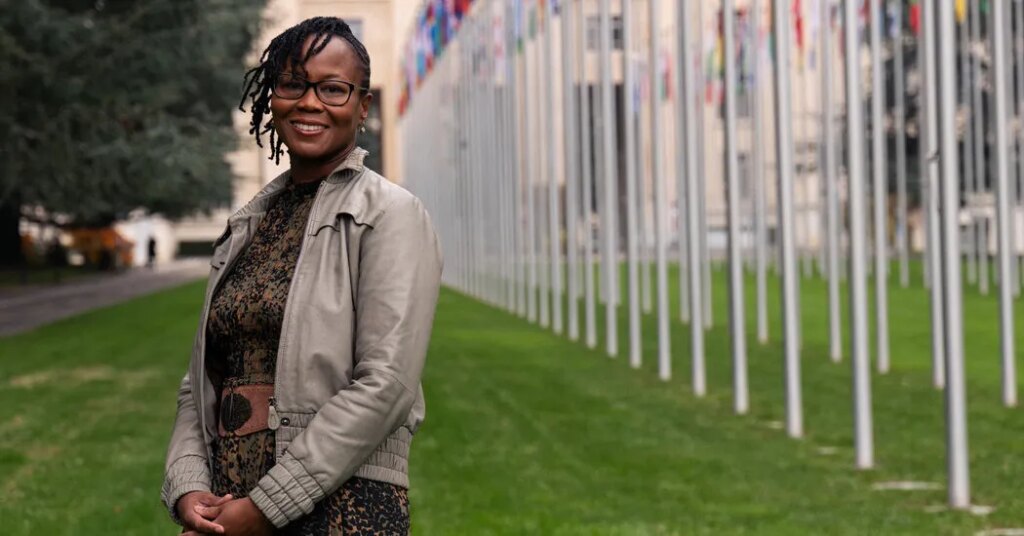
During more than 20 years at the United Nations, Nneka Henry worked on big issues like poverty reduction, food security and women’s economic empowerment. In 2021 she took on another alarming and lingering global crisis — one that has been called the neglected pandemic — by becoming head of the U.N. Road Safety Fund.
The mix of cars, scooters, motorcycles and bicycles sharing the roads in the poorest nations has had a deadly impact. According to the World Health Organization, nearly 1.2 million lives — some 3,000 a day — are lost to vehicle crashes every year, with up to another 50 million serious injuries that often result in lifelong disabilities.
For children and young adults between 5 and 29, traffic injuries are the leading cause of death, the W.H.O. says.
“The risk of dying in a road crash is three times higher in low-income countries” than in high-income countries, said Ms. Henry. Poorly maintained roads and vehicles, lack of critical infrastructure like bike lanes and signage, and weak regulation and enforcement plague many countries; only a handful have comprehensive laws for drinking and driving; speeding; and seatbelt, child restraint and motorcycle use.
Ms. Henry focuses on strengthening systems for safe and sustainable transport. She was interviewed by phone at her home in Geneva, where the U.N. Road Safety Fund is based. The conversation has been edited and condensed.
What is the U.N. Road Safety Fund’s goal?
It’s a global partnership to protect and save lives. Road safety is a topic that is so unwieldy, so complex, that you really need a pooling of resources to effectively tackle it long term. It goes to the heart of the U.N. system, this vision that countries are working together to address problems that no country on its own can solve.
How does it work?
U.N. agencies, member countries, nongovernmental organizations, the private sector and other partners come together to help low- and middle-income countries, where 92 percent of the world’s road fatalities occur.
We’re on the ground trying to change policies, laws, how enforcement works, how data is collected, and how post-crash care treatment is applied. It’s about identifying what’s needed and transferring knowledge, expertise and financing to the people in the places that need it the most.
Why is the fund needed?
Crashes aren’t an inevitable cost of living in today’s world. Many are preventable. Countries that have halved or substantially reduced deaths have done so through action over many years and decades. Small, critical actions sustained over time can create lasting change. We just have to continue pushing through, building partnerships, doing the work that we know we need to do.
What is the scope of the work?
Projects range from creating safe school zones for children to increasing access to basic emergency care. Many revolve around strengthening regulations, like the Safer and Cleaner Used Vehicles Program. It improved safety and transport emissions standards on the importation of used vehicles to African countries and subsequently to nations in Asia, Latin America and the Caribbean.
Rwanda established a mandatory motorcycle helmet law and set up Africa’s first helmet testing lab. We set the standard and did the training, but the physical infrastructure was paid for by the FIA Foundation [which funds projects related to motor vehicles]. The lab is an example of how a growing number of countries are taking their results forward, investing their national budgets to continue the work beyond what we could have done.
In Armenia, sharing real-time road crash data and improving in-country coordination led to infrastructure upgrades — a new sidewalk, pedestrian crossing and traffic lights — on a high-risk road connecting two communities along an interstate highway. They’re already tracking fewer crashes and deaths from that intervention.
What persuades donors that a project is worth funding?
Evidence. Whenever I can get it, I use it because that’s what convinces and compels. And just being persistent, because it’s not easy going back to a donor multiple times over the course of years to make the case.
We’ve known that there has been an increase in motorcyclists’ deaths, but when the latest World Health Organization’s global status report on road safety came out, it was a wake-up call. I had donors who for years were saying they wouldn’t come on board. Now they’re putting millions down on the table and we have a growing portfolio of projects around motorcycle safety.
What’s been a notable challenge?
I didn’t expect that fund-raising would be such a big part of the role. There is no core funding at the U.N. for road safety, so funds for all the work that we do have to be voluntarily raised.
What motivates you?
Passion and results. I like to see change, like when a government is strengthening the law, adopting a new standard, or carving out some of its budget for road safety.
Do you have any role models?
One person who has particularly influenced me is my former boss at the International Trade Centre, Arancha González Laya. She was always prepared, always thinking things through. What difference can I make? If you’re going to the conference, it can’t just be to sit around. Who are you going to meet with? What are you trying to achieve? She was always strategizing, always thinking about how you can add value. These key leadership guidelines that she lived by were really inspiring.
The post A U.N. Leader Focuses on the Deadly Problem of Road Safety appeared first on New York Times.