The 1999 FIFA Women’s World Cup final was a watershed moment for the sport, with record-breaking attendance and viewership numbers. More than 40 million people in North America tuned in to watch the U.S. beat China 5–4 on penalties in the final. Among them was Canadian Nikki Doucet, then a student and college basketball player at St. Francis Xavier University. “That was the first time I’d seen women’s team sports on TV, and I remember feeling so excited,” she says.
Since then, interest in women’s football has grown significantly. Its global fan base is projected to surpass 800 million by 2030, according to Nielsen Sports, while Fifpro expects the sport to be a $1 billion industry by 2027—a 72% increase from 2024.
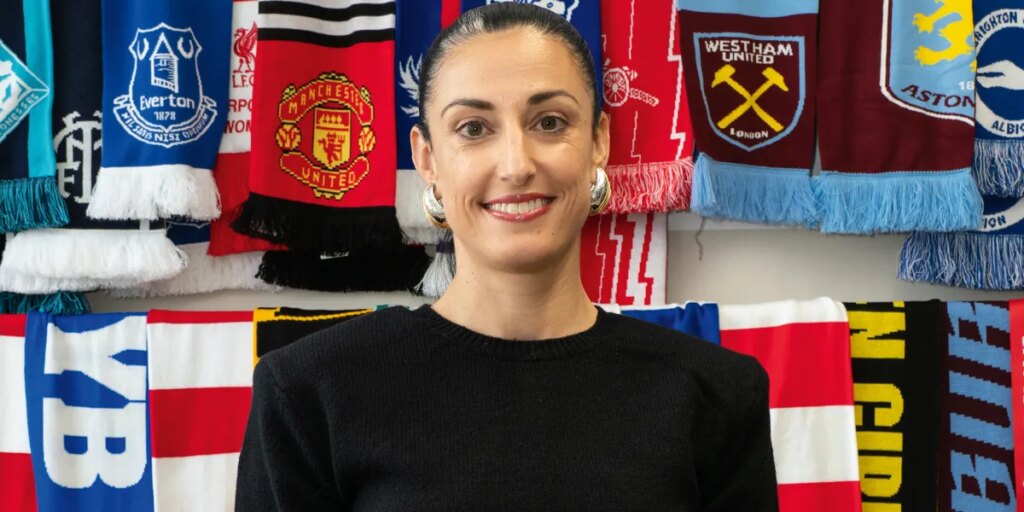
Now CEO of Women’s Super League Football, the company responsible for operating the top two English women’s leagues (WSL and WSL2), Doucet is at the sharp end of that opportunity. England has become a commercial force in women’s football: Eight of the world’s 15 highest-revenue clubs are in the WSL, according to Deloitte, and Doucet believes the league is well-positioned to capture a “significant portion” of the potential $1 billion the sport is predicted to generate.
American entrepreneurs and investment groups are taking note. The success of the WNBA—now an $850 million franchise— underlines the potential, and many see an opportunity to buy in at an early stage in the commercial development of the sport.
U.S. businesswoman Michele Kang bought the London City Lionesses in 2023, leading the club to its 2025 WSL promotion. Other notable investors include Reddit cofounder Alexis Ohanian, who holds a minority stake in Chelsea FC Women, and U.S. financier Marc Zahr, an investor in Aston Villa Women.U.S. businesswoman Michele Kang bought the London City Lionesses in 2023, leading the club to its 2025 WSL promotion. Other notable investors include Reddit cofounder Alexis Ohanian, who holds a minority stake in Chelsea FC Women, and U.S. financier Marc Zahr, an investor in Aston Villa Women.
Speaking at the WSL’s New Playbook summit earlier this year, one investor argued that European women’s football represented the “best opportunity in sport,” on a risk-adjusted basis.
“I think of my career as if I’m still an athlete. I practice for every board meeting in the same way that I used to train for a game. Your practice should be so hard, the game is easy.”
Nikki Doucet on the athlete mindset
“The enterprise value of these clubs is 100% going up,” Doucet, a former investment banker at Citi, says. “The question is, do you have owners that want to participate in this asset class of women’s football? There are different tradeoffs versus men’s football and different risk factors because we’re in a different stage of development.”
Doucet’s challenge is turning rising global interest in the women’s game into regular paying customers. There was a surge in interest following the England Lionesses’ UEFA Women’s Euro 2022 victory: Average attendance at WSL matches tripled to 5,616 the following season. But last year, median attendance was 3,236—and it remains heavily concentrated in a few clubs.
“This isn’t a manufacturing challenge. This is a marketing and revenue challenge,” Doucet says. The league invested in a rebrand of both the WSL and WSL2 ahead of the newly expanded league this season, and clubs are also investing more. In April, WSL team Brighton announced plans to build Europe’s first purpose- built women’s football stadium at an estimated cost of more than £75 million ($99 million).
“You have to invest in building the foundations that will generate long- term returns, but they might take time until you actually see the results,” Doucet says. “That’s the constant tradeoff.”
The underlying economics also remain fragile. Despite the high revenues, only four of the 14 clubs in the WSL recorded a profit (two clubs did not publish detailed financial data). The league itself, which is co-owned by the participating clubs, posted an operating loss of £8.2 million ($10.8 million) for the year ending July 2025.
Doucet attributes much of the loss to one-off costs associated with becoming an independent business, including establishing its own HR, finance, legal, and regulatory teams. The WSL and WSL2 formally split from the Football Association (FA) in 2024, shortly after Doucet joined the organization. She says the league is now profitable, although declined to share the financial details.
“We’re in a transition phase, which is probably a little bit messy. The challenge is going from big structural moments, like a World Cup, to building a weekly fan habit around women’s professional football,” Doucet says.
The majority of the league’s revenues so far have come from broadcast rights and commercial partnerships. The league generated £8.7 million ($11.5 million) from Sky and the BBC in 2025, and the league counts Doucet’s former employer Nike, in addition to Airbnb, Apple, and Barclays, among its growing list of sponsors.
The opportunities for commercial sponsors are different from those in the men’s sport, Doucet says. “We have a different audience that really values companies that are investing in women’s football,” she says. “They’re very brand loyal, and they show much deeper engagement.”
Doucet’s current priority is improving the spectacle on the pitch. “The fans want to watch the best players, and they want to watch a competition that’s exciting and has jeopardy,” she says. Good progress has been made in this area, too. The London City Lionesses signed three-time Ballon d’Or winner Alexia Putellas from Barcelona this summer, and the WSL had the highest representation of players at last year’s Women’s Euro tournament of any league.
Ensuring the WSL’s longevity is a responsibility Doucet is acutely aware of. “This isn’t a five-year business,” she says. “This is a generational asset.” She remains optimistic about what lies ahead. Doucet adds: “We’re in an early stage, so the potential is almost completely untapped—you don’t know how big it could be.”
This article appears in the December 2026/January 2027 issue of Fortune with the headline “Women’s football has a $1 billion opportunity—and the WSL wants a slice of the pie.”
The post Women’s football has a $1 billion opportunity—and the WSL wants a slice of the pie appeared first on Fortune.