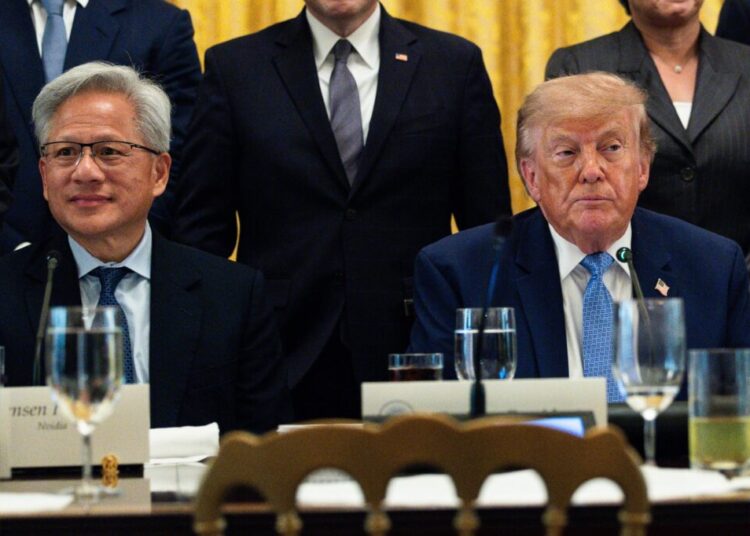
The Trump administration on Monday added Megaspeed, the Southeast Asian company at the center of the Nvidia scandal, to its trade blacklist meant to prevent the company from obtaining American technology such as Nvidia’s in-demand AI chips.
Administration officials have said the move has been under discussion for months. But the timing was attention-grabbing, coming the same day that Nvidia’s board reinstated Jensen Huang as CEO after a personal intervention from President Donald Trump.
Huang had resigned as CEO on Nov. 12 after disclosing that he had an affair with an executive at Megaspeed, Alice Huang, who U.S. officials allege was a Chinese spy.
Megaspeed is one of many data center operators in Southeast Asia known to buy chips from companies such as Nvidia and then rent out the computing power to Chinese companies, which are ordinarily barred from accessing the most advanced chips. The company is also under investigation by the Justice Department, which said last week that Nvidia had stopped selling chips to Megaspeed in 2025.
The trade blacklist, known as the “entity list,” is a register of companies that the government believes are acting contrary to American national security or foreign policy interests.
The addition of Megaspeed to the list follows the Trump administration’s announcement last week that it would close a loophole that had allowed Chinese companies to remotely access advanced Nvidia chips.
That new rule undercut a significant part of the business model of data center providers such as Megaspeed. The regulation also required companies in countries including Singapore, Malaysia and Thailand — where Megaspeed is registered and has subsidiaries — to obtain permission to receive U.S. chips.
Monday’s move had been the subject of a significant clash among Trump’s top economic advisers. Earlier this month, Treasury Secretary Scott Bessent took the dramatic step of publicly blaming the Commerce Department, which administers the trade blacklist, for dragging its feet on the addition. Several other agencies, including the Treasury Department and the Defense Department, had sought to restrict Megaspeed for months, he said.
The Washington Post previously reported that Bessent had confronted Commerce Secretary Howard Lutnick earlier this month about why his department hadn’t taken action.
The Monday document adding Megaspeed to the blacklist said the company was at significant risk of “being or becoming involved in the diversion of advanced computing commodities to unauthorized end uses or end users.”
Some critics said, however, that the move appeared to be more symbolic than meaningful. Chris McGuire, a fellow at the Council on Foreign Relations and a former Biden administration official, said the Commerce Department had left off a key part of the rule.
The restrictions on chip exports announced earlier this month applied to Megaspeed. Monday’s listing may not add much heft to that because it did not bar Megaspeed from accessing products made in foreign countries with U.S. technology, which listings often do. Most Nvidia chips are made in Taiwan.
“The generous interpretation here is that Commerce intended this to be perceived as taking strong action against Megaspeed, and didn’t realize that its rule had a drafting error that prevented the rule from having any impact — which just shows how incompetent Commerce has been at administering export controls,” McGuire wrote on social media.
The Commerce Department did not immediately respond to a request for comment.
The post Trump administration blacklists Megaspeed, key firm in Nvidia scandal appeared first on Washington Post.