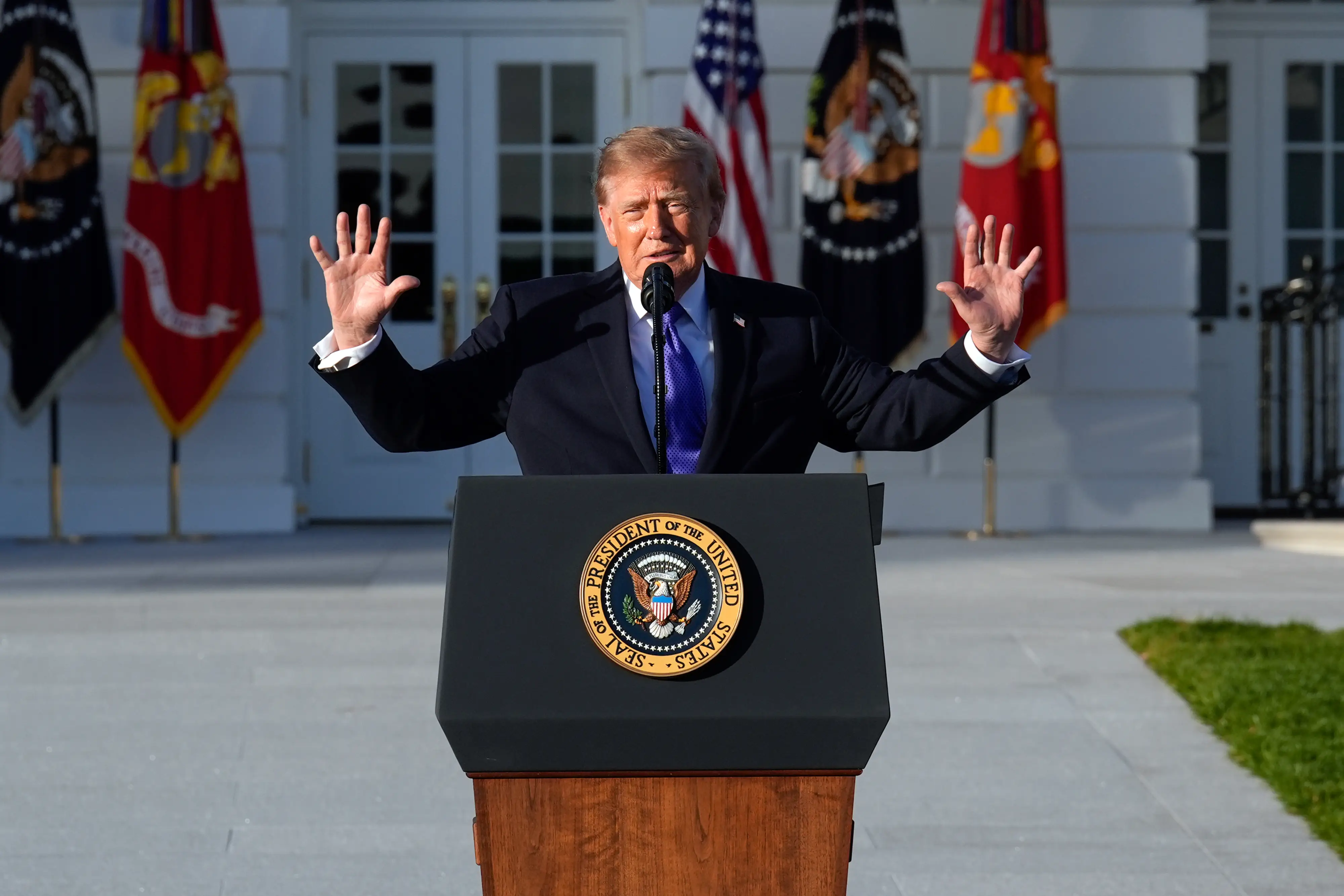
Did Donald Trump get the Nvidia board to rehire Jensen Huang?
That’s what it looks like.
And what it looks like is what matters here: Trump wants credit for getting a private company to reinstate a CEO who resigned in disgrace 11 days earlier. Just as important: The Nvidia board wants the world to know it acted to bring Huang back after hearing from Trump.
That means America is still where it has been since Trump was re-elected in 2024. The administration is eager to push private companies to do what Trump wants. And private companies are willing to do what Trump wants.
So if you were wondering whether Corporate America might be less likely to put up with Trump’s demands and directives after what seems to be a wave election against his administration, now you have your answer.
“I spoke to them, let me put it that way,” Trump told CNBC Monday morning, referring to a call he said he made to the Nvidia board. “If they would have fought it, it would have been a disaster, in my opinion.”
Meanwhile, the Nvidia board, in its statement announcing Huang’s return, took pains to point out that it had heard from “senior levels of the United States government, and based on that input, the Board is confident that Mr. Huang’s reinstatement poses no national security risk.”
This is, obviously, a head-spinning change by the board, which less than a week ago said it would not rehire Huang.
It’s also a change for the Trump administration, which had previously seemed to have internal debate about whether Huang should stay out. On one side were China hawks like Treasury Secretary Scott Bessent, and on the other were Huang allies like David Sacks, who had previously had a formal AI advisory role in the White House and who remains a powerful voice there. This is presumably why Trump tried splitting the difference last week, when he said he “would not mind” if Huang returned — but didn’t demand it.
In retrospect, that debate seems to have been settled by Sunday morning, when Bessent suggested to CBS that Huang could be a good person to lead Nvidia after all. Later that evening, Trump was openly calling for Nvidia to rehire Huang.
What remains consistent is that the Trump White House is 100% fine with intervening with individual private businesses.
We saw that most glaringly in the summer of 2025, when Trump demanded that Intel fire CEO Lip-Bu Tan, then reversed course and had the US take a 10% stake in Intel instead. A few months earlier, in a move that didn’t generate much coverage at the time, Trump decided not to restrict Nvidia chip sales to China, following a Mar-a-Lago dinner with Huang. There are many other examples.
This week’s news is an escalation. In this case, Trump wasn’t demanding tariff revenue, an equity stake, or some other tribute from a company — he wanted a company to rehire the CEO it had already said it didn’t want back.
And while the focus from Trump and the board’s recent statement is seemingly about whether Huang’s actions affected national security, that’s not the reason the board had previously given about Huang’s departure.
Last week, Nvidia said Huang left after acknowledging “personal behavior inconsistent with the company’s code of conduct.” That suggested it wasn’t just about Huang’s reported affair with a Chinese national but also ones he reportedly had with Nvidia employees. This week, Nvidia seems OK with that behavior after all.
It’s possible, as Huang’s boosters have argued, the board made a mistake in pushing Huang to leave to begin with. If so, there are plenty of private sector mechanisms for dealing with that — starting with Nvidia shareholders, who could push the board to reverse course themselves.
Instead, we have the President of the United States getting them to do that. It probably won’t be the last time he flexes that power over American companies during the next couple of years.
Read the original article on Business Insider
The post Trump wants Corporate America to remember who’s in charge appeared first on Business Insider.