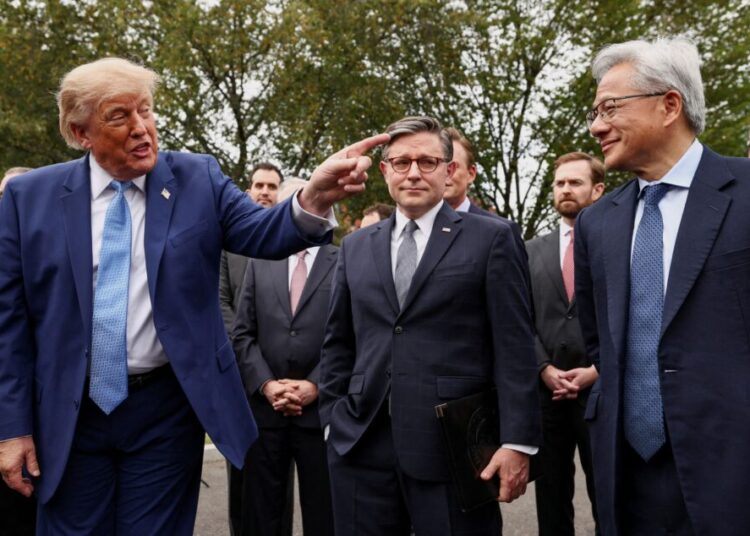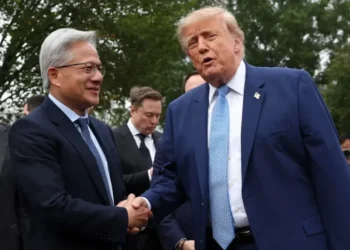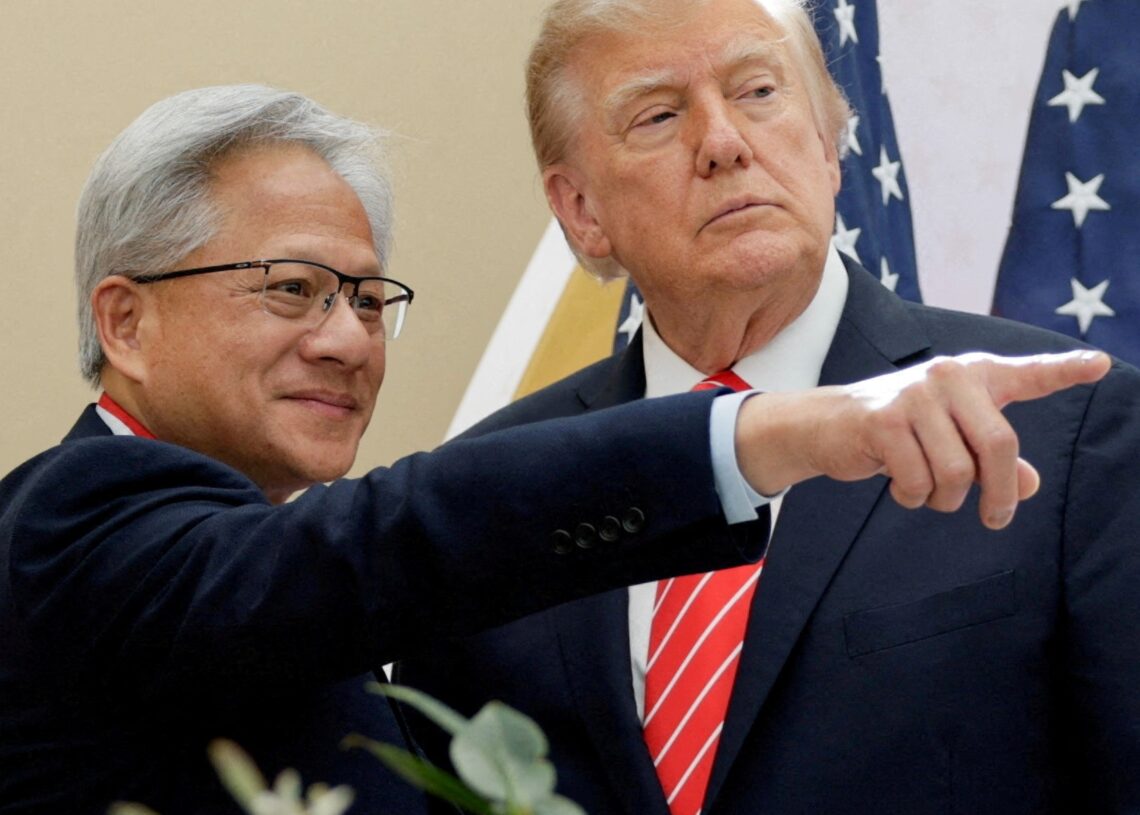
SAN FRANCISCO — Computer chip giant Nvidia reinstated Jensen Huang as its chief executive after President Donald Trump spoke directly to the company’s board and provided them “assurances” about the national security concerns swirling around Huang since he admitted to an affair with an alleged Chinese intelligence asset.
The stunning turnaround came 11 days after Huang resigned, following his admission of the affair and reports that he had another with one of his employees.
In an interview with CNBC on Monday morning, Trump said he spoke to Nvidia’s board because he was concerned about “what was happening to the company” in the wake of Huang’s resignation. “I found the board to be very, very reasonable,” Trump said.
Since Huang’s resignation Nov. 12, Trump had consistently voiced his support for the executive, joining calls from some tech leaders who had advocated his return. The tech leaders, including Tesla CEO Elon Musk, argued that Huang was a key reason for Nvidia’s success and that without him the company could falter in its critical role providing funding and computer chips for other artificial intelligence firms.
Huang’s resignation triggered a decline in Nvidia’s stock and contributed to a broader sell-off, as investor concerns mounted that the artificial intelligence boom had become overextended.
In the CNBC interview, Trump said that the market sell-off “probably” influenced his decision to advocate Huang’s reinstatement but that the more important factor was long-term concern about Nvidia’s position as a leading American company.
After the reinstatement, Nvidia’s stock skyrocketed over 30 percent, helping pull up the S&P 500 by about 5 percent.
Later Monday, the president posted an edited image of Huang superimposed on the iconic picture taken in the moments after Trump survived an assassination attempt. In the edited image, Huang pumps his fist in the air like Trump did, while also triumphantly holding a red bra over his head.
Huang’s reinstatement emphasizes the White House’s influence over decision-making at the United States’ top tech companies, even after Democrats won control of Congress in the midterm elections, forcing tech leaders to recalibrate their previously close associations with the president.
Congressional Democrats have pledged to investigate Nvidia and its work selling chips in Asia. Nvidia had made billions of dollars selling computer chips to companies that went on to rent out access to Chinese AI firms, creating a loophole that has helped boost the Chinese AI industry’s ability to keep up with U.S. technological advances.
The board had asked for assurance from the government “on the national security threat,” Trump said in the CNBC interview. “We gave them assurance, at least with everything we know, and we know a lot.”
The company’s move triggered immediate criticism from some politicians and corporate governance experts.
“The reckless decision to bring Jensen Huang back as CEO does not change the fact that Mr. Huang, Nvidia executives, and the company’s board still owe Congress answers about the company’s compliance with U.S. export controls,” Sen. Elizabeth Warren (D-Massachusetts) said in a statement Monday. “The Trump Administration also needs to explain to Congress what ‘input’ was given.”
Huang had also drawn support from a cohort of tech leaders, including Musk and former White House tech adviser David Sacks. An online petition on the site standwithjensen.com drew more than 200,000 signatures, including what it said were more than 100,000 Nvidia shareholders and 10,000 current employees, roughly a quarter of the company’s workforce.
“The mistake has been corrected,” Musk said Monday on X.
Trump last week said he would not mind if Huang returned, adding that the executive had learned a “big lesson.”
Michael Monaghan, who oversees the Founders 100 ETF, an investment fund, said in an interview Friday that he believed the tanking stock prices were disconnected from reality. Asked what he thought might turn around the sour investor mood that had battered the stock market, Monaghan pointed to two possibilities: ending the Iran war and reinstating Huang.
Despite the reinstatement, questions about Nvidia’s business in Asia, whether Huang knew about the allegations regarding the executive he had a relationship with and whether the company improperly tried to influence U.S. export policies still surround the firm and its CEO.
In a Truth Social post Monday, Trump said he still wanted Nvidia to look into export control concerns.
“NVIDIA should continue its thorough internal investigation of the Company’s compliance with U.S. export controls in order to ensure that it is fulfilling its legal obligations and Patriotic Duty to protect U.S. National Security,” he said. “Congratulations to Jensen, the NVIDIA Board, to the People of the United States — and, indeed, the World! Thank you for your attention to this matter.”
Huang’s return, just days after Nvidia board chair Harvey Jones said on an earnings conference call that the board did not intend to bring him back, immediately triggered criticism from corporate governance experts.
Jeffrey Sonnenfeld, a Yale School of Management professor who frequently advises corporate directors, said Huang’s reinstatement after an intervention by the president is the worst business and government scandal in at least a century. “That he would try this doesn’t surprise me,” Sonnenfeld said, referring to Trump. “That the Nvidia board would collapse like furniture is stunning.”
Scott Nover contributed to this report.
The post Nvidia reinstates Jensen Huang after Trump speaks ‘directly’ to board appeared first on Washington Post.