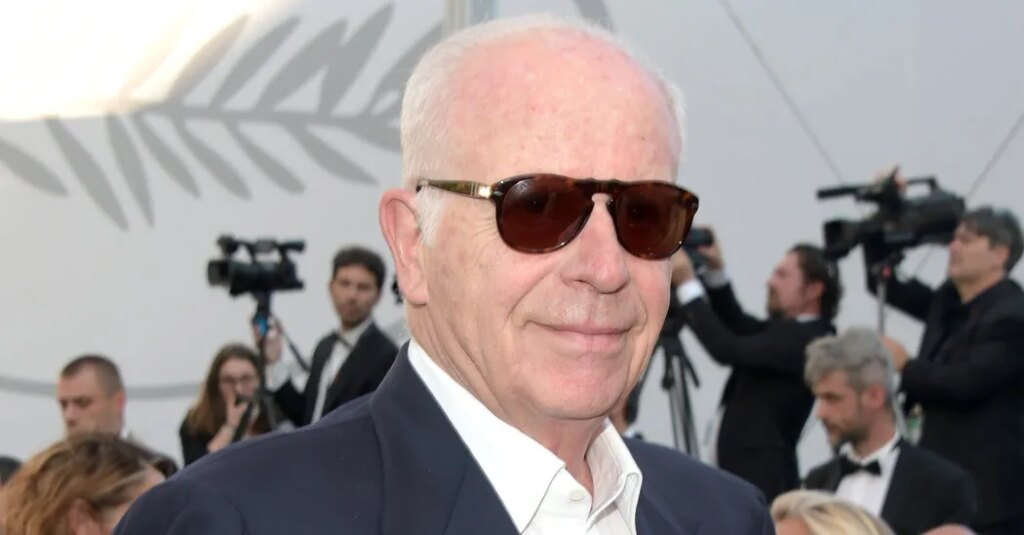
Paolo Bulgari, the Italian designer who helped propel the boutique jeweler founded by his grandfather into a giant of luxury goods, died in Rome on Saturday. He was 89.
The cause of death was not immediately available.
Mr. Bulgari held roles at Bulgari for over 65 years. As its chairman since 1984, he helped push the family business onto the world stage, transforming it into a high-end brand with stores on every continent.
In a statement on Sunday announcing his death, Bulgari described Mr. Bulgari as a leading expert in precious stones whose specialist knowledge shaped the brand’s “sensibility and aesthetic sense.”
The family described Mr. Bulgari as “the greatest jeweler of our time” who “loved Italy and was its ambassador to the world,” according to a separate statement that was shared by the Italian news agency ANSA.
Alongside his brothers, Mr. Bulgari reimagined the jeweler’s aesthetic, embracing heavy yellow gold and maximalist pieces that drew inspiration from ancient Roman architecture.
In 2011, he oversaw the deal that ended the family’s 127-year control of the business. As demand for luxury goods dropped after the 2008 financial crisis, forcing the company to cut costs, Mr. Bulgari steered the sale of the family’s controlling stake to LVMH Moët Hennessy Louis Vuitton, the French luxury goods conglomerate, for $6 billion.
In return for relinquishing control over their shares in the family business, the Bulgari family became the second-largest group of family shareholders in LVMH. Mr. Bulgari’s net worth was estimated to be $1.9 billion, according to Forbes.
Bulgari was founded in Rome in 1884 by the Greek silversmith Sotirios Voulgaris, who Italianized his name to Sotirio Bulgari. In 1905, he opened the jeweler’s third and largest space on Via dei Condotti, a historic street in central Rome, within sight of the city’s famed Spanish Steps, in the hope of enticing British and American tourists. To this day, the store remains Bulgari’s flagship.
Born in Rome to Giorgio, a son of Sotirio, on Oct. 8, 1937, Mr. Bulgari was part of the family’s third generation to control the business. By the time he was coming of age in the 1950s and ’60s, the jeweler was a favorite of the European aristocracy. Its flagship store was a magnet for Italian and Hollywood film stars, among them Sophia Loren, Ingrid Bergman, Monica Vitti and Anita Ekberg.
As a young scion of the family business, Mr. Bulgari had a front-row seat to glamour. When the actor Richard Burton was filming “Cleopatra” (1963) in Rome with his co-star and lover Elizabeth Taylor, Mr. Bulgari recalled Mr. Burton buying her a gift from Bulgari.
“I remember they were always arguing like crazy, and to make up he gave her beautiful jewels,” Mr. Bulgari said decades later, in an interview in 2001. “He bought her the most incredible emerald necklace.”
In 1984, Mr. Bulgari became the company’s chairman. Over the next decades, he and other family members oversaw an expansion of the business beyond luxury jewelry to include high-end accessories, including leather goods, silk ties, perfumes and sunglasses. These were priced for potential buyers willing to spend hundreds of dollars apiece, rather than a few thousand. In 2004, the company expanded into hospitality by opening a hotel in Milan, the first of nine that its hotel brand would eventually operate across Asia and Europe.
But the company’s fortunes turned after the 2008 financial crisis. The next year, its chief executive said sales were down, particularly in its line of watches, and the company entered a period of cost-cutting.
On the eve of the crash, Mr. Bulgari and his brother Nicola Bulgari each owned 24 percent of the company and their nephew Francesco Trapani another 4.4 percent stake. The remaining 48 percent was traded on the Milan and London stock exchanges.
In 2011, Mr. Bulgari helped negotiate the sale of the three family members’ controlling shares to LVMH in exchange for shares in the French fashion conglomerate.
Information on Mr. Bulgari’s survivors was not immediately available.
The post Paolo Bulgari, Heir of Italian Jewelry Dynasty, Dies at 89 appeared first on New York Times.