Millions of American adults may be at greater risk of measles than they realize as the virus marches through the country at levels not reached in decades.
Since the United States lost its official measles-elimination designation last week, most of the concern has focused on babies, who are too young to be vaccinated. But even vaccinated adults born before 1989 may no longer be sufficiently protected, infectious disease experts said.
Getting a booster shot could be the best option for many of those adults, seven infectious disease physicians said in interviews.
“Just getting another dose is a very easy and safe thing to do,” said Dr. Cameron Wolfe, who helps investigate outbreaks for Duke University.
In 1989, the measles vaccine went to a two-dose regimen, which is 97 percent effective. People born before then had one dose, which was thought to provide 93 percent protection. But the potency of that dose may have waned over the years because of medical conditions, medication or simple aging, experts said.
People born before 1968 may be even less protected. Those born between 1963 and 1967 received a less effective version of the vaccine. Those born before 1963, when the vaccine first became available, may never have had a measles shot. (People born before 1957 are presumed to be protected through exposure to the disease itself.)
These differences did not matter in a country where overall vaccination rates were about 95 percent and outbreaks were sporadic. But the risk of exposure to measles has changed sharply in the United States. More than 5,800 cases and 12 deaths have been reported this year, numbers widely considered to be an underestimate. More than 40 percent of those reported cases were in adults.
“I think it’s a different ballgame now,” said Dr. Brenda Tesini, an infectious disease physician at the University of Rochester who has spent much of the past few weeks trying to establish whether adults exposed to the virus in New York state’s outbreak are protected.
The vaccine contains a weakened live virus, so it is not safe for pregnant women or for people who have moderate to severe immunosuppression. That makes it all the more important for others to bolster their protection, experts said.
Dr. Wolfe, who has treated a half-dozen adults with measles, said that even a single case can create havoc, both for the hospital and the patient.
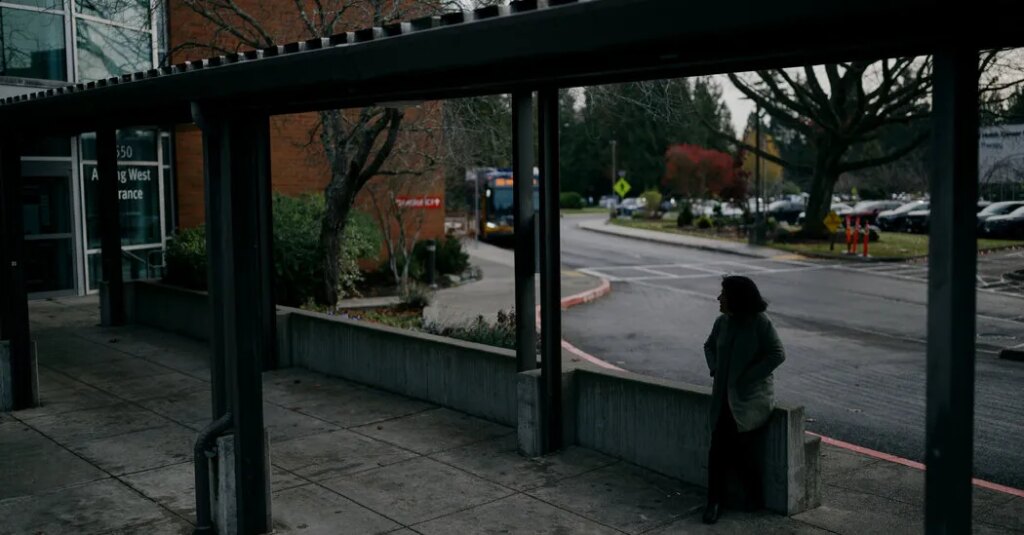
When Rita, 63, arrived at an emergency room in Seattle in March, racked with fever, gasping for breath and one rib broken from relentless coughing, measles was on no one’s list of possible causes.
She was otherwise healthy and fit, had received one dose of the vaccine as a child and did not yet have the characteristic measles rash. (She asked to be identified by her first name to protect her privacy.)
Doctors at the University of Washington Medical Center did not isolate her, said Dr. Seth Cohen, the center’s medical director for infection prevention. It took nearly 48 hours for them to diagnose her with measles, and even then, it was only because her 60-year-old vaccinated brother, who was similarly struggling in a hospital across town, tested positive for the virus.
By that point, about 150 patients in the hospital, including some with cancer, had potentially become exposed to the virus. Fortunately, none became ill, Dr. Cohen said: “The silver lining is she was likely much less infectious than she would have been had she not been vaccinated.”
Rita was discharged from the hospital after three days and a $40,000 tab, including $8,000 that her health plan required her to pay out of pocket. She remained sick and exhausted for weeks after returning home.
The measles virus destroys important immune cells, making the body vulnerable even to pathogens it has already fought. Rita lost about half her thick head of hair and has to stay away from her grandchildren whenever they are sick. She constantly picks up respiratory infections. She was sniffly with yet another cold on Friday.
Some measles patients, particularly those who are unvaccinated, end up with severe neurological complications. Measles can cause encephalitis, or an infection of the brain, during or even weeks after the illness, as well as tingling, numbness, deafness or blindness. A small percentage of patients die.
“The prognosis for all of these is actually pretty nasty,” said Dr. Pushpa Narayanaswami, a neurologist at Harvard Medical School and Beth Israel Deaconess Medical Center, who treated about a dozen adults with measles while practicing in India.
“The only way to prevent any of these complications is vaccination,” she said.
About 96 percent of measles cases in the United States are in people who were unvaccinated or have an unknown vaccination status, according to the Centers for Disease Control and Prevention. Public health officials classify anyone who cannot find proof of vaccination as being of unknown status.
Rita could not locate her immunization records when she was admitted but told doctors she had received one dose as a child. Still, the public service announcement to warn patients who may have been exposed to measles during her time at the hospital referred to her vaccination status as unknown, prompting some people in the community to label her “an anti-vaxxer Trump person,” she said.
It may also have led some adults who had been vaccinated to underestimate their risk, mistakenly believing only unvaccinated people to be vulnerable, she added.
“That to me is the most important part of my whole story,” she said.
Dr. Tesini said Rita’s experience was not uncommon and suggests there may be more breakthrough infections in vaccinated adults who may have had only one shot than the C.D.C. estimates.
“Many or most of us adults would fall into ‘vaccination unknown’ — as in, you can’t produce a piece of paper that says you got these vaccines,” she said.
The C.D.C. continues to monitor measles cases and clinical outcomes across all age groups, including adults, according to a spokeswoman for the agency. It has also expanded its Surveillance for Emerging Threats to Mothers and Babies Network to include measles.
The agency recommends measles vaccination for people who have no documented evidence of immunity but maintains its previous stance that a single dose is enough for adults born before 1989. (A committee that advises the C.D.C. on vaccines has not met since last December because of a federal court ruling suspending its work.)
Infectious disease specialists say that may be an outdated recommendation. “It’s a good time to boost for anybody who’s not sure” of their risk, said Dr. Camille Kotton, an infectious diseases physician at Massachusetts General Hospital and a prior member of the vaccine advisory committee. She said she recommends against commercial antibody tests to determine protection because they measure a single component of a complex immune system.
The pharmaceutical companies Merck and GSK, which make the measles-mumps-rubella combination shots available in the United States, said they would monitor demand for the vaccine in case they needed to increase the supply.
Dr. Kotton said she was particularly concerned for her immunocompromised patients and those with underlying conditions. Conditions like H.I.V. infection or a prior blood cancer that devastated the person’s immune system would also increase risk.
More people are now alive thanks to new and powerful immune therapies for conditions that were once fatal. “But it often means dampening down your own immune system as the therapy,” Dr. Wolfe said. Nearly 7 percent of Americans met the criteria for immunosuppression in 2024 compared with less than 3 percent a decade earlier.
The immune system’s strength also declines with age, particularly after age 50. “The protection afforded by the one dose at 30 years is not likely to be the same protection affected by the one dose at 63 or 73 or 83 years,” Dr. Narayanaswami said.
The post Measles Is a Growing Risk for Adults in the United States appeared first on New York Times.