Cooking is a social activity, an act of connection, comfort and nourishment. It also causes an estimated 436,000 emergency room visits a year. Emergency physicians like me notice a spike in cooking injuries during the holidays.
During this time of year, the joy of everyday cooking can feel like a contact sport. It’s game day for de facto family chefs, charged with cooking bigger meals for more people and making sure each dish is done at the right time. To concentrate and congregate on a larger scale means juggling sharp knives, boiling liquid, and handling hot objects and flames in a kitchen buzzing with family and friends, including your second cousin famous for compliments like, “The mashed sweet potatoes were delicious, and served at such an interesting temperature.”
Cuts, burns and slips happen. But a few preventive strategies may help you preserve precious time with family instead of spending it in an emergency department waiting room.
The most common kitchen-related injuries
Cuts
Statistics show that a knife blade causes 10 times as many ER visits as any other kitchen tool. A Journal of Emergency Medicine study of all knife-related ER visits between 1990 and 2008 found that kitchen knives accounted for 36 percent of cases. Not surprisingly, fingers received most of the cuts and slices.
Mandoline slicers, those medieval-looking kitchen tools with their guillotine-like blade that makes artful thin slices of potatoes and vegetables, will gladly shave off a fingertip if you dare to slice food down to the nub with an unprotected hand. Other knife threats for palms and fingers involve caving out avocado pits and slicing bagels.
And beware of breaking drinking glasses while rinsing in the sink. For me, it’s wine glasses. These pieces can cut through the skin, and glass shards can bury themselves in the wound.
Burns
Most burns affect the arms and front of the leg, often from scalding with extremely hot liquids. I’ve cared for severe wounds from mishandling a pot of boiling water, splattering grease and dropping a carafe of freshly brewed coffee. Other forms of havoc include pressure cooker burns from opening the lid without first reducing the pressure inside or overfilling the pot.
A minority of burn injuries come from contact with hot surfaces. My nemesis is a beloved cast iron pot. I know glove mitts or potholders are necessary, but when I’m busy, my hands go rogue before my brain knows better.
Flame-related kitchen burns aren’t as common, but they deserve our utmost attention. The Consumer Product Safety Commission reports that 45 percent of 352,000 residential fires each year are cooking-related. According to National Fire Protection Association data, cooking accounts for 80 percent of Thanksgiving Day home fires.
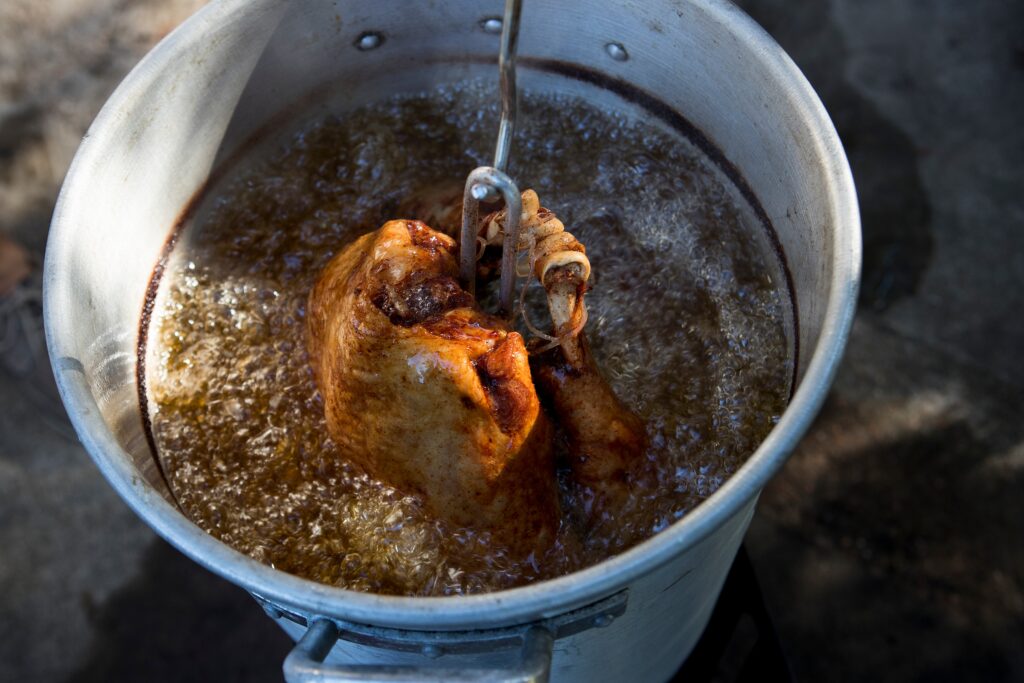
Ranges and ovens cause most cooking-equipment-related fires, but on Thanksgiving, the beloved turkey fryer makes an appearance. If used improperly, the hot oil can produce a fireball, causing severe burns and property damage. For this reason, the NFPA recommends against using a turkey fryer at home that uses cooking oil and opting for either an infrared or air fryer.
Microwave injuries
The most innocent-looking kitchen threat might be the microwave. Data shows that from 1990 to 2010, close to 160,000 patients were treated in ERs in the United States for microwave-related injuries. Spills, resulting in burns to the hands and fingers, were most common.
A small study at a U.K. burn unit described facial burns related to explosive decompression, which happens when tight lids are removed from a hot container and steam or food contents explode. This can also happen with foods that have shells and skins, which release built-up steam when pierced. Potatoes and eggs, the humblest of foods, were most often implicated.
Fall injuries
The most invisible cause of cooking-related ER visits is gravity, leading to falls. Slipping on spills, losing your balance while using a chair or step stool to reach for that extra bag of rice, stumbling over a dog eager for a treat and even tripping over your own feet — especially when wearing backless slippers, flip-flops and sandals.
Carbon monoxide poisoning
Finally, the most insidious kitchen-related tragedy is carbon monoxide (CO) poisoning. CO is an odorless, colorless, tasteless gas produced by burning gas, oil and other fuels. Gas stoves and ovens emit trace amounts of CO, but levels can become dangerous when the appliance is not properly installed, ventilated or maintained to ensure the components are clean and working correctly.
CO exposure kills approximately 430 people each year and is responsible for an estimated 50,000 ER visits. During the holidays, ovens, ranges and stoves might be pushed to work longer and more often in spaces with inadequate ventilation.
How to stay safe in the kitchen this holiday season
To reduce the chances of needing to visit your ER, here are a few suggestions. Full disclosure, they’re easier said than done, but at the very least, we can aspire to be little engines that could.
Prepare your space: Confirm all your ingredients before starting. Make sure knives are sharp, countertops are clear and the floor is dry. Move hand towels, packaging and other flammable items away from the stovetop. Avoid loose clothing, including sleeves that might catch fire as you rush about. Keep oven mitts and gloves in your line of sight so that you remember to grab them. Have a fire extinguisher handy. Check that your smoke and carbon monoxide detectors are working properly, and if they beep, please call the fire department.
Familiarize yourself with the recipe and process: If possible, give any new recipe a trial run before the holidays. I find that the prep times listed woefully underestimate the capacities of mere mortals like myself. They also assume I have more countertop space, ovens or arms. A run-through can cut down on last-minute mayhem and stress.
Focus your attention: Minimize distractions if possible. If the kids are running rings around you, kindly send the uncle who will talk your ear off to look after them in another room. Most kitchen fires start when the stove is left unattended, so stay nearby. Focus when chopping and slicing. Wear protective gloves when using the merciless mandoline slicer.
Drink in moderation: It’s a festive time, so you could be nursing a glass of wine. It’s also stressful, which can lead to a second glass. I’ve cared for too many people who sliced while tipsy and said goodbye to their fingertips while everyone at home was finishing dessert.
Keep a first aid kit nearby: Most cuts and lacerations can be cared for at home with a basic first aid kit. If it’s bleeding, apply pressure with a sterile bandage or, if necessary, a clean towel. Then clean the wound thoroughly with mild soap and water. When a sharp knife wound appears deep, seek immediate medical attention. If a finger is hard to move, you may have cut a tendon; if it’s numb, a nerve; if the bleeding pulses, you may have sliced an artery. Bleeding that doesn’t stop with direct pressure is also a red flag, especially if you’re taking blood-thinning medications.
Remove any rings from the affected digits if possible. Finger swelling from an injury can restrict blood flow.
For burn wounds, place the injured area under cool water, or cover the involved skin with a cool cloth. Gently clean the area, then cover it with a sterile protective dressing.
Don’t apply butter to any burn wound. It’s a folk remedy that doesn’t work and increases infection risk. It’s also a waste of good butter. Burns that form blisters, especially on the face, hands and feet, require immediate medical attention. The same goes for scalding or chemical burns to the eye.
Remember to give yourself some grace. Cooking can be so much fun. Don’t rush. Try to enjoy family while accepting that it’s impossible to please everyone. When I ask patients how a kitchen-related injury happened, the response I hear most often is “I was stupid.” Nah, I say, you just have a case of being human.
Jay Baruch, MD, is professor of emergency medicine and director of the Medical Humanities and Bioethics Scholarly Concentration at the Warren Alpert Medical School of Brown University in Providence, Rhode Island. His latest book is “Tornado of Life: A Doctor’s Journey Through Constraints and Creativity in the ER.”
The post I’m an ER physician. Here are the 5 cooking injuries I see most during the holidays. appeared first on Washington Post.