Nancy Rommelmann is a freelance journalist based in New York City. She writes the Substack “Make More Pie.”
The Royal Sonesta Hotel in Portland, Oregon, sold last month for $6.8 million, or roughly 94 percent less than what it went for in 2016. The price drop is jarring, but it’s just another downstream effect of a decade-long disenfranchisement from reality that transformed what could have been the next great American city into a cautionary tale.
The die was cast after the 2016 presidential election, when thousands of protesters ransacked Portland’s tony Pearl District, causing more than $1 million in damage. The violent outburst may have looked like a reaction to Donald Trump’s victory, but there was a deeper cause.
Starting around 2000, Portland attracted young people at a higher rate than most places in the country. They came to build a progressive utopia in an affordable West Coast city. But as Portland added more than 100,000 residents and became more dynamic, growth created what growth creates: higher costs and competition, which — no surprise — turned out to be unpopular with anyone expecting to get by on a part-time barista gig.
That it was all somehow Trump’s fault was obvious, but the president was far away; people needed closer targets, so they turned to landlords, law enforcement and those on the wrong side of identity politics — pretty much anyone who could be deemed an oppressor. Public condemnation of perceived enemies emerged as a tool for cutting a bigger piece of the pie.
Covid-19 lockdowns ensured there was no place (other than virtually) to unleash this newly harnessed energy until George Floyd’s killing by police in Minneapolis provided a pressure release. Thousands marched over the Burnside Bridge to protest police brutality. When a few dozen broke off from the march to vandalize and set fire to the Multnomah County Justice Center, Portlanders faced a quandary. Would reproaching them risk tarring the entire movement?
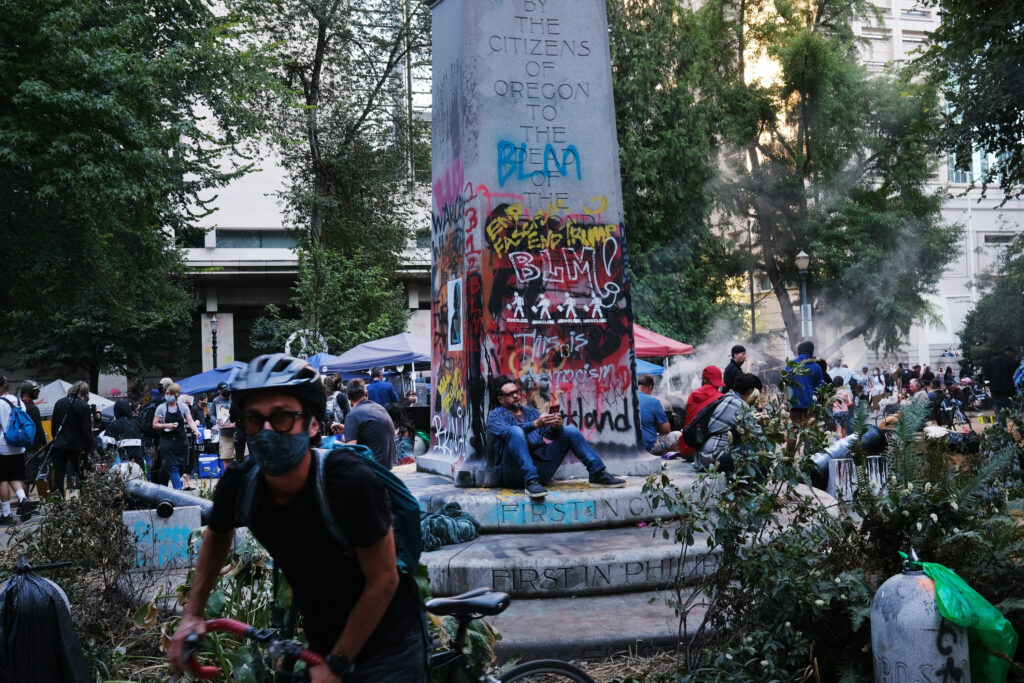
The protests continued. Until then, Portland had been creeping onto the national stage; now here was its spotlight moment. No major American city other than Minneapolis itself leaned as enthusiastically into the violence, and Trump gave the protesters exactly what they wanted when he called in federal forces to protect Portland’s federal courthouse. The demonstrators felt that they were unassailably on the right side of history, plus it was fun to chant, bust windows and get in the faces of the feds every night.
It was surreal. Protesters saw themselves as heroes of the resistance. They were going to chase Trump’s goons out of town. Yet I would stand alongside other reporters, watching protesters launch fireworks and bottles at the courthouse, then read reports the next day about the “mostly peaceful protests.”
When the feds left seven weeks later, the protests did not stop. The people were creating a more just world. Challenge this belief, which many Portlanders did, and you were a traitor. Object to the Oregon Historical Society being trashed or downtown becoming a war zone, and you might become the next target.
Finally, Portland’s cold winter rains mercifully ended the nightly protests, but by then the city had a bigger problem on its hands. That November, Oregonians voted to decriminalize all drugs for personal use, and a downtown badly damaged in the protests quickly became an open-air shooting gallery. Overdose deaths nearly doubled between 2019 and 2022. A local haberdasher told me he always carried Narcan because so many people were overdosing in public, including 11 on one corner of downtown in a 12-hour span.
The Sonesta Hotel is two blocks from this corner. Many other upscale hotels are close, too; all have struggled. Businesses have fled the downtown corridor, causing a 34 percent office vacancy rate by 2025. Portland’s population — down 17,000 since 2020 — has taken a U-turn. While Denver launched initiatives that reduced homelessness by as much as 64 percent, Portland’s permissive urban camping laws saw a commensurate rise. It’s a death spiral the city government has been unable to pull out of, with elected officials stuck debating whether to move toward the center or further left.
This is what passes for good news these days: The Oregonian recently heralded the city ranking 73rd out of 81 U.S. markets in prospective real estate investment and development. (Last year it was 80th, just ahead of Hartford.) A city that lived up to its “Keep Portland Weird” reputation, with its NyQuil-filled Voodoo doughnut and annual naked bike ride, now offers the wrong kind of weirdness.
Still, I have faith in my former city. Oregon ended its drug decriminalization experiment in 2024, and overdose deaths dropped statewide. Though homelessness remains a stubborn problem, an urban camping ban passed in 2024 may help. Look past the downtown core and the region is spectacularly beautiful and fecund as anywhere in the country; spit out a watermelon seed in spring, and you have a crop by summer.
Most citizens just want to enjoy this bounty, to raft on the Deschutes River and drink Willamette Valley pinot and generally be good, chill people. It’s that last part that I think got them in trouble. They stood by as a small contingent imagined the way to build a better world was to burn the old one down. But the young protesters will grow up, too. They’ll get jobs and have kids they want to take rafting. They’ll have friends come to town for a visit. They might need a hotel for them to stay in.
The post The next great American city that wasn’t appeared first on Washington Post.