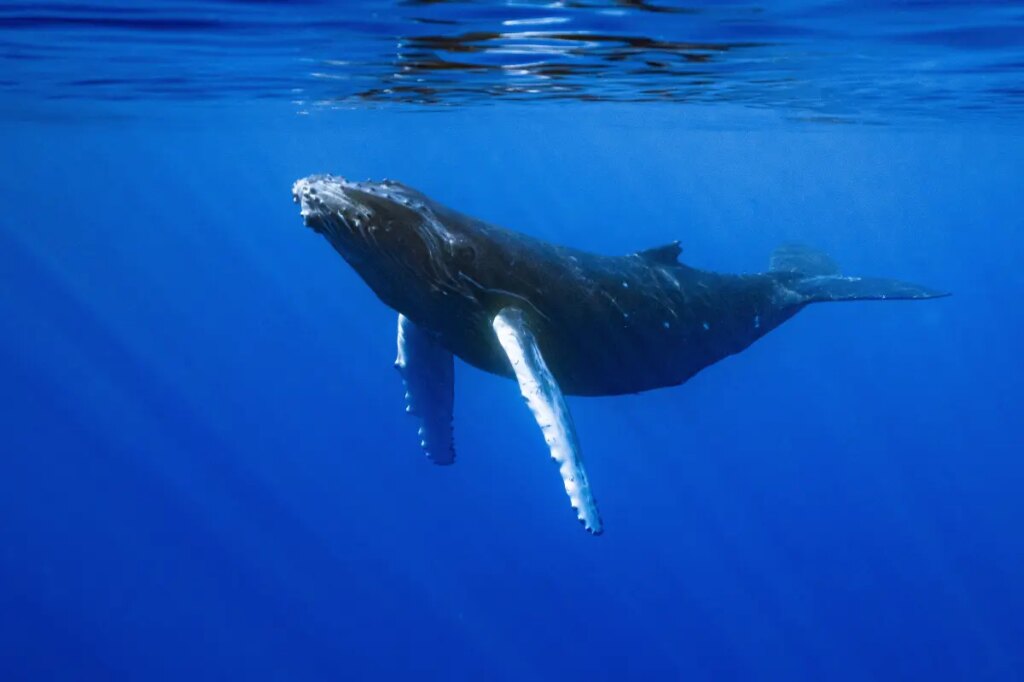
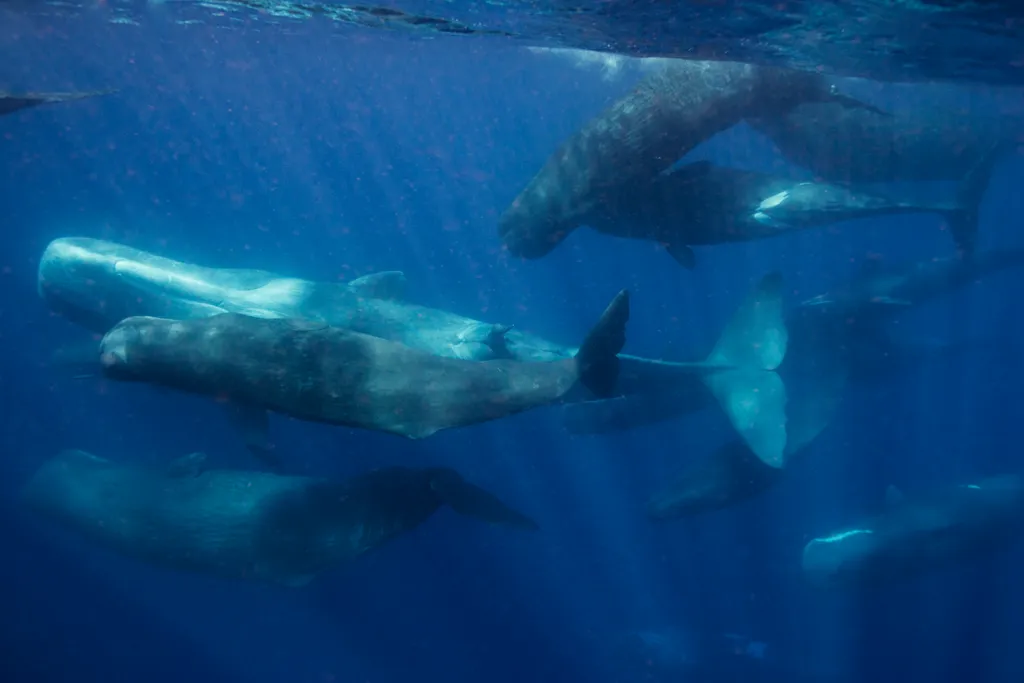
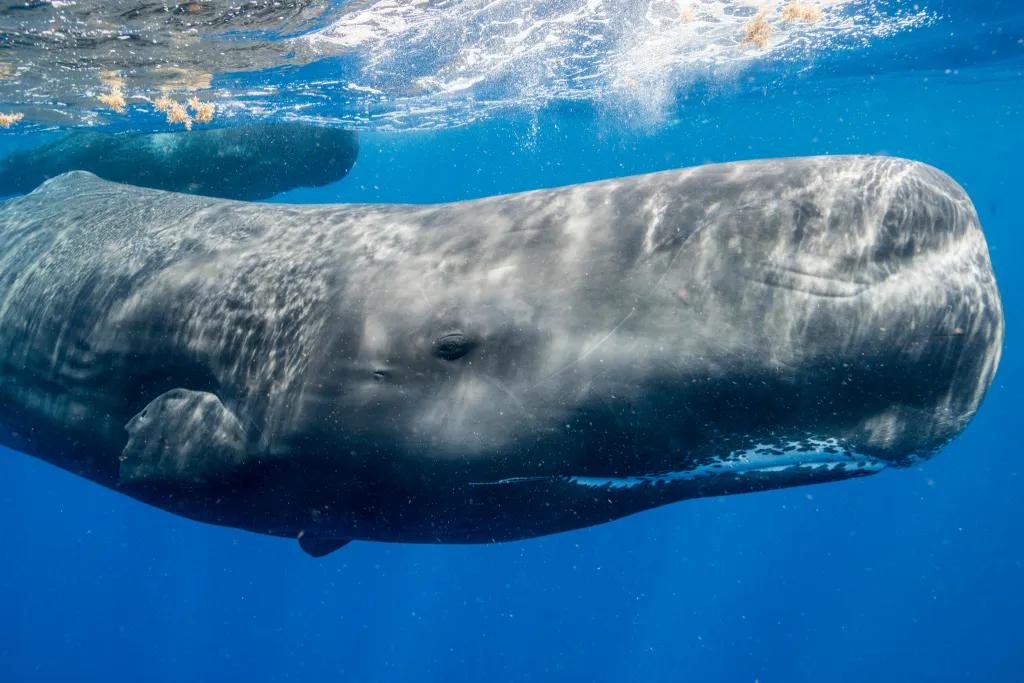
On July 8, 2023, in deep water off the coast of Dominica, a sperm whale went into labor with a group of 11 whales gathered around her.
The birth lasted just over 30 minutes. Other females repeatedly swam beneath the mother as she delivered the calf. After the newborn reached the surface for its first breath, several whales crowded around it, lifting and supporting its body as it learned to swim.
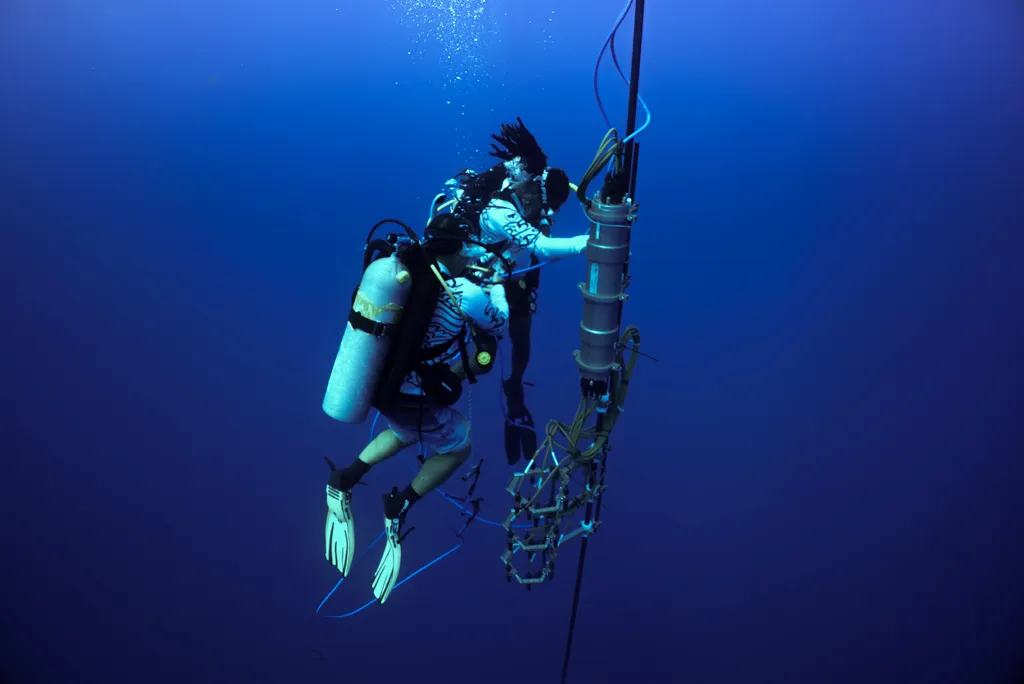
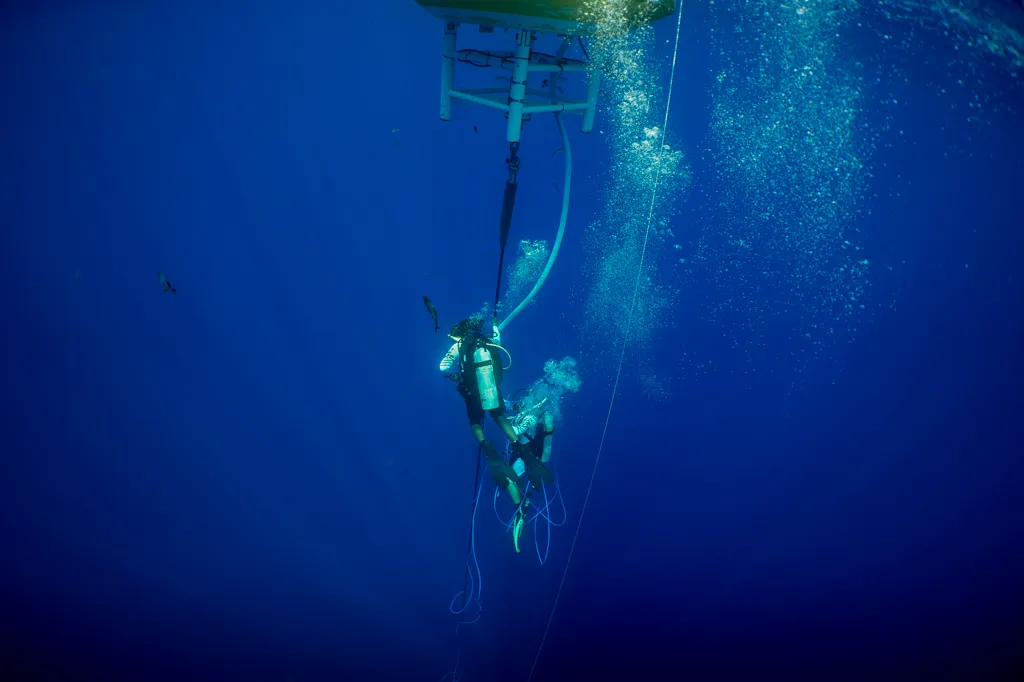
Researchers captured the event with underwater microphones and aerial drones, recording more than five hours of audio and video. When they studied the footage, they found that the whales changed the way they clicked at several key moments during the birth.
Advertisement
“Communication doesn’t happen in isolation,” said David Gruber, founder and CEO of Project CETI, the Cetacean Translation Initiative. “During the birth we observed, the vocal patterns of the sperm whales changed noticeably at various different moments.”
But what were they saying?
Advertisement
That question is driving one of the biggest and most bitterly disputed experiments in marine biology. Researchers have found that sperm whales have dialects, pass vocal habits between generations and combine clicks in surprisingly complicated ways. They’ve also detected sound patterns that resemble human vowels and exchanges that look, at least statistically, a little like conversation.
Nobody has proven what any of these click patterns means. Scientists disagree sharply about whether we’re closing in on whale language or merely finding new patterns in still-incomprehensible sounds.
Sperm whales make several kinds of clicks. Hunting thousands of feet down, they use rapid clicks to find squid in the darkness, much the way bats use sound to find insects. Near the surface, resting or spending time together, they produce short sequences of clicks called codas. A coda might consist of three, four or five clicks separated by carefully timed pauses.
Research has already established that sperm whales from different communities click differently, much as people from Chicago and New Orleans speak with different accents.
Advertisement
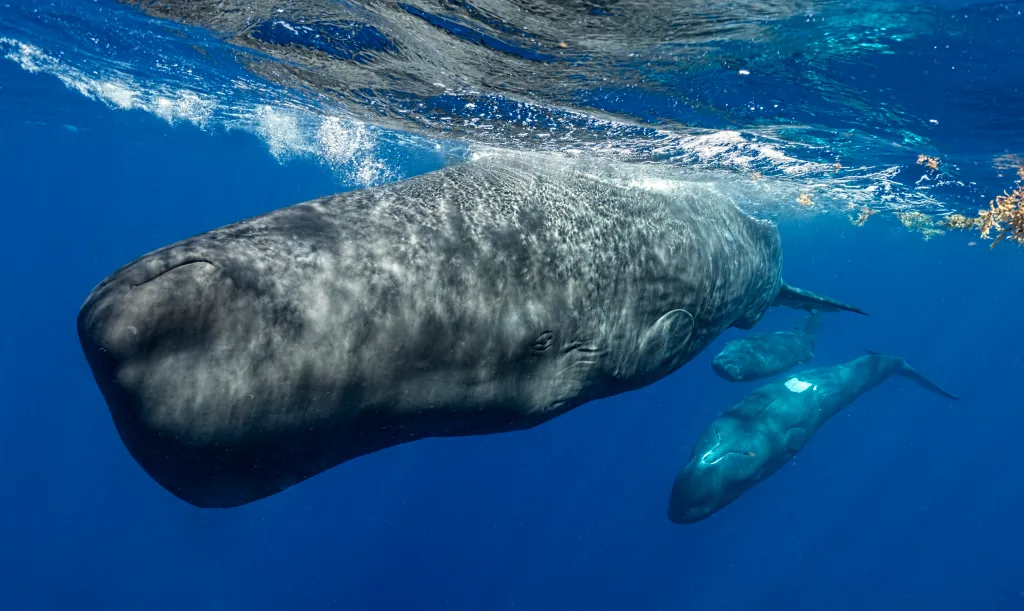
A study published in Proceedings of the Royal Society B in June analyzed 5,291 codas recorded in the Mediterranean between 2003 and 2021. Whales in the western basin, around Spain’s Balearic Islands, repeatedly used one slow click pattern. Whales farther east, along the Hellenic Trench off Greece, had a larger collection of patterns and delivered some of them at a noticeably faster pace.
Taylor Hersh, the study’s lead author and a research fellow at the University of Bristol, told The Post that researchers didn’t need sophisticated computer programs to hear the difference.
“As soon as we started listening to sperm whale recordings from both regions, the differences between them were actually very stark,” she said. “Those differences were quite apparent to the naked ear.”
Advertisement
Genetic evidence suggests that sperm whales entered the Mediterranean through the Strait of Gibraltar roughly 20,000 years ago. Some of their descendants eventually traveled east, where the two populations became largely separated.
The eastern whales still occasionally made one of the older, slower western click patterns. The western whales were never recorded using the faster patterns that later developed in the east.
“They literally still have some collective cultural memory of ‘the old ways,’ ” said Luke Rendell, a whale researcher with the Sea Mammal Research Unit at the University of St Andrews in Scotland who coordinated the Mediterranean study.
Advertisement
“We know that different groups of sperm whales only associate with each other if they speak the same dialect,” Hersh told The Post.
Newer and more controversial research is asking whether the individual clicks contain something closer to the building blocks of language.
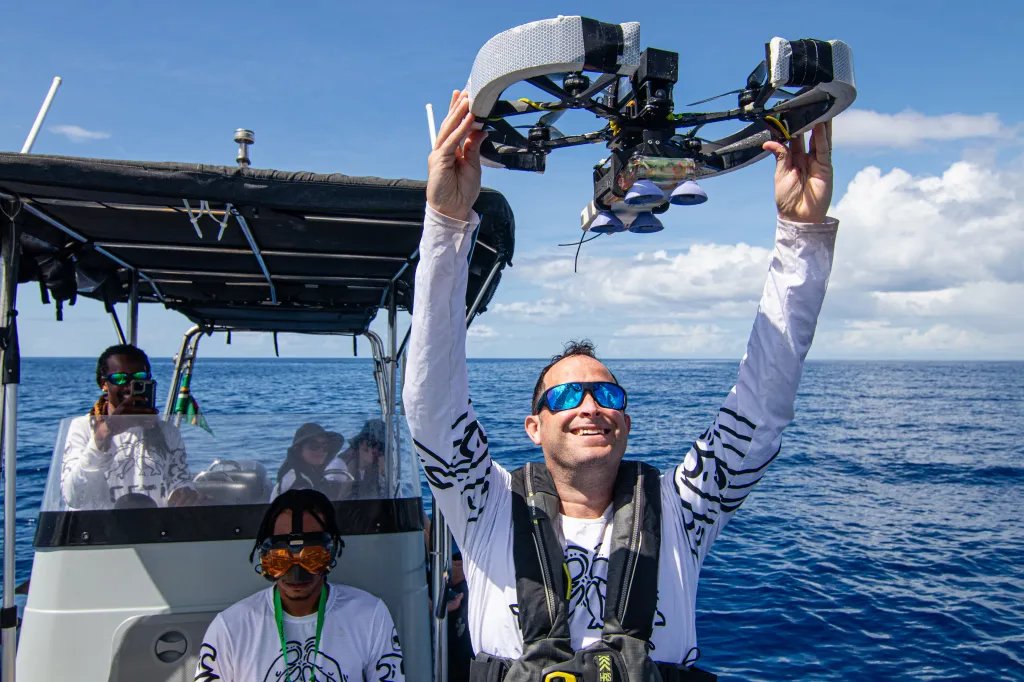
Project CETI formed as a nonprofit in 2020 with funding from the TED Audacious Prize, and its researchers study sperm whales off Dominica in the eastern Caribbean.
Advertisement
In 2024, CETI researchers used computers to analyze 8,719 codas recorded from those whales. Sometimes a whale slightly stretched or compressed the pauses between clicks, a variation the researchers called “rubato,” borrowing a term from music. Sometimes it added an extra click at the end, which they called “ornamentation.”
When rhythm, speed and those smaller variations were counted together, researchers found at least 143 commonly used combinations. They described the collection as a sperm whale “phonetic alphabet.”
They did not claim to know what any of those combinations meant.
Advertisement
Gašper Beguš, a linguist at the University of California, Berkeley, and CETI’s linguistics lead, sped up whale recordings until the individual clicks could be studied in greater detail.
“By speeding up the sperm whale vocalizations, we observed patterns that parallel human vowels,” he said.
When people say “ah” or “ee,” they move their tongues and jaws into different positions, changing the frequencies in the sound. Beguš’s team found comparable bands of frequencies in whale clicks. The researchers sorted them into two broad categories that resembled human “a” and “i” vowels. They also found sounds that appeared to slide from one category toward another, resembling a diphthong such as the “oy” in “boy.”
Advertisement
A follow-up paper published in April found that the two categories behave systematically, with the “a” sounds running longer than the “i” sounds. The researchers also found that the quality of one coda sometimes bleeds into the next, the way the “n” in “input” shifts because of the “p” behind it.
“With the work on phonology, we’re showing structural complexity,” Beguš said. “Like in Latin, sperm whale vowels can be long or short. Like in Mandarin, they have different tonal patterns.”

He compares the job to decoding an ancient language. Researchers must first identify all its sounds and recurring pieces before they can begin working out what anything says.
Advertisement
Some researchers are less eager to compare whale communication to human language.
Rendell believes the comparisons with human language have already gone far beyond the evidence. He published the first study describing sperm whale vocal clans 23 years ago and has spent roughly three decades listening to whales in the wild. He calls CETI’s claims about alphabets, vowels and conversations “massively overhyped clickbait.”
For Rendell, language requires more than a large collection of sounds. Those sounds must stand for shared ideas and follow rules that allow speakers to create a potentially unlimited number of messages.
“We are very, very, very far from that,” he said.
Advertisement
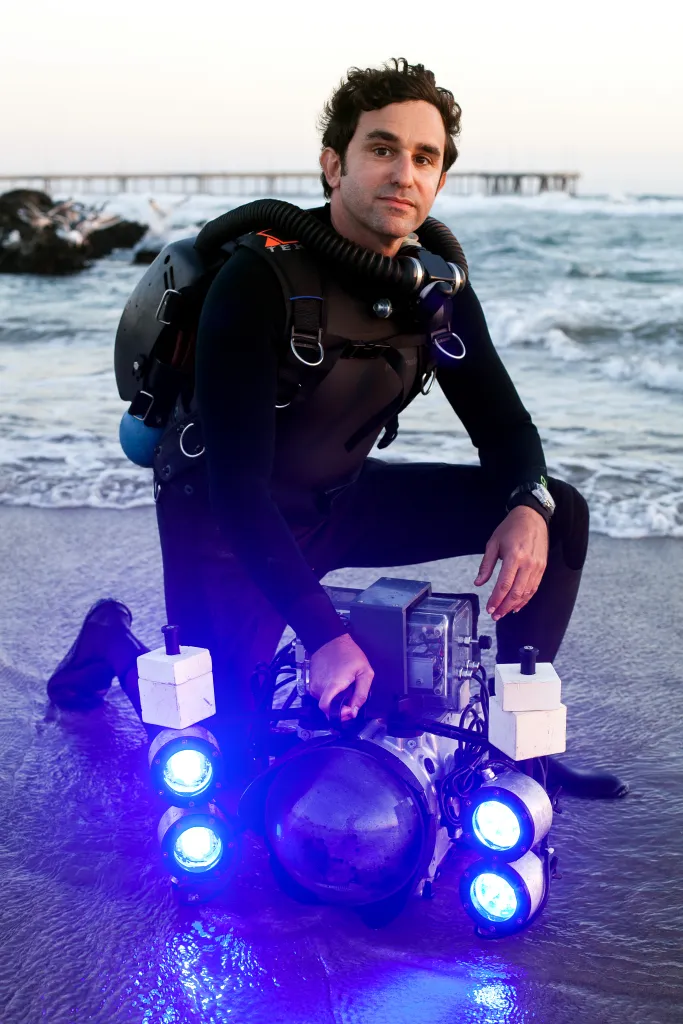
Gruber, who says he has great respect for Rendell and his contributions to the field, drew a line under the word that has caused the most trouble: conversation. Whether the findings reflect something like conversation, Gruber said, “is exactly what our ongoing research is designed to determine, not something we’ve claimed outright.”
Laela Sayigh, a senior research specialist at Woods Hole Oceanographic Institution who specializes in whale and dolphin communication, worries that inflated promises could damage the entire field. In the 1960s and 1970s, neuroscientist John Lilly made sensational claims that dolphins possessed an advanced language and could be taught to speak with humans. When the evidence failed to support those promises, serious dolphin research lost funding and credibility.

“So we really don’t want history to repeat itself here,” Sayigh said.
CETI’s next goal is to predict what a whale may be doing from its vocalizations alone. Could a computer recognize from the clicks that a whale is about to dive or go to sleep?
“If CETI’s model consistently predicts what the whale is doing in situations it has never encountered before, that’s a strong indication we’re uncovering a pattern,” Gruber said.
But one finding doesn’t depend on whether sperm whales have words, sentences, or anything resembling a human language.
Researcher Roee Diamant and his colleagues reported in July in the journal Ecological Informatics that whales off Dominica shorten their codas and tighten the gaps between clicks when ships pass. The pattern is consistent enough that the team says it can tell from the vocalizations alone whether a vessel is nearby.
Whatever the whales are saying, the presence of our ships is changing the way they say it.
The post Are scientists on the verge of discovering the secret language of whales? appeared first on New York Post.