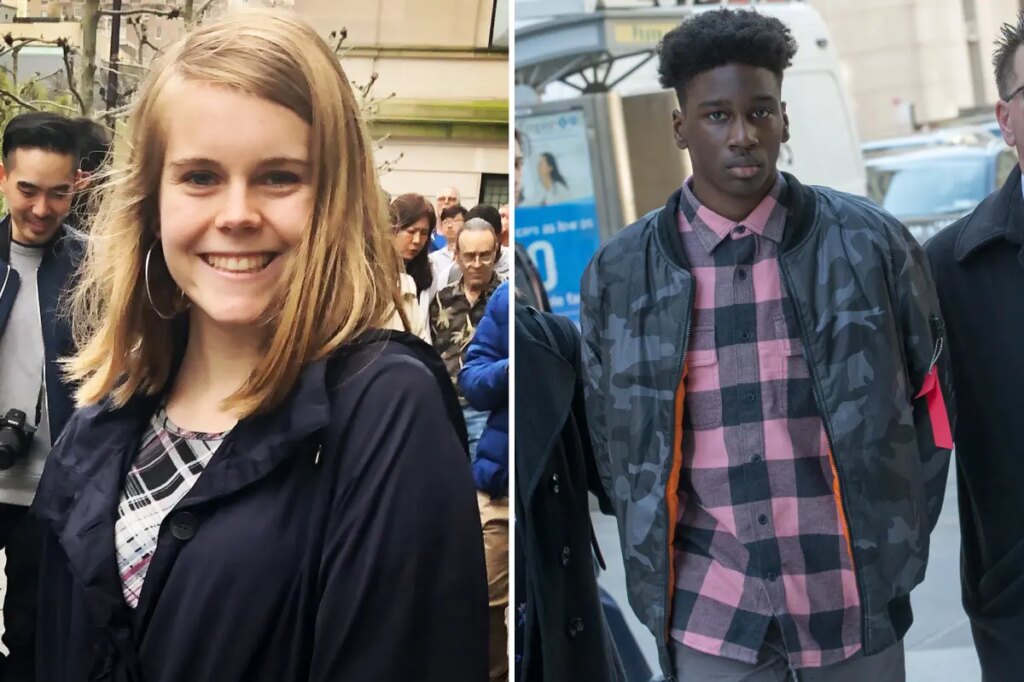
One of the ruthless teen killers convicted in the 2019 slaying of Barnard College freshman Tessa Majors was freed last month — after serving just three years in state prison despite a judge’s nine-years-to-life sentence, The Post has learned.
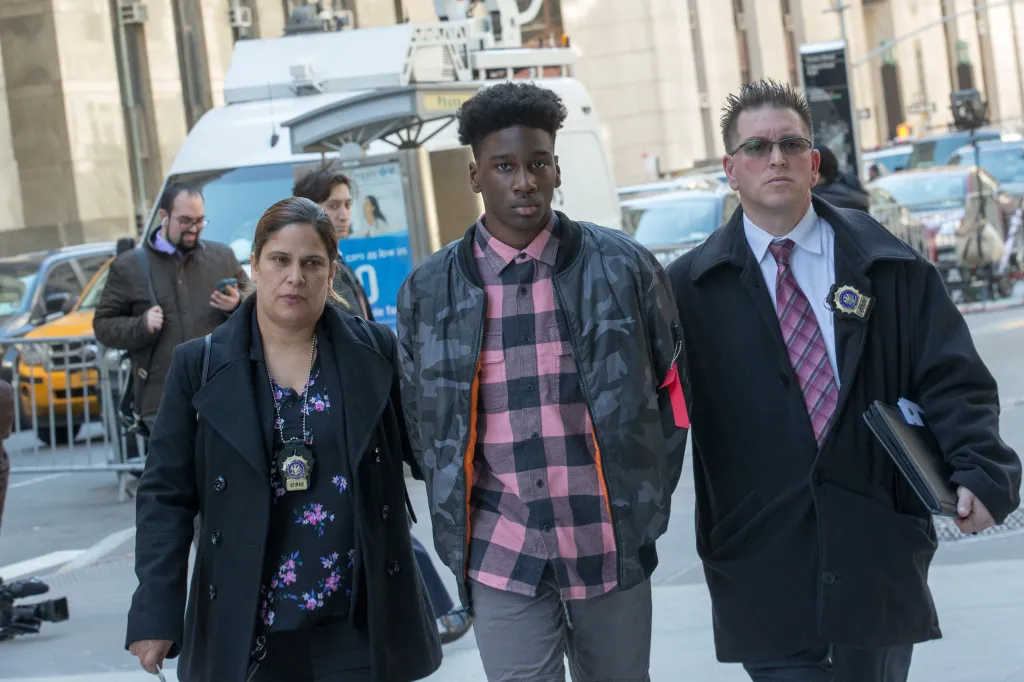
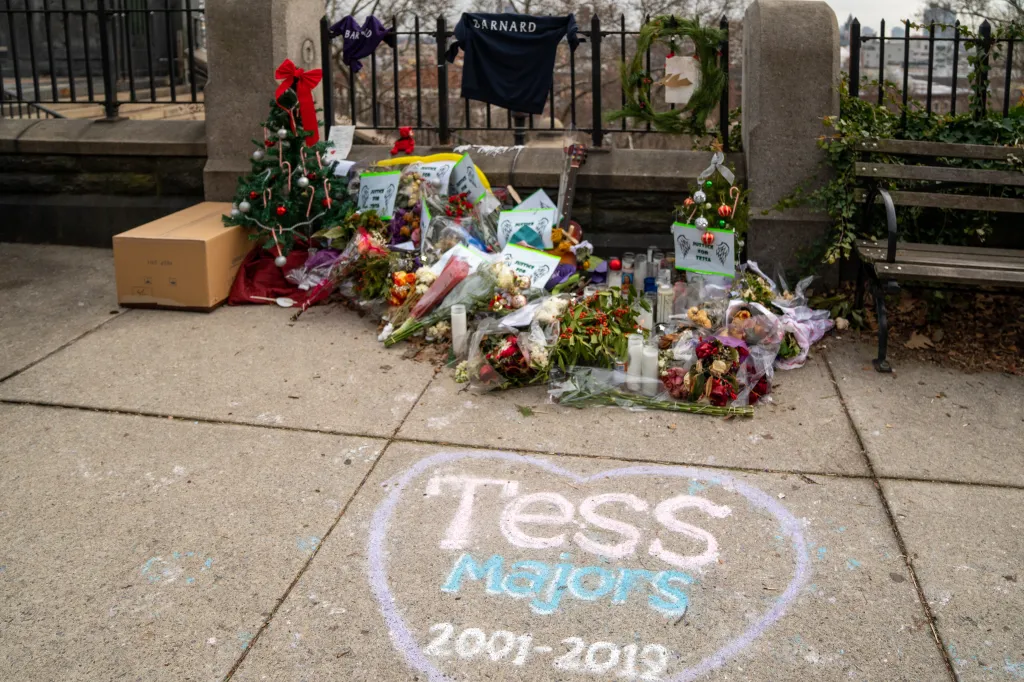
Luchiano Lewis, now 21, was cut loose from Franklin Correctional Facility near the Canadian border on Oct. 14, two months before the seven-year anniversary of Majors’ murder, according to state Department of Corrections records.
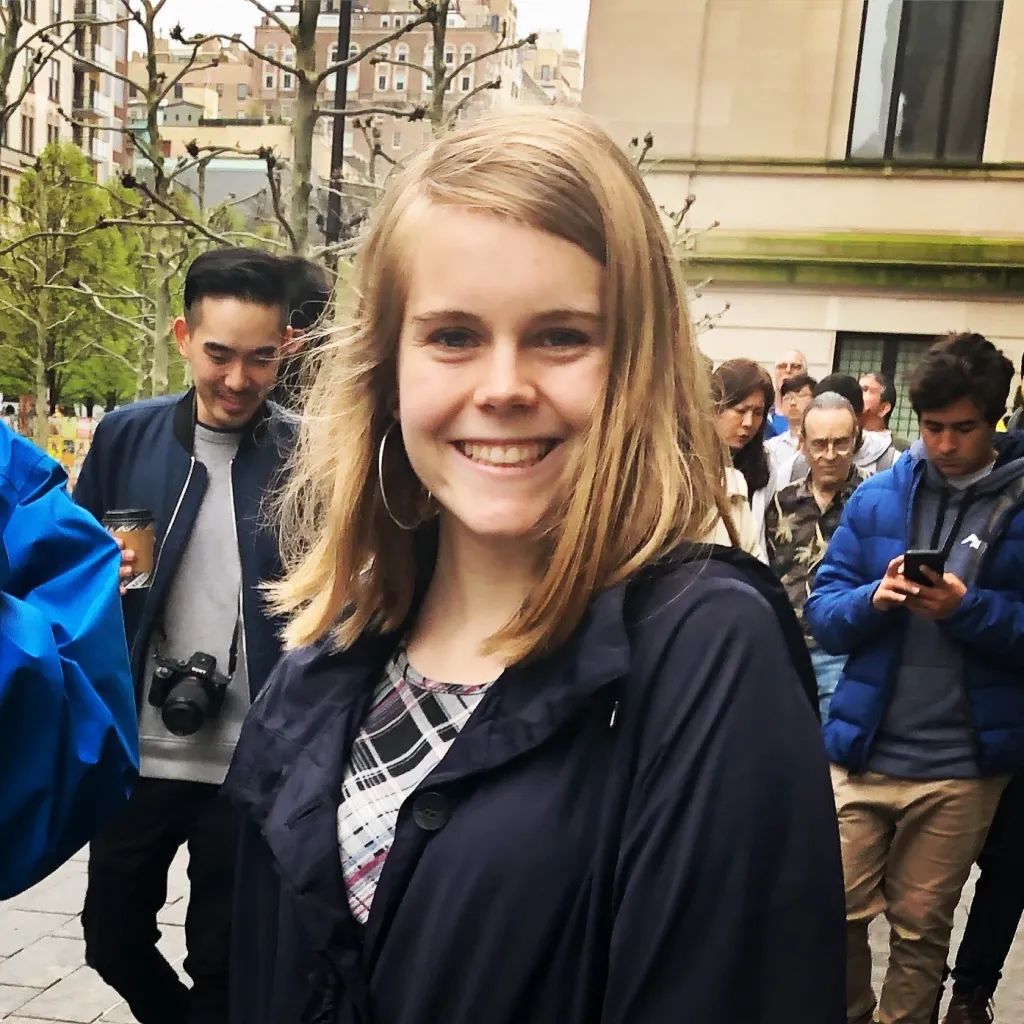
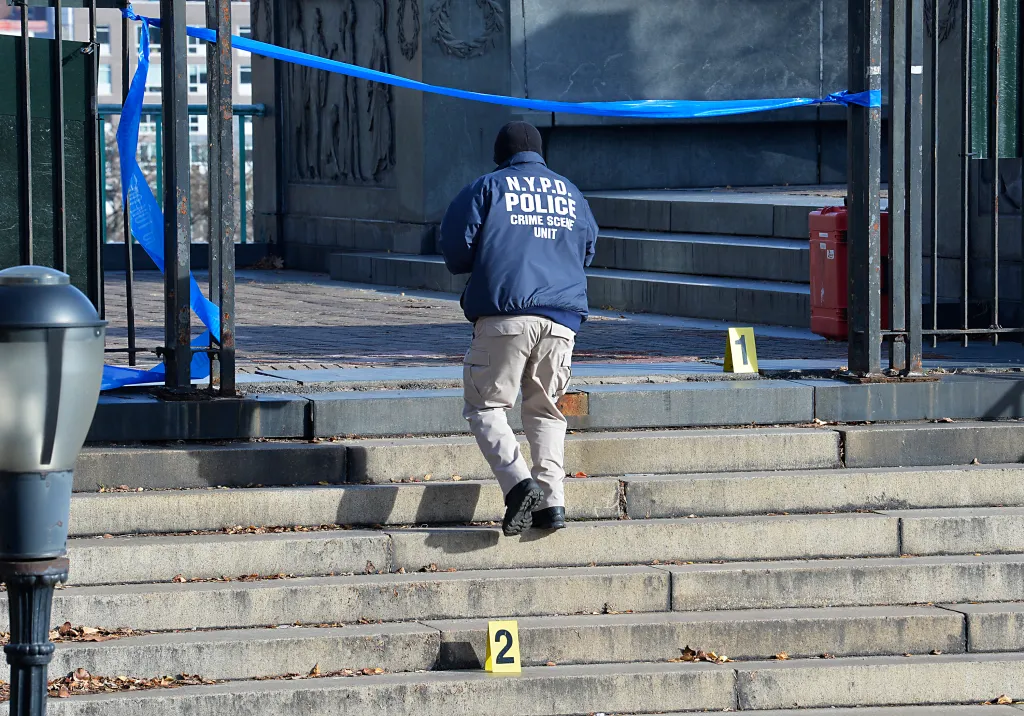
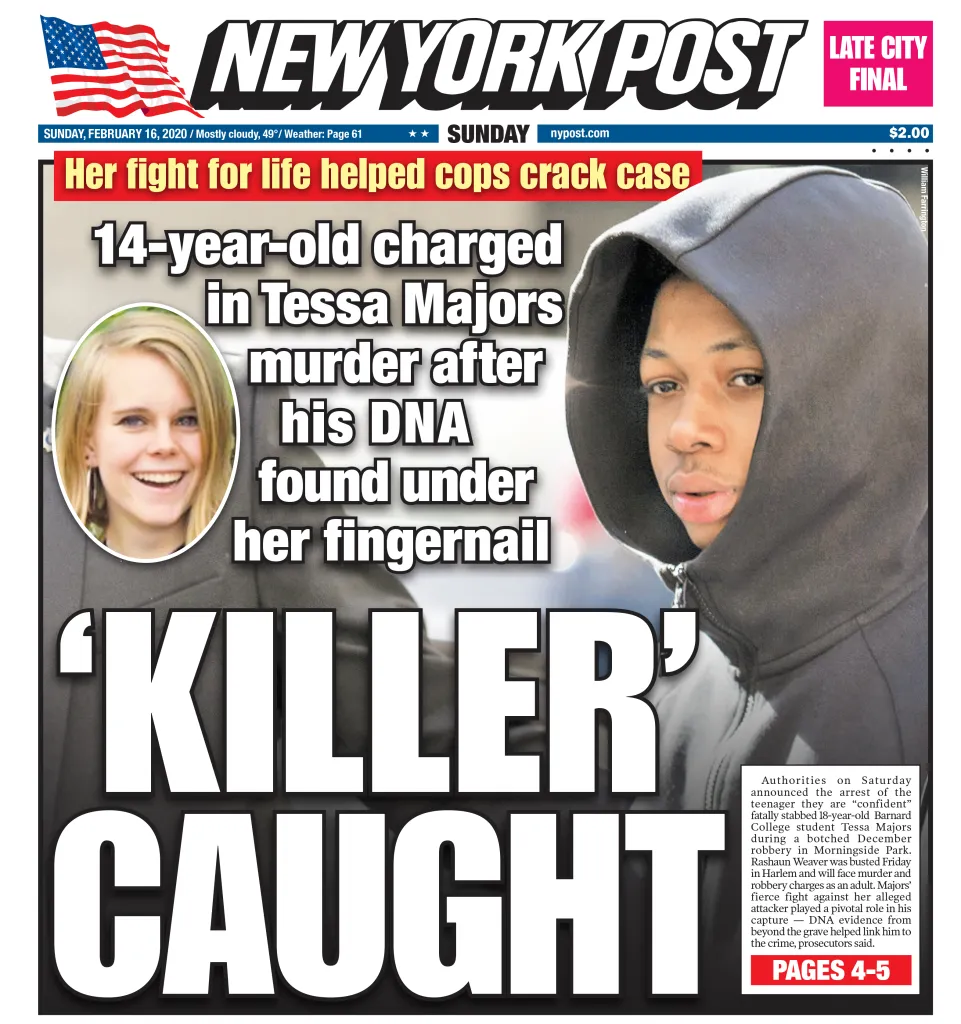
Lewis was just 14 on Dec. 11, 2019, when he, Zyairr Davis, 13, and Rashaun Weaver, 14, ambushed Majors, 18, as she was returning to her college dorm through Morningside Park around 7 p.m. They planned to rob her.
Advertisement
Lewis held the tiny freshman in a headlock while his pal stabbed her to death in a senseless crime that reverberated internationally for its sheer savagery and the shocking age of the killers.
The trio, friends from PS 180 — a K–8 school on West 120th Street near the park — first targeted a man, but he was walking too fast for them to keep up. Then they saw Majors, who was reading her phone, Lewis said during his September 2021 guilty-plea hearing.
That’s when Weaver ran up behind Majors and kicked her in the back and told her to give them her phone and cash, Lewis said.
Advertisement
“Are you seriously trying to rob me?” she responded, before she and Weaver began wrestling on the ground, according to court testimony.
Lewis and the other boy looked on as the two fought, and Lewis yelled “witness” when a man walked past. But Weaver kept attacking Majors, who screamed, “coward!”
Weaver, who’s serving 14 years to life in prison for the murder, stabbed Majors four times, including once through the heart, while Lewis held her in a headlock, authorities said.
Advertisement
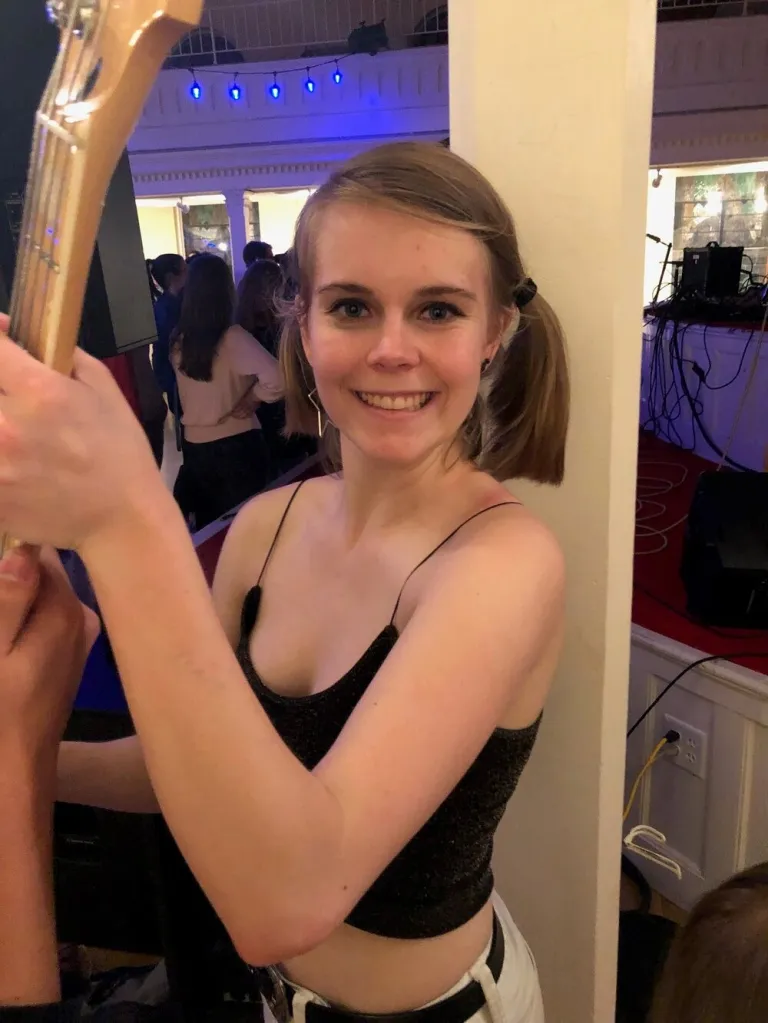
Majors, an aspiring punk rock musician, fiercely fought for her life — biting Weaver’s finger at one point.
But Weaver stabbed her so forcefully that the feathers flew out of her down jacket during the attack, Lewis testified in court.
Davis later admitted to scooping up the blade that was dropped during the assault and handing it back to Weaver.
Advertisement
Lewis apologized to Majors’ parents during his sentencing in Manhattan Criminal Court in October 2021.
“I’m deeply sorry for your loss,” he said, as Majors’ father, Robert Inman Majors, wept and looked away. Lewis also apologized to his own father for failing him.
Judge Robert Mandelbaum, who heard the case, said that “the murder of Tessa Majors tore at the fabric of this entire city.”
Advertisement
Lewis was arrested for the crime on Feb. 19, 2020, and was held in one of the city’s two juvenile detention centers.
Once he was sentenced in 2021, he came into the custody of the state Office of Children and Family Services, which runs secure centers.
After he turned 18, he was finally transferred to the state prison on Sept. 15, 2023.
His early release from Franklin last month came despite Lewis’ history of violence behind bars.
Advertisement
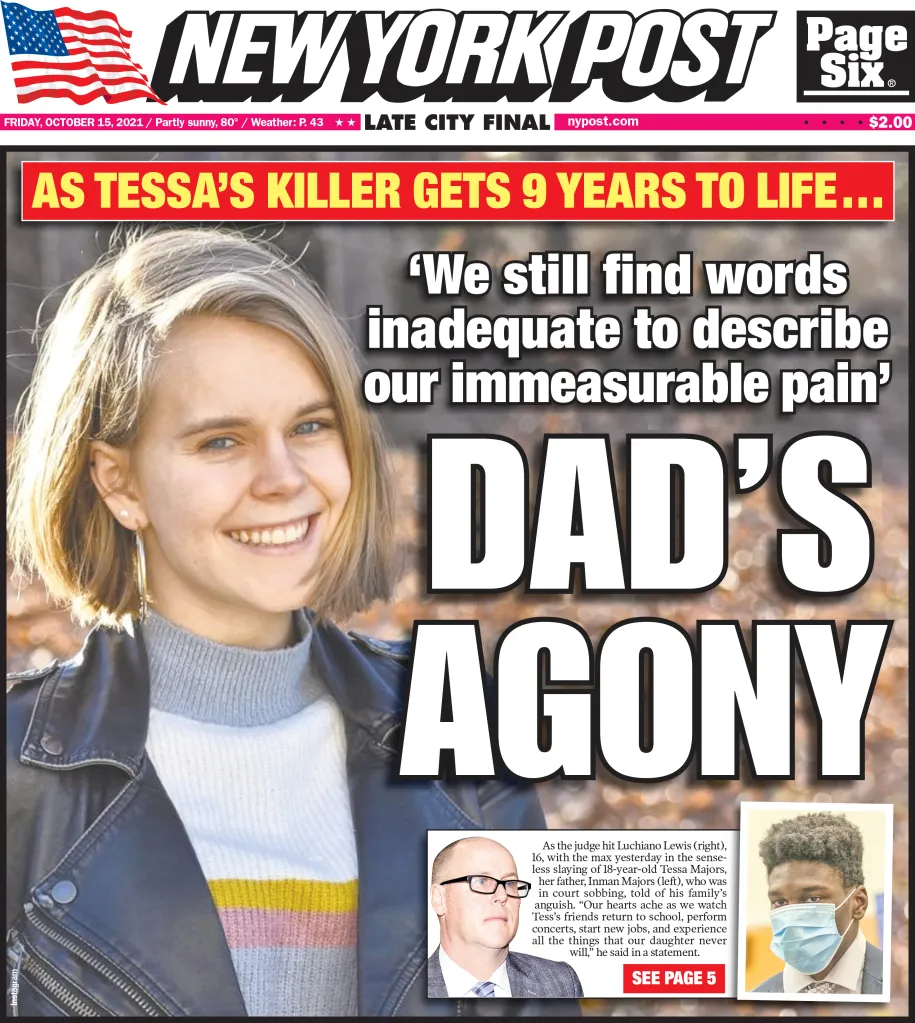
At the 2021 sentencing, Mandelbaum stated that Lewis “has learned no lessons” and showed no remorse — and noted he had slashed another prisoner in juvenile detention as he awaited trial in the Majors case.
“I agree that one bad choice — even one horrific choice — standing alone should not prevent leniency in the case of a young offender,” Mandelbaum said. “But the defendant has demonstrated in a year and a half since this terrible incident that this was not an aberration.”
Lewis’ record in juvenile detention also included multiple gang assaults and possession of contraband weapons, the judge said at sentencing.
Advertisement
Lewis was freed on conditional release without a parole hearing after serving less than seven years of a nine-years-to-life sentence, a state Department of Corrections and Community Supervision spokesman said. State law allows inmates to be automatically released after serving two-thirds of their minimum sentence. But that option is often withheld from convicts who have been violent behind bars.
Defense attorney Mario Gallucci, a former city prosecutor, was shocked Lewis was sprung given his history of violence.
“He shouldn’t have been released,” Gallucci said. “It doesn’t make any sense.”
Advertisement
Lewis walked out of prison on “community supervision,” the DOCCS spokesman said.
To get this kind of conditional release, a convict simply has to sign an agreement promising to obey the law, hold down a job, and live at an approved address.
Lewis’ two accomplices remain locked up.
Weaver is serving his 14-year sentence at Coxsackie Correctional Facility and Davis is in Rikers on an unrelated attempted murder charge, city and state records show.
Advertisement
Davis, who pleaded guilty to first-degree robbery in the Majors case, received only 18 months in juvenile detention for his part in the brutal attack. But he was placed back behind bars after he and two new pals allegedly fired multiple shots into a crowd in Harlem on April 8, 2023.
Former NYPD Detective Michael Alcazar, now an adjunct professor at John Jay College of Criminal Justice, said Lewis’ release is symptomatic of the broken criminal justice system.
“It’s horrible for the family because that doesn’t seem like a lot of time for ending this young lady’s life,” Alcazar fumed.
Advertisement
“I also think it’s a commentary on our criminal justice system,” he added. “They seem to care more about the criminal population than the actual victims. So it’s very sad.”
Lewis couldn’t be reached for comment.
Majors’ parents didn’t return calls seeking comment but her grandmother said the family is still grieving seven years after her death.
“She was just a wonderful granddaughter,” Nancy Braun, 86, said. “And we suffer every single day thinking about her and her short life and how . . . how those guys were so stupid.”
—Additional reporting by Adriano Torres.
The post Teen killer who held down Tessa Majors while pal plunged knife into her heart freed early — despite violence behind bars appeared first on New York Post.