The Ebola outbreak that originated in the Democratic Republic of Congo (DRC) has surpassed 11,700 confirmed cases and 5,700 deaths as of Nov. 19, making it the largest and deadliest Ebola outbreak in the country’s history and the second-deadliest worldwide.
Katie Thomas-Canfield, who is based in Bunia, Congo, and serves as the Ebola response director for the International Rescue Committee, tells TIME that this outbreak’s deadly pace is informed by numerous converging factors.
“There’s some element of it that is a perfect storm, and there’s some very specific elements of this moment in time that have contributed to the fast evolution,” Thomas-Canfield says.
The latest outbreak crossed the 10,000-case mark in just 163 days—51 days sooner than the West Africa epidemic in 2014-2016, which was the world’s deadliest Ebola outbreak. It shows no signs of slowing as cases spread beyond Congo. Beyond Congo, Uganda has reported 20 confirmed cases and two deaths, Kenya nine cases and two deaths, and Nigeria one case. France confirmed a case in June in a doctor returning from a humanitarian aid mission in Congo. In November, a British doctor who tested positive in Congo was flown to London for treatment and has since recovered.
Read more: Ebola Returns: How We Can Fight Back
Thomas-Canfield and other experts argue that delayed detection, the specific strain of the virus being spread, and mistrust within the affected communities toward health care providers are all hampering the response—and suggest what needs to happen next.
Delayed detection
Experts tell TIME that there are several reasons why this outbreak has spread so quickly and resisted containment.
A main contributor was late detection, according to Dr. Abdou Sebushishe, a senior health adviser with the nonprofit International Medical Corps. There was a large gap between when the outbreak started and when it was discovered, he says. According to the U.S. Centers for Disease Control and Prevention (CDC), it’s estimated that the outbreak began in mid- to late-February, two to three months before the outbreak was detected and declared an emergency by the World Health Organization (WHO) in mid-May.
“It’s quite serious because we now don’t have access to all the [contacts] of the first case,” Sebushishe says. “All those people have moved a lot in different locations, and with limited access, not all the [contacts] can be reached, and that is one of the factors, as well, that has contributed to this outbreak to be bigger.”
Experts have linked this gap in surveillance to humanitarian cuts from countries around the globe in 2025.
For example, the Trump Administration dismantled the U.S. Agency for International Development (USAID) in 2025, which led to cascading impacts on humanitarian and development efforts abroad. During the 2014 West Africa epidemic, USAID was the lead federal agency coordinating the international U.S. government response.
But Thomas-Canfield says that the stripping of humanitarian aid has not stopped with USAID cuts.
“There were the cuts in the U.K., the cuts in Germany, the cuts elsewhere, and that has collectively undermined our global capacity to both surveil [and] identify potential new biomedical hazards that are emerging—and to respond early enough to be able to actually prevent their scale,” she says.
Many countries, in the face of the current outbreak’s severity, have increased their funding to combat the crisis—something Thomas-Canfield says is helpful, but does not change the fact that there were not enough health care workers to stop the pandemic before it grew in those initial months.
“We saw that partners were not present to the same extent that they used to be present in these areas, and a lot of the risk-education community relationships that are required did not happen, and there was no long-term presence and visibility in communities,” she says. “Equally, you also saw an erosion of the community surveillance work that historically has been really important in raising alarms early and promptly.”
A difficult strain of the virus and frequent population movement
Containing the spread has been especially challenging because the outbreak is driven by the Bundibugyo strain of Ebola, a rare variant for which no approved vaccines or targeted antiviral treatments exist—though vaccine trials are currently being developed.
The Bundibugyo strain causes different symptoms that aren’t always immediately recognized as Ebola. It doesn’t tend to cause the “wet” symptoms that people associate with past outbreaks of the more common Zaire strain—including bleeding from orifices, vomiting, and diarrhea. This means that Bundibugyo is frequently confused with other common tropical illnesses—such as malaria—in the earliest stages of infection.
“What we’re seeing is a longer period of these dry symptoms that are very innocuous that do resemble very closely some of the diseases that are most endemic to this area, straight to mortality,” Thomas-Canfield says. “So a lot of the telltale signs that bring people to clinics in time to be able to receive treatment aren’t there in quite the same case numbers, fueling misinformation.”
With high population movement across the country—due to regional conflict and urbanization—and without adequate surveillance in place to catch these symptoms quickly, health care workers are chasing a moving target of hotspots across the country.
Thomas-Canfield says that her team has seen the number of health zones that were impacted jump from 60 to at least 68 since Sept. 1. When she spoke to TIME in early November, she shared that she had just heard a rumor about a case in a new health zone.
“As soon as we’re getting it under control in one area, there are new areas that are cropping up,” she says, “and because of how long it takes us to establish the relationships for communities to trust us, that means we’re already behind in the response.”
Struggles in building trust
Distrust of health care workers is a persistent issue in containing the outbreak. In the summer, that distrust fueled violence against medical workers, with reports of violent mobs attacking burial workers and response teams.
Within the first six months of the outbreak, there were a reported 260 attacks on health workers, according to the U.N. Those attacks have continued into the fall.
“Community resistance is not new,” says Sebushishe. When information is hard to share as fast as the disease spreads, he says, “it creates a lot of rumors around the isolation, around the response itself.”
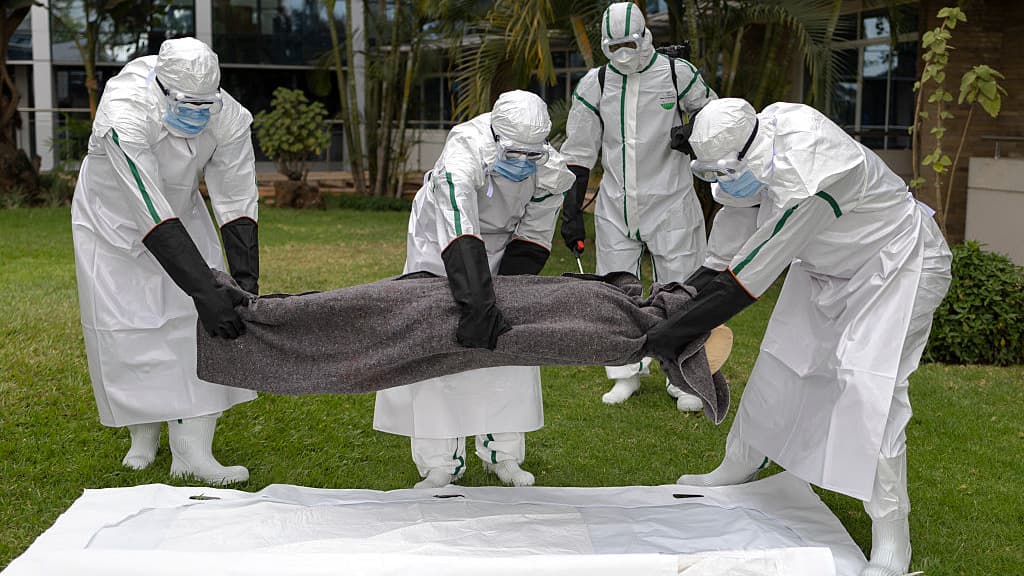
As TIME previously reported, poor communication about care in isolation units left some families believing their loved ones were being separated unnecessarily. Resistance also arose when safe burial protocols conflicted with mourning traditions, such as washing and preparing the bodies of loved ones.
Sebushishe adds that communities also are often distrustful when they see disparities in the humanitarian response to Ebola compared to their everyday medical aid.
“People say: ‘We have been dying with malaria for so long, and there is no support that we’ve received,’” he says.
This pushback to healthcare can be dangerous for workers and contribute to escalating spread.
“Resistence of community causes more people to die at home or in private health facilities or informal care, and there they contribute the spread of the disease because there are no enough containment measures in place,” Sebushishe says.
The attacks themselves can also contribute to the spread of disease, as patients who witness the attacks may flee back to their communities while they are still contagious.
What needs to change
Experts tell TIME that there are actions countries can take to get the outbreak under control.
One is to ensure clinics have the equipment and training necessary to combat localized cases.
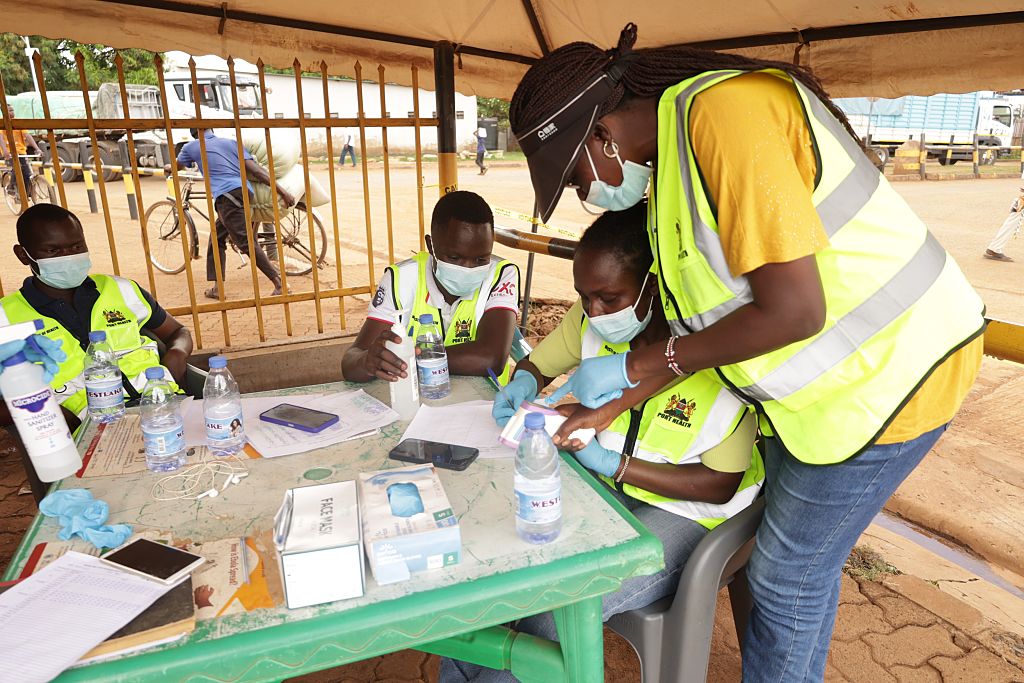
Because patients may not immediately suspect that they have Ebola, the vast majority are first seen by primary and secondary health care clinics, Sebushishe says. These clinics have very limited capacity to address the outbreak. Reinforcing these front-line clinics, strengthening their surveillance capacity, and enabling access to personal protective equipment and other preventative measures will help to lower transmission rates, he says.
“Then a lot of cases can be picked from primary health care level and be referred or isolated on time—that will cut the transmission from going further,” Sebushishe explains.
He adds that the kinds of community-engagement measures that were implemented in Ituri—where the outbreak began in Congo and where the vast majority of cumulative confirmed cases remain—need to be implemented across the country.
“Community-based surveillance and a lot of information to be provided door by door to the community needs to happen—not only in Ituri, not only in North Kivu, but in high-risk locations where population movement is frequent between those affected areas and the non-affected areas,” he says.
This community engagement is essential, according to Thomas-Canfield, to ensure that health care workers get “buy in” from citizens, and make sure response teams are able to assuage fears from the community and have meaningful engagement.
Thomas-Canfield adds that another factor must change in order for containment to occur: global border response.
“In 2014, we saw that, broadly, borders remained open with the U.S. They remained open with Europe, and that again facilitated first responders and technical expertise from the CDC, in particular, traveling to West Africa,” she recalls. Given how “novel” the virus is, she says there are not many experts in its containment, and the ability for those with the knowledge to access and work with local experts is paramount.
She notes that borders have shuttered across North America and in a handful of other nations in 2026. Humanitarian and aid workers from the United States, for example, are permitted to travel to Congo, but returning is more complicated. Potential travelers must show that they have been out of Congo for at least 21 days before they are permitted to enter the United States.
“It’s a massive disadvantage,” she says, pointing to the WHO’s advice against border closures during Ebola outbreaks. Rather than stop movement, border closings redirect movement into informal routes with no health screenings, making it even harder for health care officials to trace outbreaks, according to the WHO.
“Closure of borders is not an effective mechanism to prevent the spread of Ebola. That is not science-based,” Thomas-Canfield says.
While opening borders could help with disease management, what’s needed most is the development and dissemination of a vaccine that works against the Bundibugyo strain of Ebola.
The University of Oxford is developing one, and it is currently undergoing clinical testing. Early results have been encouraging, but whether it can prevent disease—and when it could become widely available—remains uncertain.
At the same time, there is a trial underway to learn if the Ervebo vaccine, which was approved for the Zaire strain, would have any impact on Bundibugyo.
“Vaccines are a huge draw for hope in the response,” Thomas-Canfield says, while acknowledging that “trial finalization, evidence, and confirmation of efficacy are still some time out.”
Even when a vaccine becomes available, health workers will need to engender community support in order to ensure people will accept them. Thomas-Canfield says that there are already rumors circulating in Bunia with vaccine misinformation.
Like all other public health measures, she says vaccines can “only be as effective as the strength of our community relationships and trust.”
The post Ebola’s Death Toll Tops 5,700. Can the Outbreak Be Contained? appeared first on TIME.