I love to travel, and for 14 years that meant taking vacations with my husband.
We usually went where he wanted to go (Buenos Aires instead of Tokyo, the Blue Ridge Mountains instead of the Outer Banks) and with whom (his mother). I’m not complaining — every marriage involves compromise. But in my late 50s, I came to realize how little my bucket list overlapped with his. One summer day we got into a heated wrangle about an upcoming trip, and February will mark 10 years since we separated and later divorced. (Of course, we had other issues.) Thus began my life as a solo traveler.
At the time he moved out, my ex and I had flight reservations to London for later in the year. He canceled, but I considered going on my own, despite friends who discouraged me. They wondered why I’d pay full freight for a hotel room, predicted lonely dinners in restaurants and cautioned me about traveling overseas; what if I had an accident? These concerns weighed on me, too, but newly unbound, I could not be deterred.
Destination websites would have you believe that all travelers are beautiful 30-something couples, but the truth is that traveling without a significant other is getting more popular, even among older globe-trotters. Maeve Hartney, chief program officer at Road Scholar, which organizes educational trips for the over-50 crowd, says they “have seen a steady rise in demand for single rooms over the past 10 years or more.” In fact, according to their data, solo travel surged nearly 25 percent since 2016.
Google reported earlier this year that online searches involving “solo travel” hit an all-time high, with queries for “women solo travel” reaching a 15-year peak. Anecdotally, I’ve also noticed that more of my friends of a certain age (including empty nesters, divorcés and widows) have begun to strike out on their own.
I ended up going to London after all, and while my first solo trip had some bumps, I could only hold one person responsible: Me! Still, I loved choosing my own adventures, like dining at an Ottolenghi restaurant and attending an Edward Albee play with “Billions” star Damian Lewis. A former colleague who’d encouraged me to take the trip told me that navigating a new city solo, finding lodging and learning to use public transportation would increases my self-confidence, and it did.
I was also pleased that no one was shouting at me about my inability to read a map.
The surprisingly social aspects of solo travel
Hartney told me that newly single travelers mostly fear the unknown (especially on their first trip). “Other common fears include navigational worries and emergency situations,” she added, which is why she always recommends travel insurance.
That’s a small price to pay for the benefits, she said: “Nearly all of [our clients] report a sense of freedom, meaningful alone time, reconnection with themselves, finally getting around to finishing the book on their bedside table.”
One solo traveler, Bonnie Bevan, a widow who lives in Chapel Hill, N.C., said that she’s been far more likely to meet new people. “We are more approachable and likely to have longer, richer conversations with strangers,” she explained.
Going solo doesn’t necessarily mean traveling alone. For two decades, Sandra Tedeschi, owner of Vajra Sol, has led hiking, skiing, cultural and yoga retreats in the United States and around the world. About three-quarters of those who join are women, with half or more traveling solo. She says that the greatest concern of first timers is “whether they’ll fit in with others in the group.”
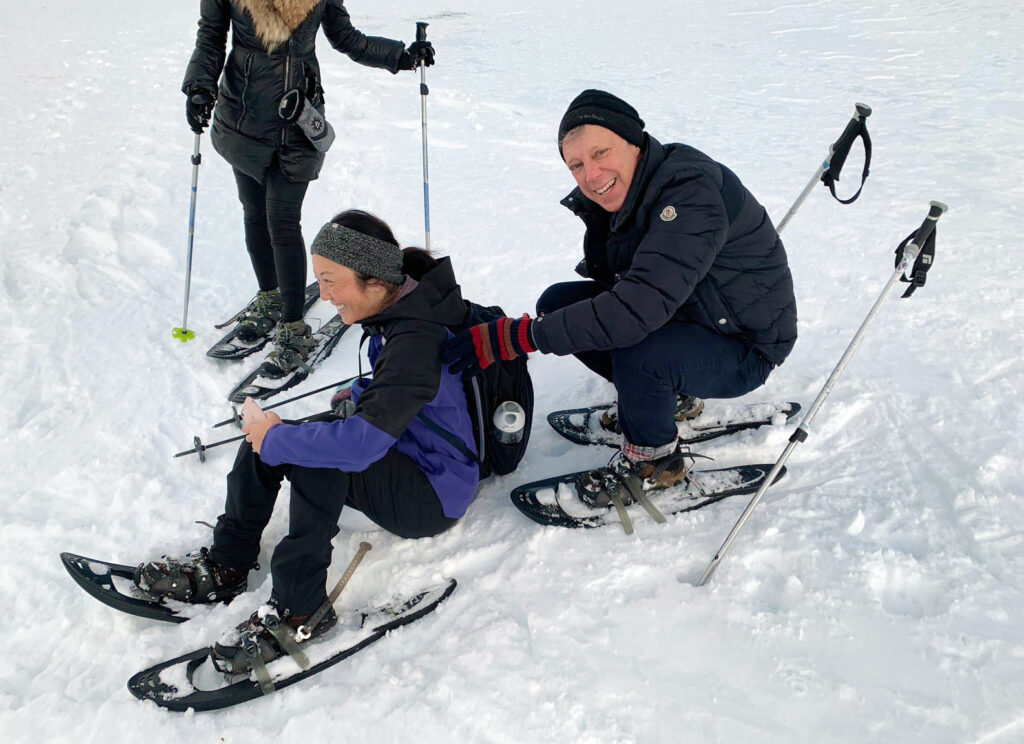
I’ve certainly felt that. In 2019, I went on a 7-day yoga retreat in Iceland in late January. Initially the prospect brought back painful memories of going to camp as a kid, when I knew no one on day one. The leader was attuned to such anxieties and had us form a “heart circle,” where he asked somewhat humorously, “Why’d you come to Reykjavik in the middle of winter, when it’s dark most of the day?” As it turned out, nearly all of us had recently navigated a major life event: divorce, widowhood, unemployment and other forms of loss or grief.
“Relationship change is one of the big life shake-ups,” Tedeschi acknowledged. “We can feel like the ground has fallen out from under us and our inner compass is off course.” That’s why many people choose to take time for themselves, to recalibrate lives that have gone off the rails. After the opening circle, I realized that our losses had become our bonds, and our openness allowed meaningful connections.
“Not everyone who comes solo is experiencing loss,” noted David Moreno, who has led yoga retreats all over the world. “Many are claiming their own sovereignty and becoming stronger in doing so. A retreat offers room for both solitude and connection. Friendships form, and occasionally romance does, too.”
How to plan a solo adventure
While you can certainly plan your own travel itinerary, there is no shortage of outfitters that cater to solo travelers. About 30 percent of the people who take Road Scholar trips do it alone, and the company even offers all-solo trips. Goway has launched a line of itineraries designed specifically for women traveling by themselves. (The price includes a private room.) G Adventures’ Solo-ish Adventures focuses on community with itineraries designed to encourage quick connection. (All guides are women and all trips include a “Me Day” for independent excursions.) And EF Go Ahead Tours offers trips designed for solo travelers headed to Japan, Ireland and the Greek islands.
Gabe Hoffman, who owns Perchance Travel, reminded me that travel agents still exist and can assist solo travelers and even recommend specific destinations. Tokyo is high on his list because of the great public transit system, while a self-guided tour through India might be more challenging. (Travel agent fees might be covered by hotels, cruise lines and tour operators, but it pays to ask.)
In the years since my divorce, I’ve traveled with friends and family — and solo. Just before the pandemic, I joined a week-long silent meditation retreat in the darkness of the Arctic Circle. The rules were strict and laid out ahead of time: no talking, no devices, no reading, no eye contact and no sex.
I imagined having an entirely solitary experience in the snowy tundra of Finland. Not so. I found new ways to connect, beckoning someone to join the dinner line ahead of me, all of us standing in awe at the dancing green light of the aurora borealis, shoveling the morning snow with others to make a path to the meditation hall, and getting up 30 minutes early to make coffee for the group.
With the darkness surrounding us, I’d be pouring the fresh brew, in silence, avoiding eye contact but still aware of the nods and bows of gratitude. By week’s end, I wrote in my journal, “We are frankly a beautiful collection of frayed and wobbly human beings …. Connection made.” Truth be told, not once did I feel alone during those eight days of being a solo traveler.
The post After my divorce, solo travel connected me with others — and myself appeared first on Washington Post.