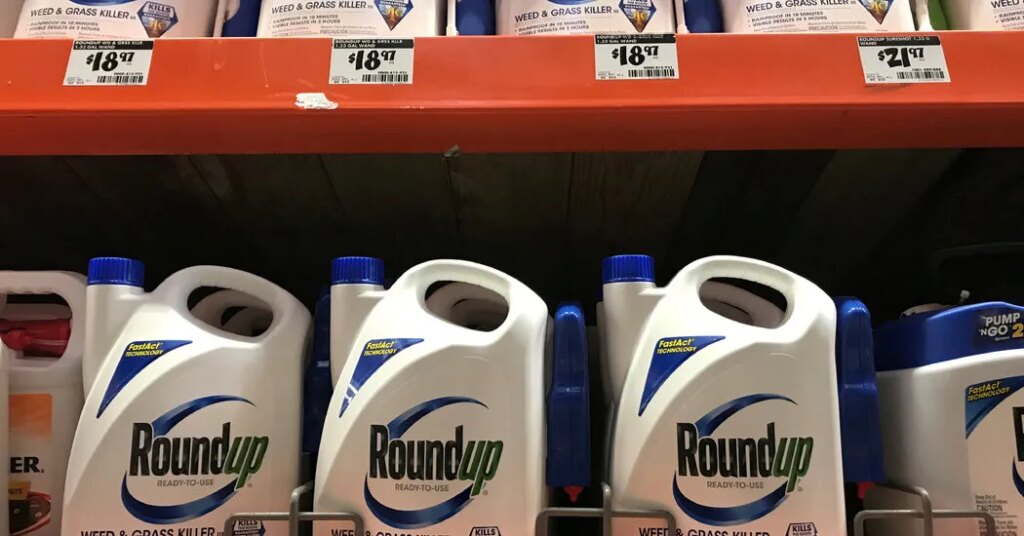
A Missouri state court gave final approval on Friday to a $7.25 billion nationwide settlement that will end tens of thousands of lawsuits against Bayer, the German pharmaceutical and biotech giant, that claim the weedkiller Roundup caused non-Hodgkin lymphoma.
Along with a favorable ruling from the U.S. Supreme Court this summer that barred Bayer from being sued in state courts for not putting a warning label on Roundup, the settlement is expected to largely end legal issues that have dogged Bayer for a decade.
“The Court’s final approval is a decisive milestone in the company’s strategy to mitigate the risks of both pending and future Roundup litigation,” Bill Anderson, Bayer’s chief executive, said in a statement.
Bayer will pay the settlement into a fund over the next 21 years, and people making claims that Roundup caused their non-Hodgkin lymphoma will be eligible for payments of $10,000 to $165,000 depending upon the severity of their cancer, their ages, their occupations and other factors.
“Today’s final approval order delivers guaranteed compensation to Roundup cancer victims who have waited more than a decade for justice,” said Christopher Seeger, one of the lawyers for the plaintiffs.
Timothy Boyer, the Missouri circuit court judge overseeing the case, called the awards “fair and adequate” and said the settlement was “among the largest in the history of mass tort personal-injury class action settlements.”
Bayer bought Monsanto, the St. Louis-based manufacturer of Roundup, in 2018 for $63 billion. Roundup is the most widely used herbicide in the world and is sprayed on hundreds of millions of acres of farmland annually that are planted with seeds genetically modified to tolerate Roundup.
But with that purchase, Bayer inherited a legal problem that eventually snowballed into around 170,000 lawsuits, with plaintiffs winning huge jury awards in courtrooms across the country.
Most of the cases focused on state failure-to-warn laws. Plaintiffs said Bayer should have put a warning label on Roundup saying it could cause cancer and that failing to do so violated laws in most states. Bayer argued that doing so would directly conflict with the label required by the federal Environmental Protection Agency, which regulates herbicides and had determined that Roundup was safe.
Eventually the Supreme Court agreed to hear the dispute. The Trump administration filed a brief supporting Bayer’s position, reversing the Biden administration’s position and infuriating activists from the Make America Healthy Against movement. The Supreme Court ruled 7 to 2 in Bayer’s favor.
Bayer and the plaintiffs preliminarily agreed to the settlement in February, before the Supreme Court heard the case. Lawyers for the plaintiffs said that a settlement was necessary because a Supreme Court ruling against them could leave their clients with nothing. For Bayer, a loss could have meant more suits and more expensive settlements. Mr. Anderson, the Bayer chief executive, said then that the settlement and a positive Supreme Court ruling would provide the “the tightest possible form of containment” to the lawsuits.
With Friday’s final approval of the settlement, Bayer will be able to put most Roundup lawsuits behind it, but the effort has been costly. The company has spent years litigating in courtrooms across the country and has settled tens of thousands of cases individually or in groups before this latest class action settlement.
Bayer previously said its litigation costs related to Roundup were at least $14 billion.
The post Judge Approves $7 Billion Settlement Over Claims That Roundup Caused Cancer appeared first on New York Times.