New Hampshire’s top election official said that he would again schedule his state’s presidential primary first, breaking with national Democrats’ calendar for the second consecutive election and complicating their efforts to prioritize other states for the 2028 nomination.
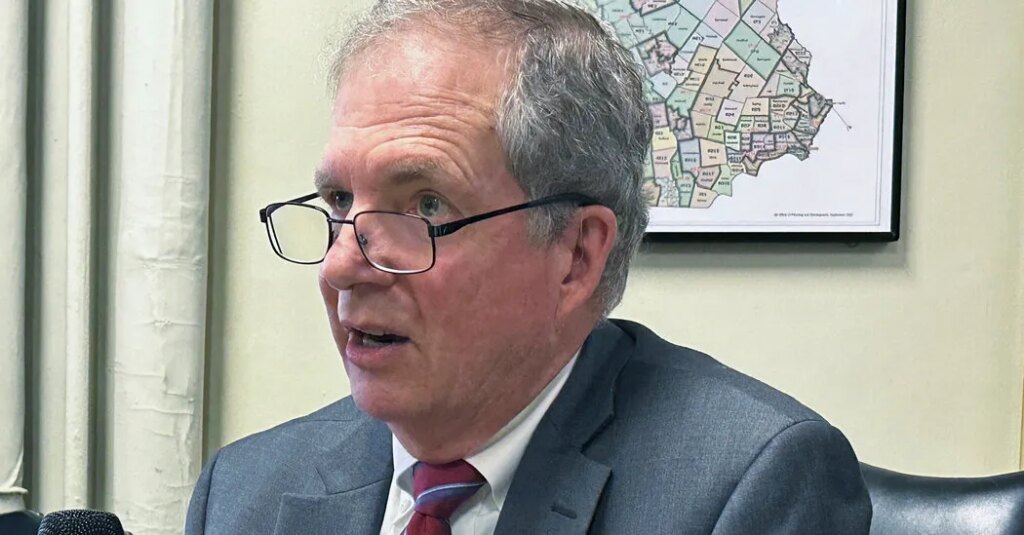
David Scanlan, the New Hampshire secretary of state and a Republican, this week reiterated in a news conference his intent to uphold New Hampshire’s century-old tradition of holding the nation’s first primary. The Democratic National Committee in August approved a new calendar, placing the South Carolina primary first, on Jan. 22, 2028, with Nevada next, on Feb. 1, and then New Hampshire, on Feb. 8. New Mexico, Michigan and Virginia were expected to follow.
The earliest states will have an outsize influence on the process of whittling down what is expected to be an expansive field of candidates. The new calendar would prioritize a group of states with electorates that are more representative of the party by broadening the contest geographically, racially and ideologically, national Democrats have said.
Mr. Scanlan was unable to comment on Friday, said Anna Sventek, a spokeswoman for his office. His statement came as he made his case for a third term, which would need the approval of the state legislature, both chambers of which Democrats won in the midterms. Ray Buckley, the chairman of the New Hampshire Democratic Party, which has complained about the national party’s schedule change before, declined to comment.
The 2028 schedule reflects a shift from when Iowa and New Hampshire, two states with largely white populations, traditionally began the nominating process. The calendar now prioritizes two southern states and two Western states, a change that is likely to increase the influence of Black and Latino voters.
In New Hampshire, a state law passed in 1975 requires its presidential primary to be the nation’s first. The state has clung to its long tradition of voting first, which predates the law, bringing out-of-state money, media and attention to its sparse population every four years.
To enforce its calendar, the party has set stiff penalties for states that violate it, including fining those that host unsanctioned primaries and voiding their national convention delegates. Any candidate who campaigns for a contest not run by the party would also be barred from participating in official debates.
A similar standoff happened in New Hampshire in 2024, when the state jumped the line, risking its delegates after the party moved its primary second, behind South Carolina. Former President Joseph R. Biden Jr. appeared only as a write-in in that election. After holding a separate party-run contest three months later, national Democrats eventually rescinded their penalties, seating the state’s delegates at the convention.
Confusion around New Hampshire’s primary in 2024 prompted Democrats in the state to criticize the party’s rule change and warn that it would disenfranchise voters.
If New Hampshire holds a contest out of order again, the results would not count toward the party’s nomination process and candidates would be barred from campaigning for it. To allocate delegates, the state would need to run an election on the date set by the party, according to the D.N.C.’s rules.
Iowa could also face complications because of state laws that require it to caucus at least eight days before any other presidential nominating contest. In 2024, the state held its own caucuses in January but delayed releasing the results until March in order to comply with the national party’s calendar. Rob Sand, Iowa’s governor-elect and a Democrat, has said that he would adhere to the state’s rules.
Gov. Kelly Ayotte of New Hampshire, a Republican, has said that she would uphold the state law that puts her state’s primary first. She was re-elected this month.
The new legislature in New Hampshire will convene on Dec. 2, when Democrats will have control of both chambers. The state legislature will vote on whether to re-elect Mr. Scanlan or seat one of the Democrats who are running for the office.
The post Top N.H. Election Official Reiterates Intent to Keep Nation’s First Primary appeared first on New York Times.