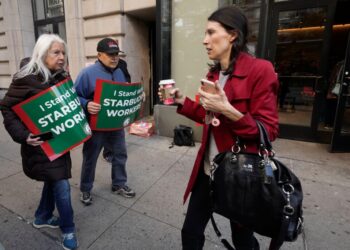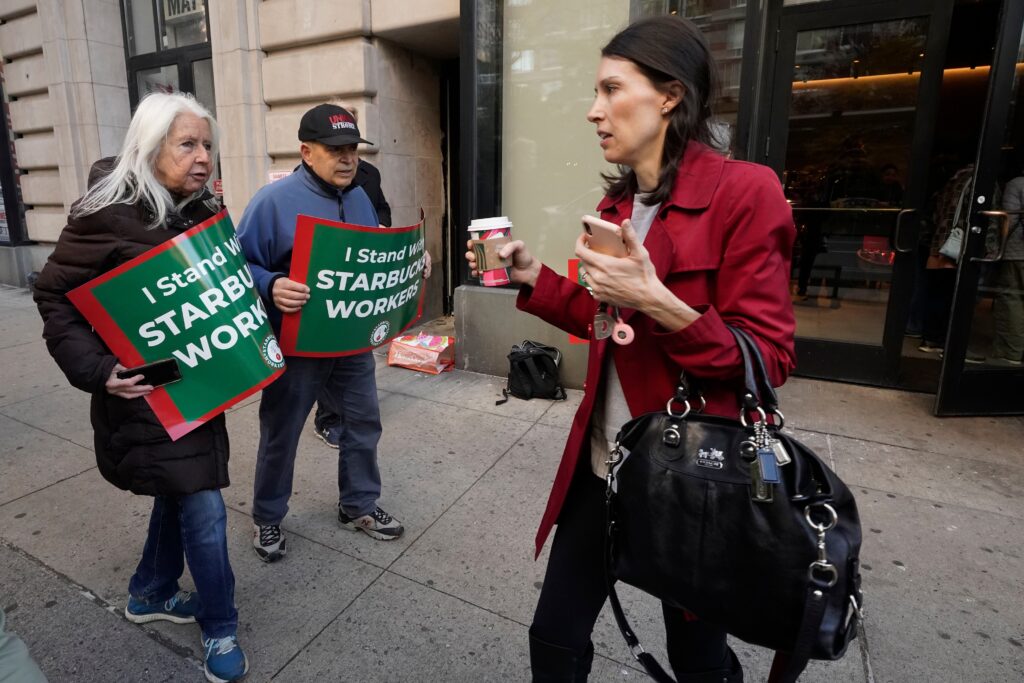
Nearly five years after Starbucks Workers United began trying to organize the coffee chain, the union still represents only about 5 percent of its U.S. baristas and has yet to secure a contract. Asking customers to stop patronizing Starbucks is its latest attempt to gain leverage.
So far, the boycott is a revolt on decaf. Union supporters last week staged rallies on about 40 college campuses. (There are more than 3,900 degree-granting institutions in the United States.) The Cleveland City Council voted this week to encourage residents to join the boycott.
The union claims to represent about 12,000 baristas at nearly 700 of the company’s more than 16,000 U.S. outposts. Its demands include a $17 wage floor, 4 percent annual raises, minimum staffing of three workers and “just cause” protections against discipline and firing.
Staffing mandates tie managers’ hands when stores are quiet. Automatic raises weaken the link between pay and productivity. “Just cause” rules make it harder to dismiss poor performers. Higher labor costs can mean higher prices for customers, fewer hours for workers, more automation and more store closures.
Competition offers better protection for workers than any union does. As rivals expanded, Starbucks’s share of U.S. coffee-shop spending fell from 52 percent in 2023 to 48 percent in 2025. If baristas don’t like their working conditions, they can take their talents to Dunkin’, Dutch Bros, 7 Brew, Scooter’s, Peet’s, Caribou, Tim Hortons, Blue Bottle or thousands of independent cafes. Restaurants and retailers want those workers, too.
Starbucks already offers generous benefits to attract and retain staff. The company says average hourly pay exceeds $19, and eligible workers can receive health coverage, stock, paid parental leave and college tuition. Turnover among hourly workers is roughly half the industry average.
Starbucks Workers United is free to call for a boycott. Americans are equally free to order a pumpkin spice latte and raise a toast to Thanksgiving in the land of liberty and free enterprise.
The post Consider the real ramifications of a Starbucks boycott appeared first on Washington Post.